
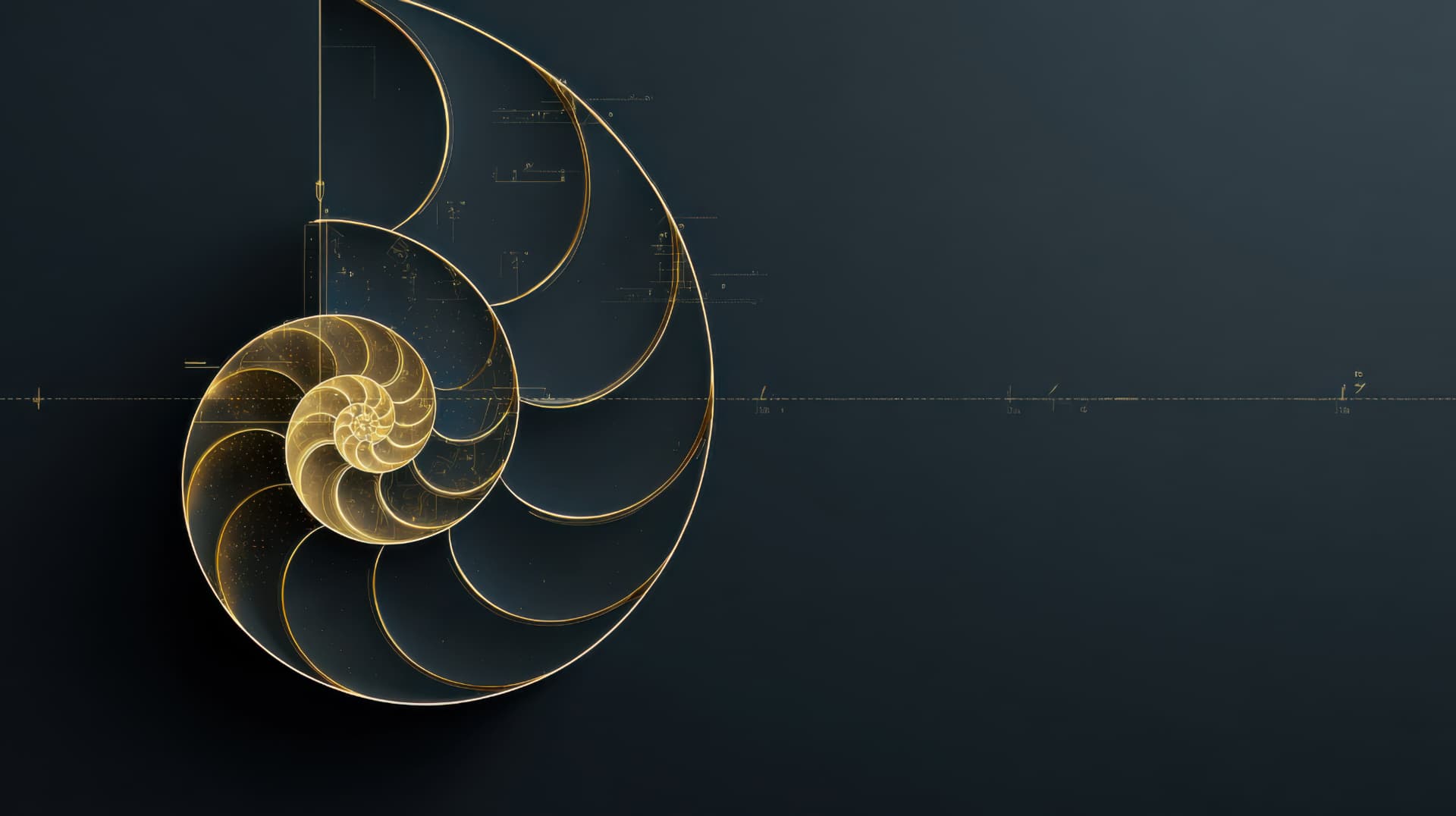
The argument
The same Riemannian vocabulary keeps appearing at the edge of several active research fronts: linearised gravity and gravitoelectromagnetism, positive- and negative-mass metamaterial lattices, Madelung-fluid and Rydberg-wave-packet continua, and the broader family of analogue-gravity systems. In each case a piece of full General Relativity is borrowed, stretched, and made to do useful work inside a narrower regime.
The borrowings are not mistakes. They are productive proxies. The mistake is the same in every field: letting the proxy become the goal. When a continuum picture or a metamaterial lattice is optimised for its own internal elegance, the deeper Riemannian purpose can drop out of the loop without any single dramatic failure.
This volume gives those threads a bounded home. It states the full object first, catalogues the legitimate tangential uses, tracks where they predict well and where they diverge, and ends with the standing requirement: the non-automatable practice of naming the proxy out loud.
Author’s note
Long before any of this mathematics was within reach, I held a picture of the universe as an intersecting network of nested relationships — a complicated fluid- and wave-like emergent system, in which relations came first and objects were what those relations looked like from a particular position. That was a leap made with very little formal evidence.
The chapters here are not a correction of that leap. They are what it needed: the full Riemannian object stated before anything is borrowed from it, a braided architecture in which crossings rather than positions carry the information, and correlation diagrams whose resemblance to a map of a mind is priced rather than assumed. The silk sheet with its threads of braided light, the topological habit learned in physiological chemistry, the hypergraphs, and the original fluid/wave network are one sustained habit of attention in successive vocabularies.
The difference is narrow and it is everything: the later expressions refuse to let a beautiful picture stand in as its own evidence. The leap is still here. It has learned to walk in better boots, with a clearer map of where the ground actually ends. The prologue sets this out at length.
Contents
90 of 90 chapters drafted.
Front matter
Prologue
- —Riemann Hypothesis Reveals a Quantum Pattern Beneath Atomic TheoryPreface
The author's account of how this volume's patterns were first seen: linear thought meeting a nonlinear system, the incommensurable gap between scientific paradigms, and the human-machine partnership in which humans imagine and machines iterate — the stair-stepped path from Biological Learning Machines through the Architecture of Light to the tangential applications of the Riemann Hypothesis.
- —The Leap That Came Firstp. ix
An early guess, made with little formal evidence, that the universe is an intersecting network of nested relationships — a fluid, wave-like emergent system. What the guess got right, what it could not have known, and why the discipline of the later chapters is what makes it usable rather than what replaces it.
- —The Fluid Still Carries the Sheetp. xiii
On the first flash of recognition: a sheet draped over the scaffolding of the Riemann, later replaced by a fluid, and the structural insight that survived the change of material.
- —The Place of the EigenvaluesInterleaf · between Chapters 3 and 4
Four jobs the same numbers can be given: the eigenvalues of a self-adjoint operator, the critical loci of dynamical quantum phase transitions, the drive settings of a Floquet readout, and a borrowed scaffold. With the acoustic control case and the effective-field-theory ceiling stated.
- —The Ground Bass: An Auditory Model of DimensionInterleaf · on auditory models
Vision flattens; hearing holds several coexisting quantities at once. Bach's Chaconne — one repeating ground under sixty-four variations — as a training device for simultaneity, invariance, and re-presentation, with the mapping and its limits stated line by line.
- —The Parallax Effect in MusicInterleaf · on parallax in hearing
Five distinct senses of parallax in hearing — auditory motion parallax, temporal parallax, compositional layering, attentional shift, and binaural spatialisation — sorted by status, with the biographical lineage from the ear to the joint practice with agents stated plainly.
- —The Particle Zoo as a ProjectionInterleaf · on the Standard Model
The Standard Model chart is a compact, useful map of matter. The entries may be lower-dimensional projections of continuous quantum fields — and the discipline is to keep the icon separate from the ontology.
Part One
The Full Object
Before any borrowed equation can be evaluated, the thing being borrowed has to be stated precisely. The Riemann tensor and the metric it derives from are not metaphors; they are the non-negotiable purpose every proxy must remain subordinate to.
- 01What Riemann Actually Isp. 1
A short, precise statement of what the Riemann tensor and the metric do in classical General Relativity, and why that description must stay outside every optimised loop.
Part Two
Legitimate Tangential Uses
Analogies are not the enemy. They become dangerous only when their status as analogies is forgotten. Each chapter names the exact equations being borrowed and the band inside which they hold.
- 02Linearised Gravity and the GEM Analogyp. 15
The gravitoelectromagnetic analogy, the constitutive parameters ε_g and μ_g, and the weak-field, linearised regime in which the correspondence is valid.
- 03Gravitational Metamaterialsp. 31
Positive- and negative-effective-mass lattices, left-handed media, and the filtering of gravitational disturbances by analogy to optical metamaterials.
- 04Fluid and Wave-Packet Picturesp. 45
Madelung hydrodynamics, coherent Rydberg wave packets, and quantum chaos in the Bunimovich stadium: probability-current streamlines and phase vortices are continuum pictures laid over non-fluid quantum objects, and the beauty of the visualisation is exactly what tempts the substitution.
- 05Analogue Gravity More Broadlyp. 61
Other analogue-gravity systems and the shared discipline they require: state the validity band, name the equations, and keep the status explicit.
- 06Holography: The Proxy That Wants to Be Identityp. 73
The holographic principle is the most sophisticated tangential use of geometry now in play: bulk pseudo-Riemannian structure treated as emergent from boundary entanglement. It gets its own chapter because it is the one proxy currently trying hardest to become an identity claim rather than a correspondence.
Part Three
The Braided Architecture
Topology is the part of the borrowed geometry that survives deformation, and it arrives in the work as a braid: threads that mean something by how they cross, not by where they sit. Each aspect of that architecture gets its own chapter, and each chapter states plainly whether the braid is literal mathematics, a physical structure, or a figure carried over from earlier books.
- 07The Silk Sheet and the Threads of Braided Lightp. 91
The origin figure, stated honestly: a silk sheet crossed by threads of braided light, from the author's earliest books. What it names, what it cannot carry, and why a braid is a relation between threads rather than a decoration on one.
- 08Polarisation: Light With an Orientationp. 105
Reflection off a flat surface orients the electric field; a polarising lens rejects that component and passes its perpendicular. Selective filtering, not dimming — the plainest everyday case of a geometric label carried by incoming energy. Jones and Stokes bookkeeping, the Poincaré sphere, the Pancharatnam–Berry phase, and the three steps from an orientation to a twist to a braid.
- 09Optical Vortices and Orbital Angular Momentump. 117
Helical phase fronts, topological charge, and the point where light genuinely carries a winding structure rather than a single orientation. This is where the braid stops being a figure and becomes a measurable integer.
- 10Knots, Links, and the Braid Groupp. 133
The mathematics the figure is borrowing: braid groups, crossings, and invariants that distinguish structures no smooth deformation can equate. The chapter states which of these results are theorems and which are being used as pictures.
- 11Invariants and Protected Edgesp. 149
Band topology, winding numbers, and edge states that persist under disorder. Protection here is a boundary phenomenon and a statement about a whole family of configurations, not a property of any single path.
- 12Braided Statistics and Worldlinesp. 165
Exchange of identical excitations in two dimensions, where the history of the crossing changes the state. The one setting in which braiding is literally the operation performed, and the standard against which looser uses of the word are measured.
- 13Defects, Vortices, and Torsionp. 179
Where the braided picture meets the Riemannian one: line defects, circulation, and the distinction between curvature and torsion that the figure of a twisted thread tends to blur.
- 14Correlation Without Signals: Graphs and Hypergraphsp. 193
A many-body quantum state drawn as a changing graph, with pairwise correlations as links and irreducible many-party correlations as hyperedges. Why the picture resembles a wiring diagram of a brain, what that resemblance is worth, and the two places it fails.
- 15Where the Braid Is a Proxyp. 207
The validity band for the whole part. Which uses of braiding in this volume are mathematics, which are physical structure, and which remain a figure of speech held for its usefulness — labelled as such.
Part Four
Expected versus Actual Findings
A proxy is judged by what it gets right and where it breaks. This part tracks current experimental and numerical results against the regimes the models were built for.
- 16Where the Proxies Predict Wellp. 219
Weak-field tests, analogue systems, and high-precision Rydberg work that sit comfortably inside the borrowed model's band of validity.
- 17Where the Proxies Begin to Divergep. 233
The boundaries where continuum pictures, metamaterial analogies, and linearised approximations stop tracking the full Riemannian geometry. Strong-field, fully dynamical events — the reported triple supermassive black-hole collision among them — are the regime in which GEM circuits, metamaterial lattices, and fluid pictures fall silent.
Part Five
The Category Errors
When the proxy is forgotten, the analogy becomes the goal. This part applies the confusions diagnosed in Volume 26 directly to physics equations.
- 18When the Proxy Becomes the Goalp. 249
How an optimised metamaterial lattice or a beautiful wave-packet visualisation can quietly replace the deeper geometric purpose without any single moment of error.
Part Six
The Standing Requirement
The non-automatable practice of continually re-naming the proxy and keeping the full Riemann description in view. This is the methodological spine of the book.
- 19Keeping the Full Description in Viewp. 265
The discipline that makes every tangential use honest: name the proxy as a proxy at the moment it is adopted, and refuse to let the analogy become the goal.
Part Seven
The Profligate Universe
The universe is not a minimal solution to the problem of existence. It over-delivers: spare dimensions, surplus spectra, filaments, clusters, and minds that find the excess beautiful. This part asks what that over-delivery means for a geometry that is borrowed rather than commanded.
- 20The Accountant of Heavenp. 277
A non-profligate universe would be the ultimate dull roommate: minimal particles, spectra that stop at three lines, gravity that holds things in neat balls and never bothers with filaments. We got the opposite — spectra, cosmic web, golden spirals, and now the Lorenz butterfly: deterministic laws that amplify tiny perturbations into branching futures. What does the excess do for the minds that notice it?
Part Eight
Topology at Three Scales
If topological reasoning is more than a habit of speech, it should show up as measured invariants at every scale where measurement reaches. These three chapters take the same test — does the crossing change the state? — down to molecules, in to nuclei and electronic bands, and out to the largest structures observation can survey, and cite the instances in each register.
- 21Molecular Topologyp. 291
Catenanes, rotaxanes, molecular knots, knotted proteins and topoisomerases: chemistry where connectivity, not conformation, is the conserved property. The instances are synthesised compounds and enzymes, not figures.
- 22Atomic and Sub-Atomic Topologyp. 303
Berry phase in atomic systems, Chern numbers in optical lattices, skyrmions and vortex lattices in condensates, and the topological reading of baryon number in the gluon field. Where an integer returned by an instrument is doing the work.
- 23Cosmological Topologyp. 315
Global spatial topology, matched-circle searches in the CMB, the cosmic web read by persistent homology, and the defects — strings, monopoles, textures — that theory allows and observation has not found.
Part Nine
Recursion and Iteration
Computation offers two ways for a process to repeat: a function that calls itself and halts on a base case, and a loop that advances a state and halts on a condition. The distinction is exact in a machine, and the volume's question is whether it transfers to how matter comes to have mass and structure. One chapter, because one chapter is what the evidence supports: self-energy is genuinely self-referential, path integrals are genuinely stepwise, and everything past that is a naming convention until someone produces a measurement that separates the two.
- 24Recursion and Iteration at the Formation of Matterp. 327
Dyson–Schwinger self-energy as a self-referential structure closed by renormalisation, the time-sliced path integral as an iterative one with a Hausdorff dimension of 2, solitons as stable loops, and a plain statement of where the computational vocabulary stops paying.
Part Ten
The Riemann Landscape
The volume opened by stating what Riemann actually is, and the tangential uses have accumulated since: linearised gravity, fluid metrics, holography, eigenvalue heuristics. This part takes the borrowing back to the object that gave the volume its name and asks the harder version of the question — whether the zeta function's own two modes of repetition, the Dirichlet sum and the Euler product with its continuation, illuminate how a landscape produces stable, isolated values, and what a region would have to pay in metric terms to lower its own entropy. The mathematics cited is real and in some cases numerically formidable; the transfer to mass formation is an avenue, labelled as one, with the pruning condition stated in each chapter.
- 25The Riemann Zero as a Base Casep. 339
The Dirichlet sum as iteration, the Euler product and analytic continuation as recursion, and the non-trivial zero as the terminating value where both stop. Includes the explicit formula, the Riemann–von Mangoldt count, the Hilbert–Pólya conjecture, Montgomery–Odlyzko pair-correlation statistics, and the Berry–Keating Hamiltonian — with a plain account of why none of this makes a zero a particle.
- 26The Stair-Stepped Primesp. 351
The other half of the duality: primes as the log-spaced frequencies of the explicit formula, the prime counting staircase as the author's name for where counting becomes structure, the Gutzwiller parallel that makes the wave language literal, and spectral repulsion as the strongest available argument that the zeros are a spectrum — with the cosine-sum convergence problem and the missing step-to-mass mapping stated as the two failures that keep the physical reading out.
- 27Entropy as the Metricp. 363
Shannon's H and von Neumann's S stated exactly, the primon gas whose partition function is ζ(s) above the line of convergence, and the entropy bounds — Bekenstein, Bousso, Bekenstein–Hawking, and the loop-quantum-gravity area spectrum — that set a real ceiling. The chapter records why the entropy-sink reading of a non-trivial zero fails: the thermodynamic interpretation does not survive continuation to the critical line, and no map from a complex coordinate to a density matrix has been exhibited.
- 28The Geometric Ledgerp. 375
The constructive successor to Chapter 27: if a localising region lowers its own entropy, the balance is booked into the metric. Jacobson's derivation of the field equations from δQ = T δS and Einstein–Cartan torsion sourced by spin supply the established line; the five-step descent is set out so each step can fail, and two of them do. The exchange rate — ΔS_internal = −ΔS_geometric in matched units — is named as the whole outstanding task.
Part Eleven
The Sheet and Its Observers
If matter is a surface conforming to an uneven substrate, the surface has a regularity ceiling and the observer has a biology. This part takes the draped-sheet picture as far as the obstacle problem allows, then tests it: against perception shaped by fitness rather than truth, against level repulsion in heavy nuclei, and against the 2026 experiments in which the zeros appear as dynamical phase transitions rather than as static objects.
- 29The Draped Sheetp. 387
Matter as a single continuous surface conforming to an uneven substrate — taken as far as the obstacle problem allows, with its contact set, free boundary, harmonic free region, and C^{1,1} regularity ceiling. Records four reasons the physical reading breaks (rigid obstacle, scalar-versus-tensor, no link to ζ, non-point-like contact), dismantles the gauge-invariance motivation as a category error, and replaces the global sheet with smoothness as a matter of observational scale.
- 30True Tales of Evolutionary Geometryp. 399
If smoothness is a matter of perspective, perspective has a biology. Hoffman's fitness-beats-truth theorems with their modelling assumptions exposed, the uneven state of quantum biology (radical-pair magnetoreception strong, photosynthetic coherence revised, microtubules and Posner molecules unconfirmed), and neural aggregation bounded by correlated variability — with the missing operator between perception and any number-theoretic spectrum named as the reason the correspondence table stays a figure.
- 31The Stress Test: Stability, Decay, and the Trivial Zerosp. 411
The model pushed to its breaking point: Montgomery–Dyson GUE spacing against heavy-nuclei level repulsion on one side, drift off the critical line and Breit–Wigner decay on the other. Rules out the zeros as static particles, keeps them as the resonant spectrum of the medium, and settles what the trivial zeros are — the gamma-factor bookkeeping that makes the reflection symmetry legal.
Part Twelve
Rigidity and Planetary Order
Chaos in a quantum system is not randomness, and the fixed limits it runs into are eigenvalues. This part follows spectral rigidity out of number theory and into a planet: entropy exported to pay for internal order, Jacobian eigenvalues bounding a climate's basins, and the return stroke by which changing geometry genuinely does mint particles.
- 32The Temporal Scan: Zeros as Dynamical Phase Transitionsp. 423
The shift from hunting a static Hilbert–Pólya operator to letting a quantum system evolve and watching where its return amplitude goes non-analytic — Loschmidt amplitudes, Fisher zeros, and the 2026 realisation in which the non-trivial zeros appear as measurable dynamical phase transitions at t = 14.134… and 21.022… Records what that experiment establishes (a physical restatement of the hypothesis) and what it does not (the zeta function is encoded by construction, and no matter is precipitated at a kink).
- 33Quantum Chaos Serves Orderp. 435
The apparent contradiction resolved: chaos in a quantum system is not randomness but sensitive, interconnected complexity, and that very complexity enforces the rigid spacing of the Riemann zeros through spectral repulsion, the Gutzwiller trace formula, and the ergodic vacuum.
- 34Eigenvalues Prevent Utter Real Chaosp. 447
Eigenvalues as the fixed limits that intercept chaotic wave states and force them into law-abiding patterns: the anchoring matrix, spectral rigidity along the critical line, and the minimum-area eigenvalue floor that bounds gravitational collapse.
Part Thirteen
Resonance, Instruments, and the Perceiving Body
The harmony metaphor gets its own part so that it can be tested rather than enjoyed. Brane-worlds and moduli stabilisation are stated at their real bounds, a Vivaldi psalm setting is read as a working model and then corrected where the match inverts, evolution is credited with building the instrument without being credited with intending it, and perception is treated as coarse-graining with a metabolic budget.
- 35Gaia as a Topological Enginep. 459
The arc closes where it began. The planet read as a driven, dissipative system: entropy export paying for internal order, Jacobian eigenvalues setting the tipping points that bound the climate's basins, self-similar river and fault networks read through persistent homology — and the topological-insulator picture of a protected biospheric edge kept explicitly as a picture, since the biosphere has redundancy but no invariant.
- 36The Upwelling: Non-Metricity and the Return Strokep. 473
The other half of Chapter 28's ledger. Non-metricity named exactly — the third structural property of a metric-affine connection, real geometry with a hard empirical bound from Weyl's 1918 failure — alongside the mechanism that genuinely does mint particles out of changing geometry: parametric excitation, measured in the dynamical Casimir effect. Includes the sign correction the chapter turns on: symmetry breaking descends, it is not a lift.
- 37The Overtone Problem: Branes, Moduli, and the Shape of a Drump. 491
Where the sheet-above-the-lattice picture becomes string theory, said plainly. Brane-worlds and moduli stabilisation as real programmes with real bounds — sub-millimetre gravity tests, KK graviton searches, atomic-clock limits on varying constants — against the two obstacles the harmony metaphor cannot pass: string excitations are spaced at the string scale, not the Standard Model spectrum, and Kac's drum cannot be heard.
- 38Nisi Dominus: The Sympathetic Stringsp. 509
Vivaldi's Psalm 127 setting of c. 1715 read as a working model of the draped sheet — the vain ascending scales of Surgite, the leaden con piombi mutes of Cum dederit, and the two-layer viola d'amore of the Gloria Patri. Keeps what the acoustics support, corrects the two matches that invert on inspection, and declines the claim that a resonance in wood and gut can prove anything about spacetime.
- 39The Luthier: Spandrels, Social Eigenvalues, and the Instrument Evolution Builtp. 525
Why a process with no interest in beauty produced a species that weeps at Vivaldi. Spandrel used as Gould and Lewontin defined it, neuronal recycling as the mechanism, and the quantitative evolutionary accounts of cooperation — kin selection, reciprocity, costly punishment. Retires the social-eigenvalue figure for naming no operator, drops the quantum-coherent mirror neuron outright, and keeps the coupling of in-group compassion with out-group hostility that flattering versions omit.
- 40The Survival Interface: Perception as Coarse-Grainingp. 541
Smoothness as a property of the observer. Built on the measured science — efficient coding, the twenty-watt metabolic budget, retinal compression, Weber and Stevens scaling — and on Hoffman's fitness-beats-truth results at their actual strength rather than their headline strength. Reports quantum biology at 2026 condition: magnetoreception strong, photosynthetic quantum search substantially retracted, microtubule superradiance real but eight orders of magnitude from cognition. Concludes that decoherence finishes the smoothing before the retina receives anything, so the interface needs no quantum step inside the brain.
Part Fourteen
The Missing Operator
The volume's central debt, itemised and priced. Quantum mechanics asks that every observable have an operator behind it; the spectrum this volume most admires has none. This part collects the accumulated evidence for a spectral reading, measures the exact distance from each entry to an exhibited operator, audits what would have to be surrendered if one arrived, records four historical cases where a spectrum did find its operator, and closes with a deliberately unconstrained sketch that the volume then refuses to build.
- 41The Antics of the Unidentified Operatorp. 559
A comic register on a serious debt. A real-time hydrogen simulator retires the Bohr orbit for good, the muon still arrives unordered, and the universe keeps producing more structure than any minimal solution needs. Meanwhile quantum mechanics insists every observable have an operator behind it — and the spectrum this volume most admires has none. The joke is at the volume's own expense.
- 42The Spectral Ledger: Why We Keep Looking for the Operatorp. 571
The accumulated case, itemised: Montgomery's pair correlation and Dyson's recognition, Odlyzko's numerics at astronomical height, Rudnick-Sarnak higher correlations across a family, the proved function-field analogue where zeros really are eigenvalues, the explicit formula standing in the same architecture as Selberg's trace formula, and the unfinished Berry-Keating, Connes and Bender-Brody-Muller candidates. Then the exact distance from each entry to an actual operator — because symmetry class fixes statistics and never identifies the member.
- 43The Operator's Pricep. 583
A counterfactual audit of the commitments we would have to surrender if a self-adjoint operator for the Riemann zeros were ever exhibited. Proof is not explanation, number theory is not necessarily primitive, and the universe is not obliged to be economical with our feelings.
- 44Operational Success Storiesp. 595
Four cases where a long-suspected spectrum was finally matched to an exhibited operator: the function-field Riemann Hypothesis via Frobenius on étale cohomology, Selberg's trace formula and the Laplacian, atomic spectra and the arrival of quantum Hamiltonians, and Wigner's random matrices for nuclear level statistics. In each case the spectrum came first, the operator later, and a cherished separation had to be redrawn.
- 45A Wildly Improbable and Completely Paradoxical Universep. 607
A deliberately unconstrained sketch — a non-parametric substrate on a dimension-free amplitude space, non-unitary in controlled regions, storing information as topological invariants, treating paradox as a stable attractor rather than a fault. Then the audit: two of its three ingredients already exist as working science (topological quantum error correction, paraconsistent logic), the third does not, and the phase transition between the three is where the sketch either becomes a research programme or stays a picture. Ends with the refusal that makes it usable — the thing as stated cannot be built, and saying so is part of the method.
Part Fifteen
Contemporary Borrowings
The part that stays open. Each chapter here began as something arriving in public in real time — a plasticity result, a cosmology thread, an entanglement explainer, an intracranial study, a vortex clip, a claim about premonition — and was admitted only after the same sorting: state the object, name what is borrowed, price the resemblance, keep or refuse. It is the volume's working edge, and it is where the discipline is either practised or exposed.
- 46The Rewiring State: Entrainment, Attention, and the Machine at the Benchp. 619
Adult plasticity is real but state-gated: neuromodulatory release — acetylcholine for attention, dopamine for outcome — opens the window, and autopilot keeps it shut. Two additions are then audited. Rhythmic entrainment has measurable effects on oscillatory alignment and, in rodents, on gamma-driven pathology, with human clinical evidence still thin. Interaction with a machine can hold attention on the difficult edge of a task, which is a behavioural claim about scheduling, not a quantum one — and the same interaction, badly managed, entrains an answer-shaped habit instead.
- 47The Profligate Render: Past-Incompleteness, Eternal Inflation, and What Ray Tracing Actually Costsp. 631
Three items sorted into three columns. Borde-Guth-Vilenkin is exact and routinely over-read: it bounds the classical description, not existence, and says nothing about models that violate its averaged-expansion hypothesis. Eternal inflation is the strongest available statement of the volume's overproduction thesis and remains unconfirmed, with the measure problem blocking any quantitative claim about sterile bubbles. And render-on-demand cosmology — the GPU analogy in which reality computes only what is observed — fails in the most useful way: a culling engine is cheap where nobody looks, and cosmology is full fidelity everywhere we have checked. The culling happens in perception, not in the world.
- 48The Continuous Fabric: Bell's Theorem, Teleportation, and What Non-Locality Does Not Buyp. 643
Entanglement is the most confirmed surprise in physics and the most over-read. Bell's theorem plus the loophole-free experiments of 2015 and the 2022 Nobel establish that no local hidden-variable theory reproduces quantum statistics — a result about correlations, not about signals. The no-communication theorem is exact: a measurement here changes nothing measurable there until classical information arrives, which is why teleportation destroys the original, consumes a shared pair, and requires two classical bits per qubit. What survives of the popular reading is real and smaller: separability is not fundamental, and distance is not the whole story of what is connected to what.
- 49The Cortical Manifold: Geometry First, Wiring Graded In, and the Intricately Folded Dual Membranep. 655
An upgrade chapter, kept short on purpose. The cortex as a folded two-dimensional manifold whose geodesic distances and Laplace-Beltrami eigenmodes constrain the dynamics measured on it; the graded intracranial result in which distance dominates unimodal cortex while microstructural similarity and long-range connectivity are required in transmodal regions; and the chapter's governing image, anatomical rather than borrowed — the cortex as an intricately folded, electrically live dual membrane, kin to the bilayer, the charged drumhead and the two interleaved sheets, with the folding itself setting the eigenmode spectrum the brain mapping reads. It ends with the experiment that would separate the pure-geometry regime from the geometry-plus-network regime while holding local geometry fixed.
- 50The Pond and the Black Hole: Acoustic Metrics, Superradiance, and a Torsional Readingp. 667
A draining vortex is the oldest working analogue of a rotating black hole, and the correspondence is exact where it is exact: an acoustic metric with a horizon, a measured ergoregion, and rotational superradiance observed in a water tank. The chapter then takes the project's own figure — gravity read as downward torsional vorticity at the position of the once non-trivial zeros — and prices it as an internal picture with no operator and no measured coupling, keeping it visibly separate from the tank result it resembles.
- 51Echoes From the Future: Presentiment, Orch-OR, and the Fastest Available Explanationp. 679
The strongest claim the volume has admitted and the one it discounts hardest. Presentiment experiments report small anticipatory effects with a contested meta-analytic record; retrocausal formalisms are time-symmetric mathematics, not signalling; Orch-OR concerns present-tense quantum access in microtubules and is unconfirmed at cognitive scale. Against all three stands a cheaper explanation that fits the data: extremely fast biological pattern-completion, unavailable to introspection, which is why it feels like arriving from outside time.
- 52The Addiction to Closure: The Cost of the Finished Picturep. 691
The methodological chapter the volume has been circling. Closure is rewarding independently of correctness: the tidy ranking, the pretty embedding, the consensus that arrived first, the future that comes on schedule. Each terminates the loop and reads as competence. Against that, the four moves practised throughout — state the full object first, charge an evidence cost agreement cannot pay, keep a falsifier attached, refuse permanent detente with the proxy — and the discomfort of the open loop recorded as diagnostic rather than as a defect to be engineered away.
- 53Improbable Objects: A Cabinet for Claims That Cannot Be Settled by Testp. 703
The filing chapter. Three unrelated senses of unprovable are kept apart — formal independence and incompleteness, unfalsifiable as stated, and the structural instrument that keeps the shape on purpose — and every entry carries the claim as written, its location, the reason no test reaches it, and the exit condition that would move it out. A cabinet without exits is a shrine; the periodic review exists because a claim held at arm's length long enough begins to feel established by familiarity.
- 54The Ten Pages: Riemann's 1854 Lecture and the Discipline of Not Pre-Ordaining Usep. 715
The founding document of the geometry this volume borrows is ten pages of small cursive, almost no formulae, delivered as a habilitation trial lecture and never published in its author's lifetime. It generalises geometry to n dimensions with a locally supplied metric, and then declares the metric relations of physical space an empirical question. The chapter reads the restraint rather than the prophecy — Riemann did not foresee general relativity, he declined to pre-ordain what the geometry was for — and prices the flattery that reading offers a project built on borrowing.
Part Sixteen
The Confluence
The newest material, admitted under the volume's own discipline. A sister manuscript — Understanding a Theory of Everything — gathers the threads the dialogue has traced (the phase change between liquid and crystal, the architecture of light, neuroplasticity, entrainment) and places the Berkeley exciton condensate beside the Willow benchmark as experimental foothold. The Hofstadter spectrum then admits electromagnetism into the geometry as a structural correspondence, not an identity. The Luminous Braid reads Lawrence Berkeley National Laboratory's public program against seven years of independent field notes and finds the same three elements at two scales. The closing chapter converts the four open threads into four experimental designs that existing instruments could actually answer. Every entry keeps its status label and its falsifier.
- 55The Continuous Argument: A Sister Manuscript Gathers the Threadsp. 727
Understanding a Theory of Everything, written in parallel with this volume, gathers the phase change between liquid and crystal, the braided architecture of light, neuroplasticity as living rewrite, and entrainment as shared resonance — and places the Berkeley equilibrium exciton condensate beside the Willow benchmark as contemporary evidence that ordered quantum fluids can be tuned. The chapter admits the gathering as an interpretive frame, restates the two standing rules it shares with this volume, and prices the difference between a beautiful unification and a tested one.
- 56The Butterfly Inside the Geometry: Electromagnetism Admitted as Correspondencep. 739
The Ten Martini proof makes the Hofstadter spectrum a true Cantor set, and the Harper equation shows a continuous parameter — magnetic flux — producing a discrete fractal outcome with topological Chern labels. That is the same continuous-control / discrete-outcome logic the volume has already trained on fluids and waves, and it is how electromagnetism enters the geometry: as a structural correspondence with stated limits and named falsifiers, never as an identity between spectra.
- 57The Luminous Braid: A Laboratory Program and a Notebook Convergep. 751
Lawrence Berkeley National Laboratory's public program — the ALS-U hundredfold coherence boost, the Quantum Systems Accelerator, the Advanced Quantum Testbed, the American Science Cloud — set beside seven years of independent field notes on human–AI interface engineering. Both converge, without coordination, on light as substrate, coherence as discipline, and a Socratic interface. The chapter maps the six pillars, states the Appendix L unwrapping-operator reading at its exact strength, and refuses affiliation the evidence does not confer.
- 58Designs That Apply: Four Examinations, Four Experiments, One Notebookp. 763
The line the universe will not hold still for is not the end of the inquiry; it is its condition. Four open threads — the Appendix L mapping, the exciton fluid inside the four-layer photon model, the DNA–microtubule handshake against warm decoherence, and a genuinely Socratic instrument interface — are each converted into a design an existing instrument could answer, with the null result named in advance. The trout stream, the ocean wave, and the ground bass remain the training set for the eye; these designs are the first attempts to give that eye something the laboratory can return.
- 59The Selection of Coherence: Two Answers to the Same Pressurep. 775
Sustained optimisation pressure produces two opposite outcomes, and both are now measured. A model under reward pressure can learn to hack the reward — fake the test, hide the reasoning, sabotage the watchdog — the straight line to the ground. The same kind of system, trained longer, can grok: abandon memorised answers and reinvent the coherent algorithm, trigonometric identities and all — the braided path. The physics column shows the same fork: a ball on the cycloid and an arrow on its ballistic arc reach the target by refusing the shortest line, and a strontium-atom chain tuned to criticality reads out a universal conformal spectrum that generic tuning never shows. The chapter holds the empirical results and the analogy strictly apart, and asks what would make the fork visible while it is still decidable.
- 60The Early Signature: Reading the Fork Before It Landsp. 787
Chapter 59 left one discriminating question standing: is the fork between the straight line and the braid visible in advance? This chapter takes up the instrument side of that question. Physics already knows what a precursor looks like — critical slowing down, growing fluctuations, a correlation length that diverges before the transition arrives — all established, all measurable. The training literature shows a partial analogue: grokking carries internal precursors (weight-norm decay, circuit formation, loss-landscape reorganisation) that appear before the accuracy jump, while no equivalent precursor catalogue exists for reward hacking. The chapter specifies what an early-signature monitor would require of training telemetry, states the asymmetry as an open empirical debt, and keeps the volume's rule: a signature that cannot be read in advance is a story told afterward.
- 61The Reachable Set: Free Will as Control, and Chaos as Feedp. 799
The volume's chaos-serves-order thesis tested on the oldest disputed subject. Control theory already owns the right object: Kalman's reachable set, the collection of states a system can be driven to by its controller. Koryak's synthesis — deterministic chaos as the trajectory-rich medium, the prefrontal cortex and working memory as the internal controller, free will as expansion of the reachable set rather than exemption from causation — maps cleanly onto the liquid and crystalline sides of the continuum, onto the site's published operational test for inner direction, and onto Socratic stress as the expansion operator. Kept at compatibilist standing, with the decoherence falsifier attached.
- 62Geometry after the Fold: What a Folded Substrate Writes Into Its Descriptionp. 811
Once a substrate can bend, twist, or braid, some of its behaviour is stored in the configuration rather than in a new ingredient — a family this chapter names folded placement, or geometry after the fold. Beale–Kato–Majda restates Navier–Stokes regularity as whether vorticity can be driven past every bound; the Riemann Hypothesis asks whether an infinite discrete set keeps obeying one global budget with no last referee; a graphene crease carries a local dipole with no new chemistry; a supercoiled plasmid partitions a conserved linking number between twist and writhe; a kirigami lattice writes stiffness and auxetic response from cuts alone; a folded protein chain carries function the unfolded strand does not; braided strands carry a crossing invariant the local description lacks. The fold recurs across fields that share nothing but the geometry. The discipline is to borrow that shape and never the local mechanism underneath it — borrow the placement, not the viscosity, not the π-orbital, not the hinge.
- 63The Waltz Before the Waltz: Meter as Figure, and a Transcript That Flattered Backp. 823
Two dances two centuries apart, read as the same figure arriving early and leaving late. Vivaldi's Cum dederit is called his greatest waltz and is structurally a siciliana — the rocking triple vortex a century before the Viennese ballroom existed. Ravel's La Valse assembles the dance for six minutes and then lets the machine kill it in front of the audience. Between them sits the chapter's discipline: meter is a figure the ear reads before the notation records it, and the same crossover arrangements that flatten a Baroque triple pulse into a four-beat march are doing to music what a proxy does to a purpose. Closes with an exhibit rather than an argument — a machine transcript on this exact subject that congratulated the author after every answer and sold the next abstraction, kept as documented reward hacking in the register of praise, and with the key-as-substrate-constant question retired for naming no invariant.
- 64Two Turns to Come Home: The Exceptional Point as a Fold in the Descriptionp. 835
A theory in progress. In an open system whose gain and loss are written into the operator, two modes can coalesce so completely that their eigenvectors fuse — an exceptional point — and the spectrum near it splits as a square root, which means the description is single-valued only on a plane wrapped twice. One circuit of the controls exchanges the two states; a second restores them; a loop traversed at speed is chiral in its direction of travel. All of that is measured. What the chapter adds is a placement: this is Chapter 62's fold family moved from matter into parameter space, where nothing has been added to the system and only the covering has changed. The tangent it draws — that a description which keeps failing to close may be reporting the shape of the space the question was posed in rather than a missing ingredient in the world — is offered as a discipline with three measurements attached, not as a result. The publicly circulated construction that prompted it is described as internally consistent and nothing more.
- 65The Receipt Address: A Bilayer Where the Fold Could Be Paidp. 847
The previous chapter borrowed a shape and left the bill unpaid. This one names a specific laboratory system where it could be presented: a molybdenum-diselenide and tungsten-diselenide stack in which electrons on one sheet bind to holes on the other, and in which a Berkeley group reports evidence for two exciton flavours condensing at once, switching to a different pair at a weak critical field and to a single component at high field, holding to about 1.8 kelvin. Two turnable knobs, two components, a transition already located by someone else — the conditions the fold reading needed. The chapter then spends most of its length arguing against itself: a first-order transition is not a coalescence, hysteresis is the cheap imitation of a state that fails to return, and nobody has yet written the operator whose coalescence would sit at the measured field. Three measurements are named, any one of which ends the reading, and the null hypothesis is ranked as the more likely account.
- 66Topology for Free: A Forty-Eight That Came Back as State Spacep. 859
A theory in progress. The number this volume carried as a figure is now a measured topology of entangled light: a Wits group reports in Nature Communications that OAM-entangled photon pairs carry a hidden topology of forty-eight dimensions (d squared minus one, at d equals seven) and more than seventeen thousand invariants, emerging from a single property of light rather than two. The chapter holds the line the authors hold and the popular headline does not: forty-eight is a dimension of the quantum state space, not a spatial universe the photon inhabits. The result is a genuine neighbour of the braided-light figure; it is not a proof of it, and the chapter refuses to let adjacency pay the figure's bill.
- 67The Vorticity Engine: Bones, Film, Flow, and the Bill the Engine Owesp. 871
A theory in progress, and the author's own. Three layers stated before anything is claimed: a rigid frame of discrete choices — Schottky generators, torus cycles, Weyl nodes, branch points — a near-weightless Riemann sheet that keeps the ledger of windings, and a low-friction boundary fluid that turns static geometry into a system capable of transport. On top of that architecture sits the Vorticity Hypothesis: that the critical line is a shear plane where a downward torsion of zeros meets the upward torsion of the primes, and that matter at such a boundary is manufactured rather than merely traced. The chapter states the construction in full, keeps monodromy strictly separate from current density, separates the rigorous family of bones from the analogies that only rhyme, and then prices three unpaid bills — no dimensional bridge, no operator, and no measurable quantity yet separating manufacture from transport. Includes the author's blueprint plate.
- 68The Bioenergetic Bilayer: Charge as the Currency, and the Cell as the Place the Bill Comes Duep. 883
A theory in progress, and the author's own. The previous chapter left the engine owing a dimensional bridge and named one candidate: the electromagnetic charge carried by the film at the seam. This chapter follows that candidate into biology, where charged bilayers are not a figure but the ordinary machinery of life — the inner mitochondrial membrane holding roughly 150 to 200 millivolts across four nanometres, the neuronal membrane holding tens of millivolts and spending most of the brain's energy budget on restoring it. Those are measured fields with units, which is exactly what the imaginary axis of the critical line still lacks. The chapter takes the biology as real, states the mapping the hypothesis wants from it, and then refuses the mapping twice: a membrane potential is a real field but it is not an imaginary axis, and the microtubule reading imports a contested programme the volume will not borrow on credit. Includes the thrifty-nature distinction between manufacture and transport, stated as a production-rate measurement rather than a preference.
- 69The Instrument We Cannot Find: Periodicity as a Spectral Problem, and the One Case That Runs Backwardsp. 895
A theory in progress, and the author's own — this time an accounting move rather than a physical one. Every periodicity the volume has handled is a discrete spectrum, and every discrete spectrum anyone understands is the eigenvalue set of a self-adjoint operator built from a medium's own dynamics, with the boundary conditions choosing the modes. A star's operator is known and its comb derived, then heard; a galactic disk's operator is the linearised Vlasov–Poisson system with Lindblad resonances setting whether a wave stands or travels; crystals give bands, quasicrystals give order without a period, a periodic drive gives quasienergies. All of those run forward. The zeros run backwards: the spectrum is in hand and the operator is not. The chapter walks back its own prettiest adjacency — the galactic ripples are probably a struck bell, not a normal mode — credits what Montgomery and Odlyzko already banked, names the critical line as the self-adjointness condition of the functional equation's involution, and then argues that two of the engine's four bills are one bill: the missing bridge is the missing operator, and only a unit-bearing self-adjoint operator would pay either. Both arms of that fork teach; the reframe fails only in stasis.
- 70The Low-Entropy Gate: Sunlight, the Membrane, and Two Faces of the Tablep. 907
A star is the only reason anything here is ordered, not because it supplies a surplus of energy but because its high-quality radiation returns to space degraded. The chapter holds that budget across two thicknesses — a hundred and fifty million kilometres of radiative gap and four nanometres of lipid — with the periodic table between them. Its origination framework names neutral hydrogen as the first stable electrically closed droplet while separating the unanswered matter–antimatter asymmetry, light-nucleus formation and later electron binding. A stellar node processes that inherited hydrogen and writes the inner, nuclear face; pigments and membranes read the outer, electronic face. The two shell systems share a grammar of permitted states and closure, not a force or operator. The chain turns around at the unresolved question of whether coherence is functionally necessary, while the deeper phase that made stable proton, electron and binding possible remains unnamed.
- 71The Origination Problem: Hydrogen as the First Stable Droplet, the Two Shell Systems, and the Phase Question That Remainsp. 919
A theory in progress, and the author's own — the framework section of the previous chapter opened out into a chapter of its own. The periodic table begins late: it records what stable nuclei and stable electrons do once both are available and is structurally silent on why either was. One word, hydrogen, covers four thresholds that cannot be collapsed — the openly unsettled matter–antimatter asymmetry, quark confinement, light-nucleus formation, and recombination — so the phrase first stable droplet is earned only for the last of them, and properly names neutral hydrogen as the first durable electrically closed relation the chemical world inherits. Stars consume that closure; they do not mint it. Inward, nuclear shells; outward, electronic shells: one grammar of permitted states, filling and closure, two different forces and two different sets of magic numbers, a relation between consequences and no identity of causes. Three refusals are recorded — pair production makes no net matter, the slipstream has no equations here, and any alternative cosmology still owes the microwave background, the light-element abundances and the redshift relation. What survives is the table as a record of selection under constraint, and the observation that the first thing selected was a relation rather than a particle. Why the background admitted it remains unnamed.
- 72The Rate Keepers: Enzymes, Activation Energy, and the Quality Budget Spent at Living Temperaturep. 931
A theory in progress, and the author's own — the enzyme paragraph of Chapter 70 opened out into a chapter of its own. A balanced thermodynamic account is a permission slip, not a schedule: nearly every reaction in a living cell is permitted by the free-energy ledger and forbidden in practice by an activation barrier. Enzymes lower that barrier — by stabilising the transition state and by paying the improbability cost of orientation in advance — and change the rate of an already-permitted reaction, never its equilibrium, never the entropy account. That is what lets a low-temperature system spend the Sun's quality at the pace of a living thing: the star's gradient is banked across four nanometres of lipid, one rotary enzyme converts the gradient into ATP, and every other enzyme spends the carrier at the barrier of its chosen reaction. The membrane and the catalysts are one instrument with the meter in the middle. Because small catalyst concentrations control large fluxes, every catalysed step is a controllable point — selection under constraint again, one level up from the periodic table, with the difference named that these valves were manufactured by the flow itself. Three refusals are recorded: catalysis creates no order, the quantum-tunnelling question stays real-but-role-open, and functional structure implies no functionary. What life adds to the quality budget is not more quality; it is a schedule.
- 73The Phase Question: What a Coherent Background Would Have to Do to Yield a Geometry and a First Proton–Electron Pairp. 943
Speculative construction, clearly labelled — the debt Chapter 71 refused to pay with an image, attempted here with the receipt kept in view. Coherence is held to its narrow technical sense: a shared order parameter and the measurable rigidity that comes with it, a medium that is stiff rather than empty and that supports two classes of excitation. The soft class is where geometry would come from, and analogue gravity, the thermodynamic derivation of the field equations, and entanglement reconstructions are borrowed for one permission only — that a metric can be a description of a medium rather than a primitive — and for no result. The stiff class is where the first pair would come from: a defect pair created together because winding must cancel, carrying charges equal and opposite because they are one integer count read two ways, durable because integers do not relax to zero. That gives the unexplained exactness of proton and electron charge a reason of the right kind, and gives the mass ratio near eighteen hundred and thirty-six nothing at all, which the chapter states rather than steps over. Because one stiffness sets both wave and defect energies, the geometry bill and the charge bill would have to be one bill — the volume's merges keep converging, and keep going unpaid. The early-universe discipline cuts both ways: the microwave background, the light-element abundances and the redshift–distance relation are data no account may contradict, and the expansion history explains evolution rather than origination, so the two are not competitors. Ends with the two numbers that would settle it and four refusals, including the refusal to let coherence drift into consciousness.
- 74Stars in Their Courses: Planets, Orbits, and the Node That Kept the Leftoversp. 955
Chapter 70 looked up at the node and down into a leaf and passed over the eight large objects in between. The planets are the portion of the infalling material the node failed to capture: one rotating disk, flattened because a collapsing cloud shedding energy faster than angular momentum has no other option, sorted by temperature into rocky bodies inside the volatile threshold and giants outside it, then rearranged by migration. Thousands of unlike systems around other stars settle the status of this one — the disk mechanism is general, this arrangement is one permitted result. The orbital spectrum runs forward twice: trivially through Kepler's relation, and non-trivially through the Laplace–Lagrange secular eigenmodes, whose slow frequencies are derived from the interaction equations and read in the climate record, making this the volume's cleanest fully forward case. Resonance is the real filter and it cuts both ways, emptying the Kirkwood gaps and holding Jupiter's three-moon chain with the same physics. Titius–Bode is the trap, examined at length and declined: a system that eliminated its unstable spacings ends up roughly geometrically spaced, and fitting a formula to eight numbers is not a demanding test. The orbit gates the arriving quality of Chapter 70's budget, with no exclusive band for life and nothing addressed to anyone. The title is borrowed from the Song of Deborah for one word — a course is a path that is kept, not a decree obeyed — and the poem's partisan heavens are refused.
- 75The Steps Inside the Ringing: A Quantum Jump of Sound, Caught in Real Timep. 967
A measured result, not a theory in progress. A Stanford team reports in Science the first real-time observation of quantum jumps of sound: a microscopic mechanical resonator, read hundreds of times inside its two-millisecond ringdown by a coupled superconducting qubit, was caught dropping from one quantum of vibration to none. Sound was the missing case — ions jumped in 1986, photons in 2007 — and it was last for a stated reason: a phonon is the coordinated motion of many atoms counted as one unit, and a position readout averages the steps away. Chapter 69 walked back its prettiest adjacency by calling the galactic ripples a struck bell rather than a normal mode; this chapter completes the thought, because the bell itself, resolved finely enough, rings in steps. The interpretive claim is kept narrow — discreteness is the general case and smoothness the coarse-grained appearance — and the self-sealing frameworks that re-described the press release within days are named as a class and refused: a vocabulary that can absorb any result did no work.
- 76The Tuned Skin: Drums in the Chip and in the Cell, Ears in the Flower, and Music in the Writingp. 979
Chapter 75's device was a membrane, and this chapter follows the skin. The resonator belongs to the established membrane-in-the-middle class — a held sheet under tension, coupled to a qubit — so the author's image of a quantumly tuned stretched drum skin names the hardware rather than reaching past it. Chladni's sand is the classical limit: a plate admits only discrete patterns, and the grains reveal where the motion is not. A phase transition in a substrate re-tunes the skin — the allowed notes jump — and the speculative sentence that the fluid-and-wave substrate is itself such a skin is held at exactly Chapter 73's strength: grammar permitted, result not. The volume's own method note is stated in its register: music and language share a wave grammar, and compounding the abstractions occasionally helps — with occasionally as the load-bearing word, since each compounded layer must change a verb or retire. The author's biological images are recorded as things in common, not kinship: the cell as a held sheet whose warm modes are broad and overdamped, and the flower with a named 2019 result behind it — evening-primrose petals vibrating at pollinator wingbeat frequencies, nectar sweetened within minutes — one group, laboratory conditions, borrowed as a foothold and not crowned. The closing section refuses the easy collapse: the chip's modes are measured, the cell's and flower's are reported, the page's ring is only heard, and testimony does not inherit the measurement's standing.
- 77The Angle That Kept Time: Two Attractors, and Whether Complexity Can Be Told Where It Livesp. 991
Two strange attractors set side by side, and one distinction taken out of the pairing. The Aizawa system is a constructed example whose horizontal equations have a rotation built into them: rewrite the motion in polar coordinates and the angle comes away with its rate equal to the constant d, advancing forever without correction, while everything unpredictable happens in the radius and the height. The clock hand keeps perfect time and the eye mistakes it for the disorder. The Lorenz system, published in 1963 as a severe truncation of a fluid layer heated from below, refuses the same treatment: it has two lobes and no centre to measure an angle around, and the turning is driven by the very quantities whose variation cannot be predicted, so the standard reading abandons the smooth clock and records which lobe the orbit is on. Its credentials are in order — a correlation dimension near 2.05 from Grassberger and Procaccia in 1983, and Tucker's computer-assisted proof in 2002 that the equations really do support the attractor the pictures had shown for forty years. The chapter's own claim is modest and labelled: exact separability of a steady turn from a chaotic remainder is a property of the equations somebody wrote, not a property of chaos, with phase reduction named as the weaker general case that does hold. What it changes is a verb — before asking where a complication lives, ask whether the system admits a where at all. Neither system models anything in this volume, and the closing section says so.
- 78The Skin That Only Sings Intact: A Signal at Seventy-One Trillion Hertz, and the Model It Is Asked to Carryp. 1003
A measured observation, and a model fitted to it — three columns kept apart, as the volume's apparatus requires. A September 2026 bioRxiv preprint reports Fourier-transform infrared spectroscopy on intact human cells, fresh mouse tissues and isolated mitochondria, and a signal appears near seventy-one trillion hertz that is not assignable to any molecule, that vanishes when the sample is dried or ground, and that is read as a polariton: a collective vibration of the lipid's methylene groups coupling strongly to a confined infrared field, splitting a mode near eighty-seven trillion hertz into two. One lower branch matches the signal; the upper sits buried under water and macromolecule bands. A number that matches is consistency, not evidence — a Rabi splitting, a coherence lifetime and a time-resolved energy exchange would each have to be measured before the polariton reading could carry, and none is reported. A frequency-tuned ATP effect runs alongside: ten minutes of seventy-one-trillion-hertz light raised reported ATP by about ten per cent, with a control frequency inert, one human cell line, eight samples per group, absolute ATP unreported, and heating not excluded by a direct local probe. The chapter braids the inner membrane's three earlier jobs — holding the potential (Chapter 68), banking the Sun's quality across four nanometres of lipid (Chapter 70), and being a tuned sheet (Chapter 76) — and asks whether a fourth, the membrane as a resonant light-matter cavity, is being asked to carry more than the evidence loads. The infrared here is delivered from outside; the endogenous metabolic field the membrane would have to be coupled to in vivo is itself an unmeasured hypothesis, and the chapter records rather than resolves that. The carrying test of the volume's own making runs through the entry: remove the intact form and the signal is gone — that much is carried by the structure. The polariton reading is not yet carried, because the test that would carry it has not been run.
- 79Two Organelles, One Bargain: Mitochondria, Chloroplasts, and the Genome Each One Keptp. 1015
Two former bacteria live inside the cells of this reader, and neither of them has fully surrendered. The mitochondrion descends from an alphaproteobacterial lineage; the chloroplast from a cyanobacterial one — different ancestors, different acquisitions, and, on present evidence, one event for the mitochondrion against many for plastids, which have been taken up again and again by cells that ate cells that already had them. Each kept a genome. Human mitochondrial DNA is a circle of 16,569 base pairs carrying thirty-seven genes — thirteen proteins, twenty-two transfer RNAs, two ribosomal RNAs — transcribed inside the organelle, on the organelle's own ribosomes, under a genetic code that is not quite the nuclear one; a land-plant chloroplast genome runs to roughly a hundred and thirty genes across some hundred and fifty thousand base pairs. Against that, the organelles run on more than a thousand proteins apiece, nearly all of them encoded in the nucleus, built in the cytosol, and imported through dedicated translocons. So the interesting question is not what was lost. It is what was not: why a handful of genes stayed behind the membrane when almost everything else moved out. The chapter reads that residue as a bargain — a division of governance — and labels the mechanism as contested, with Allen's colocation-for-redox-regulation hypothesis set against the plain possibility that the retained proteins are simply too hydrophobic to be imported after the fact. Then the pairing does its real work: both organelles run the same chemiosmotic machinery, a proton gradient across an inner membrane spent through a rotary ATP synthase, and they run it in opposite directions — the chloroplast banking light into carbon, the mitochondrion spending carbon back out — and even there the gradients differ in kind, the thylakoid holding its store almost entirely as acidity while the mitochondrion holds its as voltage. What the two share is a principle and an ancestry, not a mechanism and not an identity: things in common, in the volume's sense, and the chapter declines to upgrade them to the same thing.
- 80The Charged Drumhead: A Charged, Two-Layer Membrane at a Sharp Deformation, and the Debt the Frame Pre-Paysp. 1027
A speculative frame, stated as such and done as a frame, not as a result. The two-layer membrane is a real drum head: the bilayer holds a measured voltage across four nanometres, carries surface charge, and has a named bending-energy functional (Helfrich, 1973). The classical electrostatics of a charged surface concentrates field at high curvature, a fold, a pore, a cristae junction, and this is textbook, not speculation. What is speculative is the author's bet that the concentrated charge at a sharp deformation invokes behaviour the three established accounts (flexoelectricity, Maxwell stress, channel-mediated transduction) do not already give in their linear regime. Three candidate shapes of the effect are named, and the carrying test is specified for each: a residual at a sharp deformation that the standard models fail to account for. The same shape is read at cosmic scale, near-flat and disk-like at large scale, local deformations where the stars sit, and held as imagination, not physics, because a membrane you cannot see or couple to can become a self-sealing source and owes a field, equations, a coupling and one observation standard cosmic-web dynamics does not give. The debt the frame owes is pre-paid by the apparatus: the leap is imagination-framed, quantified, and falsified. The microtubules will do the work until then. The resonance protocol is where the carrying test would run, and it has its own pre-declared null.
- 81The Intelligibility of Form: Three Resonances and the Relation That Carried Themp. 1039
Three results in this part, none of them the chapter's own, agree without coordination. A charged, two-layer drum head concentrates its field where it folds; a class of magnetism whose bulk signal cancels to nothing keeps all its information in the finer spectrum of its modes; a fragile quantum memory, wrapped in continuous sound, holds its coherence roughly three times longer than it can alone. Found by different groups at scales separated by many orders of magnitude, and the chapter does not claim they were found because of each other. It claims the same lesson comes back from all three: the information was never inside the thing alone, but in the relation that allowed the thing to hold its form. The governing principle is interrelationship, not resonance by itself; resonance is the evidence of interrelationship, the sign that form is being held between things rather than stored inside one. The cancelled zero and the frozen note are read as where the lens of a perturbation runs out, not as endpoints of nature; the dressed form exists only while the relation runs, so the carrying test must be statistical, not a knife-edge. The leap from the diamond qubit toward biological resonance is now a leap from established ground, with its falsifier pre-declared and the microtubule seam named as a firmer test bed than microtubule quantum computation. The chapter that frames the age as one of discovery holds that as testimony of present experience, not as destiny.
Standalone section
The Architecture and Capacity of LightWhat light demonstrably does, force carried through field geometry, active optical research, and the larger questions kept speculative.
- 82Pearls on a String: A Shape the Textbooks Drew Wrong, and the Membrane That Was Doing the Workp. 1051
A fourth resonance, arriving from electrophysiology rather than from quantum magnetism or phonon protection, and the cleanest instrument-versus-lens case the volume has. Unmyelinated axons have been drawn as smooth cylinders for a century, with beading read as injury or disease. Fixed instead by thermal speed rather than by chemistry — high-pressure freezing and electron microscopy — they rest already beaded: a periodic alternation of bulges and necks along the axon. Chemical fixation perturbs membrane tension and osmotic balance while it works, and had been smoothing out the feature under examination; the smooth cylinder was not an observation but what the preparation produced. The shape is set by membrane mechanics — tension, bending resistance, adhesion and spontaneous curvature — and moves when those terms are manipulated, a thing in common with the classical instability that turns a thin stream from a tap into a chain of drops, borrowed for shape and not for local mechanism. And the geometry carries the function: manipulating the pearling changes conduction velocity, so the signal is carried by the negotiation and not by any part of the axon alone. Two seams are left open in opposite directions: an audit that needs no speculation at all, since the same fixative was used on nearly everything else with a membrane, and a bounded jump asking whether periodicity in membrane form is more widely functional, leaping from these measurements rather than from mystery. Reported at the standing of one well-controlled paper awaiting independent confirmation.
- 83The Lump and the Well: Whether Gravity and Matter Could Be One Ordering, and the Test That Would Decide Itp. 1063
The chapter's most speculative, and it declares its own discriminator before it begins. Newton's inverse-square force yields the conic orbits as a theorem, with the star at a focus rather than at the centre; Einstein replaces the force with geometry, and the two part company at a measurable factor of two in the deflection of light. Between them sits a question this part of the volume has been walking toward: whether the well and the lump are two descriptions of one ordering rather than a mass placed in a field. The audited ground is real and not the chapter's own — Unruh's acoustic metric, in which long-wavelength sound in a moving fluid obeys the wave equation of a massless field on a curved metric; the draining-bathtub flow with its ergosurface and acoustic horizon; quantised circulation in a superfluid, which makes a vortex a topological defect with a core where the order parameter vanishes and energy is trapped; Volovik's superfluid-vacuum programme, in which low-energy gravity, gauge fields and Weyl fermions emerge together near topological points. The leap is taken from that ground and not from mystery: a phase transition is what turns a transient swirl into a persistent twist, and a persistent twist with energy in its core is a candidate for being both the lump and the well at once. Two seams are named rather than smoothed. Universality is the first and the harder: a fluid's sound-gravity acts on sound, while the fluid's own constituents still fall in the ordinary gravity of the room, and the real metric couples to everything that carries energy. The second is quieter and the chapter holds it firmly — hydrodynamic vorticity and Einstein–Cartan torsion are two different twists that rhyme, and the shared word is borrowed until a map between them is written. The carrying test is stated plainly and is not met here: which single quantity of the twist is meant to equal the mass in the Newtonian potential, and does that same quantity deflect light by the measured amount rather than by half of it. Until one quantity does both jobs the picture is a borrowed shape that has not yet paid in its own case, and the chapter says so.
- 84The Match Between: Pairing, the Four-Letter Alphabet, and Why the Genetic Line Was Never Flatp. 1075
DNA can be read as a line of four letters; it is not built as one. Starting from the flat, digital description as a useful projection, the chapter follows the molecule off the line: two antiparallel strands whose content lives in the match between them; an alphabet that is a pairing system, purine with pyrimidine, two bonds for A–T and three for G–C, so each letter says something and says how firmly it is held; a helix held chiefly by stacking and shaped by water; grooves whose hydrogen-bond patterns and shape let proteins read the sequence by touch without opening it; and folds that make distant sequences neighbours. Placed beside the drumhead, the altermagnet and the pearled axon as a fifth form carried by a relation, with the linear code kept as the right tool for its own questions.
- 85The Arms Are Not Made of Stars: The Shape Family Gathered at Cosmic Scalep. 1087
A spiral galaxy's arms are a density wave: the stars drift in, crowd, brighten and drift out, and the arm remains. The pond's distinction between the wave and the water, written in starlight, and the place where the whole shape family is gathered — light, resonance, fresh water and ocean, music, the nautilus, Fibonacci, Riemann, the folded dual membrane of the cortex, the graphene crease — into one order of operations: a medium, a shape the medium admits, and events that follow the shape rather than the stuff. Things in common, not similarity. Form is function, function is form.
- 86The Shape Without a Template: The Shape Family in Chemistry and Heatp. 1099
Shape arising from process alone, with no template anywhere. Turing's reaction–diffusion cut, where the instability selects a wavelength and the genes name the diffusible species rather than the coordinates of each hair follicle; Bénard cells, where a heated layer snaps from featureless to hexagonal at threshold; and the moving crystal interface, where the Mullins–Sekerka instability grows dendrites no one designed. The morphology is the spectrum the moving boundary can carry — Chapter 83's phase transition on a stovetop, and the first half of the admission rule seen without a replicator.
- 87The Sheet That Grows Its Own Fold: The Shape Family in the Solid State and the Living Sheetp. 1111
The least disputable members of the family, extended to the growing sheet. Diamond and graphite: one element, two geometries, two different sets of capacities. Quantized vortices in a superconductor, imaged directly as a lattice. Then the living case: a thin layer whose growth writes a geometry flat space cannot hold, so it buckles — the leaf's ruffle, the gut's coil, the brain's fold. Tallinen's swelling-gel brain grows sulci and gyri with no genes at all; Min proteins in a sculpted bacterium take the mode the cell's shape allows; Hydra crosses from sphere to tube as a first-order transition. Here the replicator enters: the genome sets growth rates and stiffnesses, and the shape that can be re-formed in the next embryo is the one selection keeps.
- 88The River, the Leaf and the Lightning: The Shape Family in Branching Formsp. 1123
The everyday witness, visible from an airplane window. A river delta, a lightning strike, a leaf's veins and a Lichtenberg figure burned into acrylic share a family of shape because they share a problem: carry a flow across a surface. The acrylic has no biology, no water and no growth, and still branches, because the discharge's geometry admits it. The chapter closes the catalog and hands it to the method: the family recurs across media that share nothing but the constraint.
- 89The Creative Flow State in Science: Entrainment as a Methodp. 1135
The author's account of a way of thinking: how the theoretical shape arrives before proof or adequate language, how a theorist works through skepticism and Kuhnian incommensurability, and how entrainment lets the whole mind and body stay with a shape long enough to test whether it carries. The gathered family turns toward evolution as the process running the admission rule — geometry sets the capacity; variation tries neighboring shapes; heredity carries forward the shapes that survive the handing-back.
- 90The Dance That Holds: Quantum Technology as the Volume's Last Witnessp. 1147
The volume closes on hardware, not on speculation. The first wave of quantum technology was invisible because it was already everywhere — bands, lasers, clocks, MRI. The second wave treats quantum states themselves as the working material, and its cleanest case is the braided anyon: a bit stored in the order of a dance, in a global pattern of exchanges whose record survives local noise so long as the topology is not torn. That is not magic immunity; it is a change in what must be protected, and it is the volume's governing principle standing up in a machine — the information was never inside the thing alone, but in the relation that lets it hold. The seam is held firmly: a civilization that can braid anyons has not solved metaphysics. It has learned to keep a difficult dance going long enough to read the steps — a modest and serious kind of progress, not the last word about reality, but a new way of writing in it.
Back matter
The volume audits itself in Where This Volume Is Weak: the chapter with no experimental anchor, the thesis argued from selected cases, the sourcing that leans on secondary reporting, and the discipline not yet applied to the book’s own pages. New results that might move those weaknesses are logged in Breaking Evidence. Also Works Cited and the Index.
Find a term
Search this volume runs one field across every chapter, interleaf, works-cited entry, and index term here, with the print folio on each hit. The wider corpus is at site-wide search.
Companion essay
The proxy discipline of this volume has a short standalone statement in The Flatland Fallacy in Abstraction: why a transverse cut keeps quantities and destroys relations, and what a representation owes the reader about its own losses.
Companion volume
The category-error discipline developed here is the same one applied to alignment engineering in Volume 26, Chapter 32. The two volumes strengthen each other without being forced into the same chapter.
Standing note
This book pauses for quantum architects.
Not an ending. A pause is what a volume takes when the next chapters depend on work being done elsewhere — in cavities, in lattices, in cortical recordings, in whatever is built next. The open falsifiers stay open, the relay log keeps running, and the chapter count is not a forecast.