
Companion volume · KW Norton
The Emergent Quantum Universe
You cannot step into the same river twice
A continuation of the inquiry opened in Understanding a Theory of Everything. Nine chapters follow one question outward to the earliest galaxies and inward to the mycorrhizal dark: what changes when the universe is treated as a generative, relational, phase-capable continuum that will not hold still for measurement — and what participation in such a continuum asks of a human life.
Contents
Introduction
Introduction
You cannot step into the same river twice
Introduction
Chapter One
Incommensurable
Darwin, Tesla, and the interval Kuhn named
Incommensurable
Chapter Two
The Universe That Will Not Hold Still
The broken contract with stillness
The Universe That Will Not Hold Still · The Jaguar in the Zeitgeist · Two Scales, One Fracture · Frameworks and the Shape That Remains
Chapter Three
What the Exploration Is Beginning to Reveal
Four features of the continuum
What the Exploration Is Beginning to Reveal · Four Features of the Continuum
Chapter Four
The Universe the Instruments Are Beginning to Show
Webb, the Hubble tension, and a horizon under pressure
The Universe the Instruments Are Beginning to Show · Age, Horizon, and the Pressure of New Data · Why 13.8 Billion Years Can Yield a 46-Billion-Light-Year Radius · Expansion as a Signature of Emergence
Chapter Five
Parallel Minds in a Generative Continuum
Human, digital, and quantum parallelism — and the fear that follows
Parallel Minds in a Generative Continuum · Quantum Parallelism and Its Emerging Applications · Fear and the Larger Tent · Historical Precedents for Technological Anxiety
Chapter Six
Practices of Participation
Commitment without closure, and music as a discipline of attention
Practices of Participation · Inquiry Alongside the Ordinary Passions · Music and Inquiry as Parallel Practices of Attention · A Recurring Affinity
Chapter Seven
A Quadrillion Quadrillion
The universe underfoot, under-skin, and in every drop of seawater
The Universe Underfoot and Under-Skin · Communication Already Under Way · Foundations in the Sea · Human Cosmonauts
Chapter Eight
The Heart and the Imagination
The living centre that holds the registrations together
The Heart and the Imagination · Closing
Chapter Nine
The Riemannian Skeleton and the Necessity of Speculative Work
Placing spacetime on Riemann's non-linear wave skeleton
The Riemannian Skeleton and the Necessity of Speculative Work
Chapter Ten
The Spacetime Wave
Curvature, invariants, and the Riemannian skeleton
Escaping the Newtonian Cage · The Shared Skeleton: Riemann's 1860 Wave Mechanics · Spacetime as a Generative Process · Conservation Laws as the Universe's Riemann Invariants
Chapter Eleven
Surfing the Riemann Hypothesis
What a piece of work is man — and what is this quintessence?
Surfing the Riemann Hypothesis · There Are No Accidents or Coincidences · Californication: Industrialized Ownership of Ideas · Tomorrow & Tomorrow & Tomorrow — Irony Serves Us Well
Chapter Twelve
The Sharp Instruments of Human Intellect
Irony & paradox as the tools that keep the tension alive
The Sharp Instruments of Human Intellect · Accidental Notes on a Famous Irony · Historical and Mathematical Ironies · The Same Instruments in Literature
Chapter Thirteen
Visualization
Holding the brain and the waveform in one frame
Visualization
New arc · Evolutionary Surfing of the Quantum Universe
Eight further chapters, in progress, following one implication as far as it will go: that the mutational supply available to evolution is more quantum and more environmentally coupled than the Modern Synthesis assumed, and that cultural divergence is doing evolutionary work now rather than commenting on it.
Illustrations
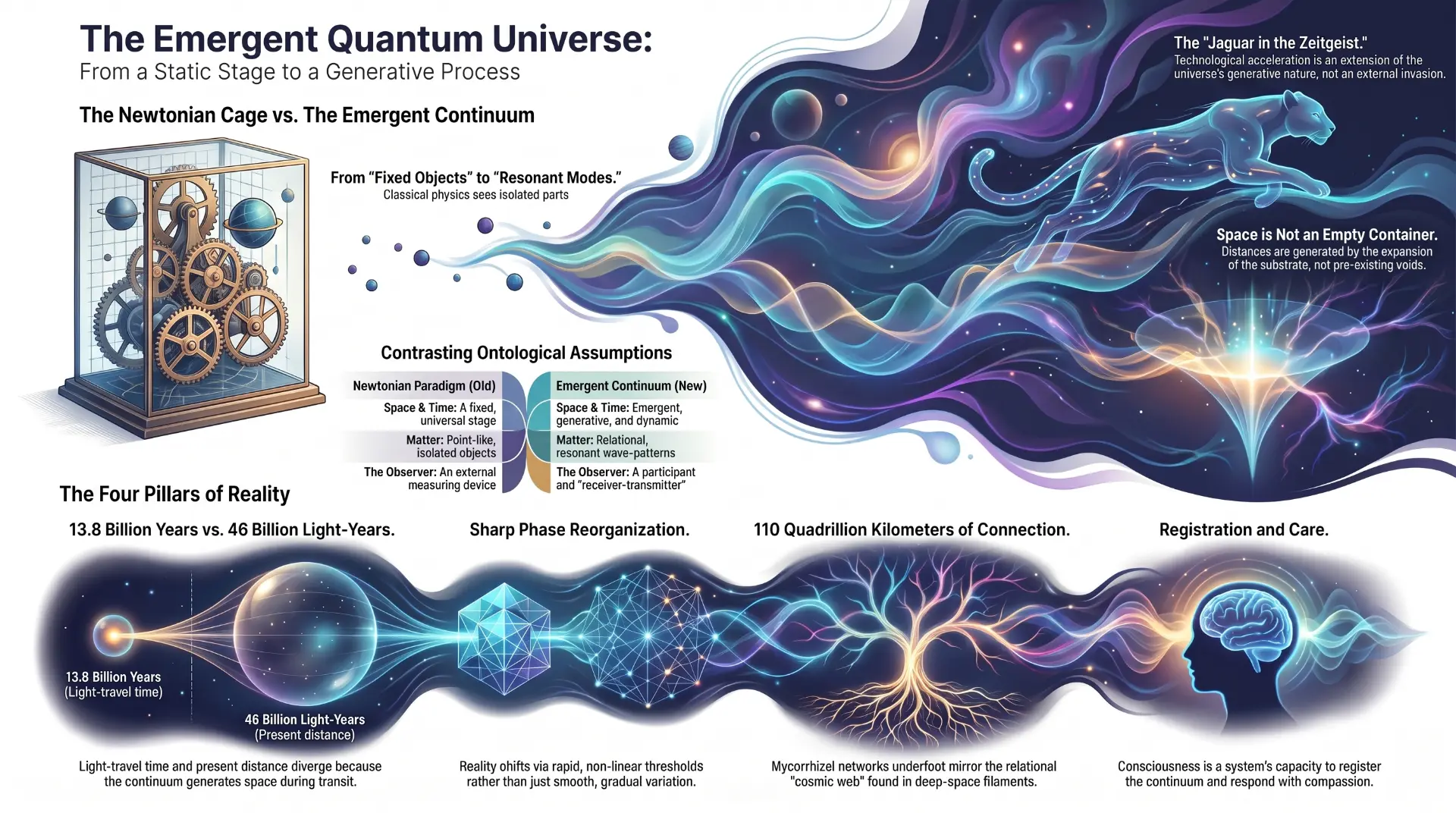
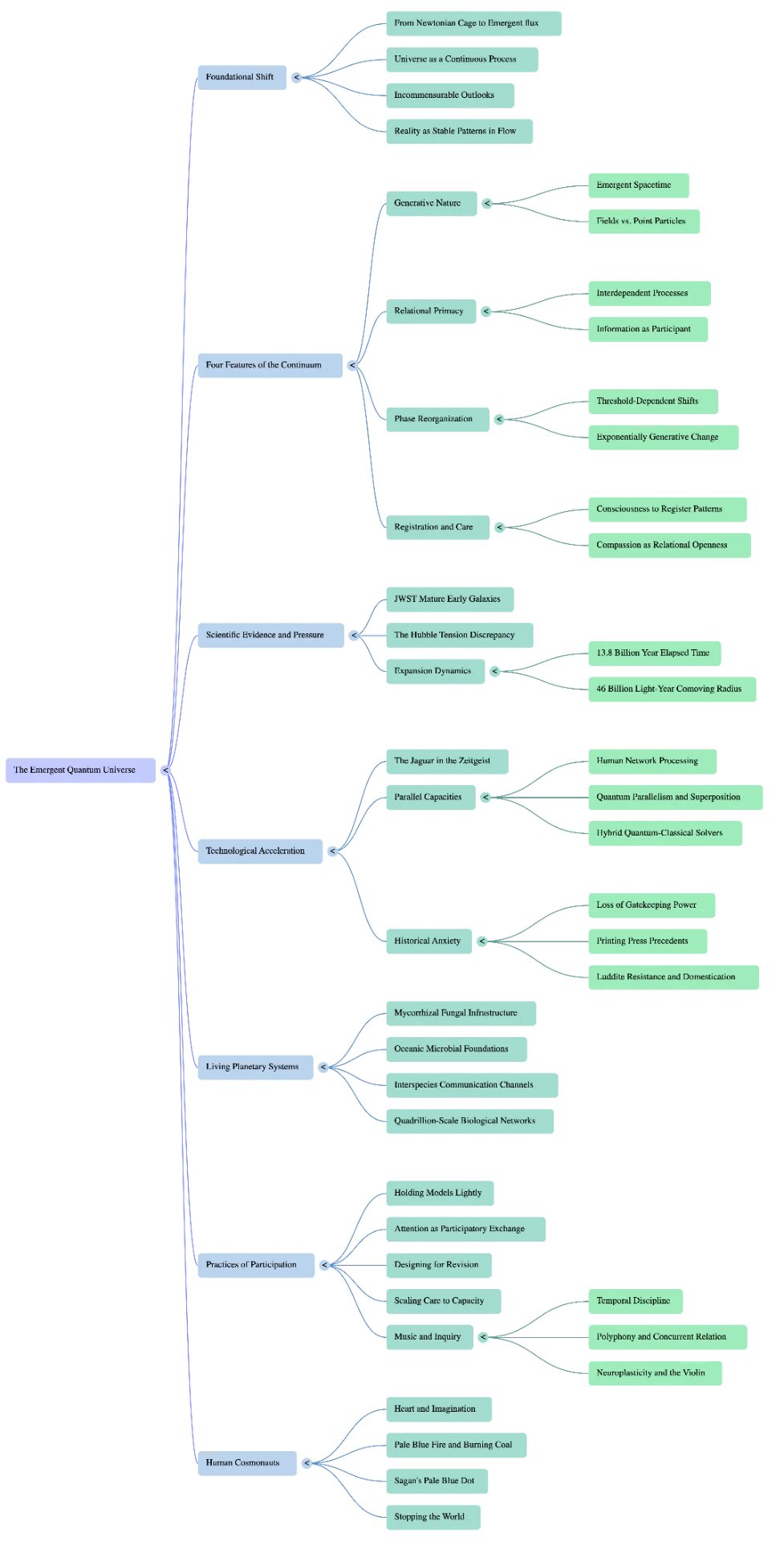
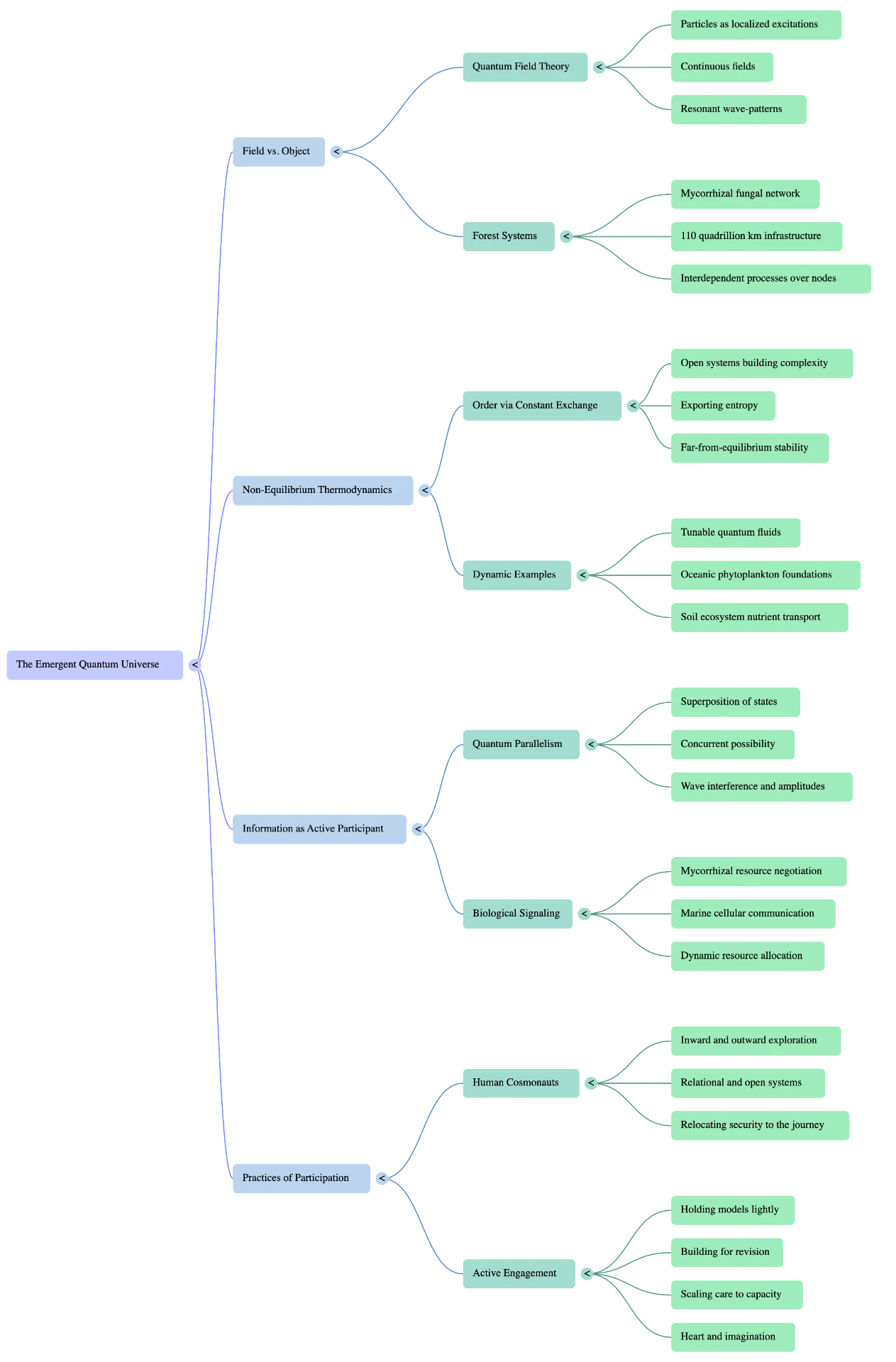
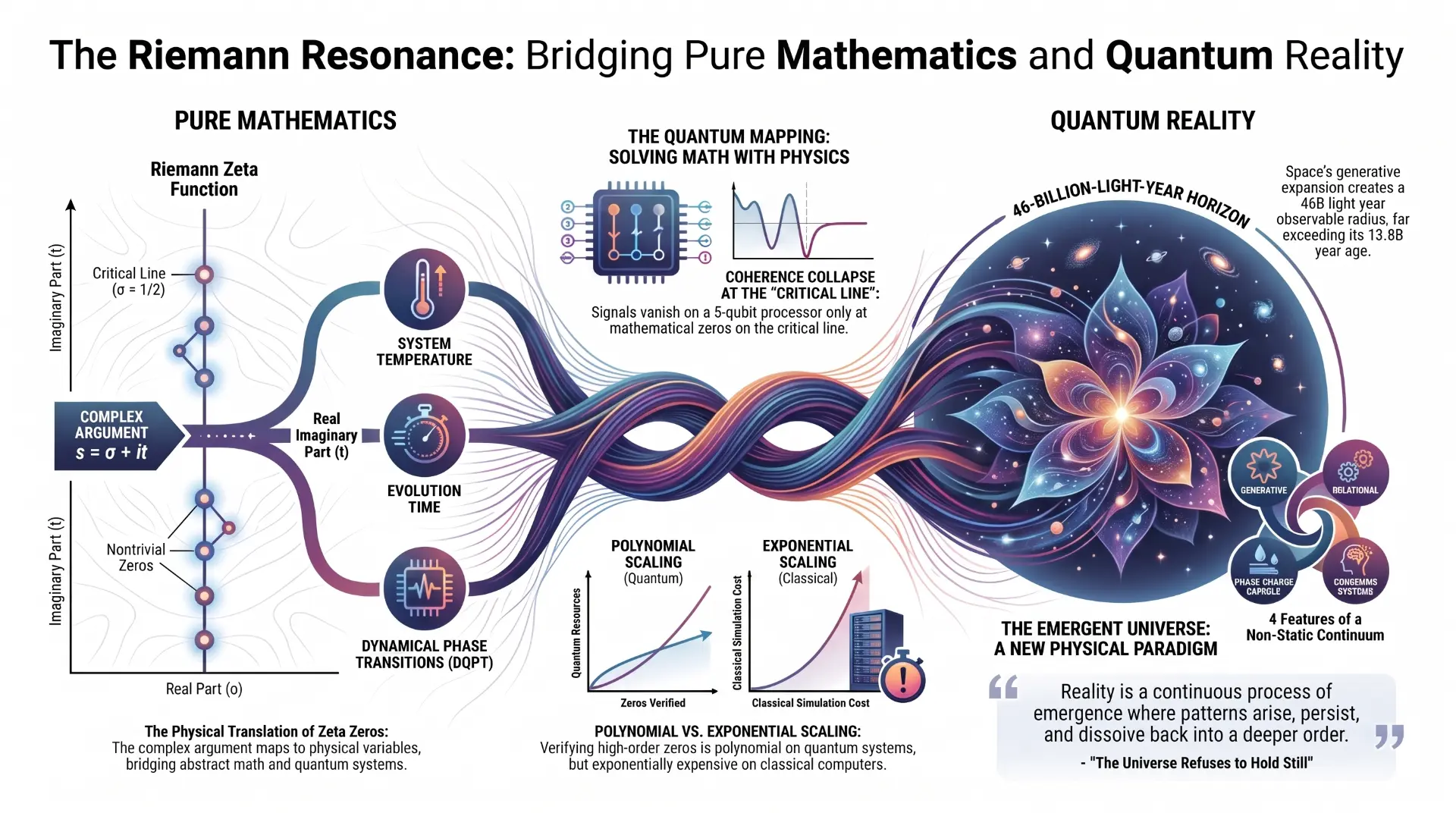
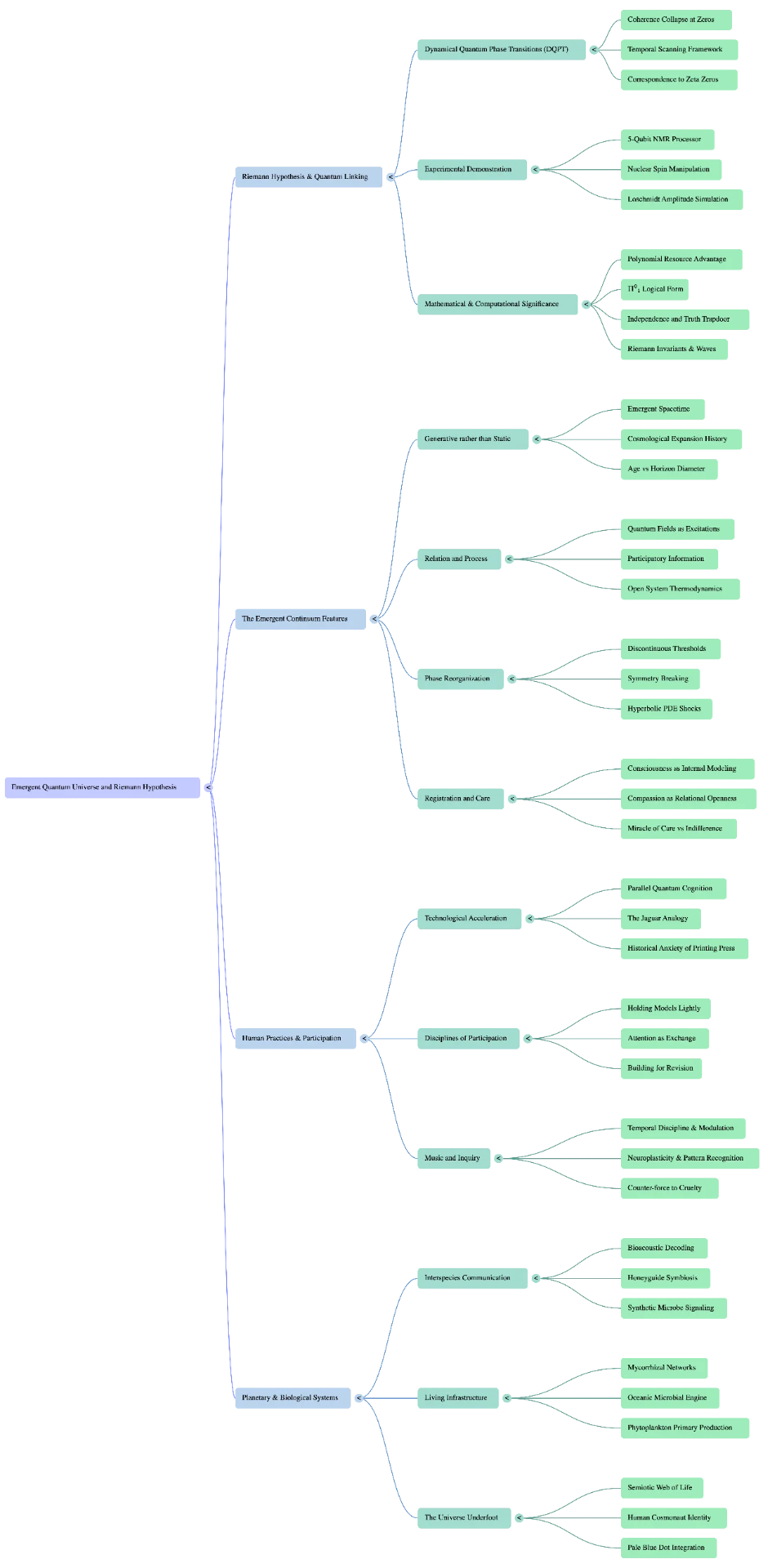
Five visual summaries of the argument: the paradigm shift laid out in one frame, the Riemann–quantum bridge, and three concept maps of the continuum's structure. A longer fourteen-plate sequence, The End of Stillness, walks the whole arc frame by frame.
Read it offline
The complete book is published here directly by the author. The reading edition below is the same eleven chapters set for print or screen — 100 pages, 6 × 9, with contents and page numbers.
Chapters are also being serialized as standalone essays. No paywall, no publisher, no gatekeeper between the work and a reader.