
A declared position of ignorance
Every previous chapter of this book has been written from something. Chapter 2 was written from a metabolic literature I have read for years. Chapter 4 was written from a water history I grew up inside. Chapter 5 was written from my own nervous system. This chapter is different, and I want that on the record before the first claim rather than buried in an apology at the end.
I do not know what quantum research will find at the scale of energy. Nobody does — that is what makes it research — but my ignorance is of a specific and larger kind. I am a citizen-scientist reading at the edge of a field whose practitioners spend decades acquiring the mathematics I am borrowing. The honest posture is not to pretend otherwise and not to fall silent either. It is to do what this book has done at every other scale: state what is established, state what is open, state what would settle it, and refuse to let enthusiasm cross the line into assertion.
So this chapter is written as a ledger of the frontier rather than a report from it. Six research fronts. For each: the question, what is actually established, what remains open, what observation would falsify the hopeful reading, and what the entry is worth in joules if it lands. Two of the six are my own work, published in an archive I edit and not refereed by anyone else, and they are marked as such wherever they appear. A ledger that flatters its own author is not a ledger. The Department of Energy's quantum information science portal gives the official map of the territory; the six fronts below are my own selection from it.
Three different claims, routinely confused
Before the fronts, a piece of hygiene. The phrase quantum energy is doing at least three unrelated jobs in public conversation, and most of the confusion in this area comes from letting them share a sentence.
The first claim is that quantum mechanics describes energy at small scales. This is not a frontier; it is the settled floor of twentieth-century physics. Band structure in a semiconductor, the photoelectric effect in a solar cell, the binding energy released in fission — all of it is quantum mechanics already doing industrial work. Anyone who tells you quantum energy is coming has not noticed that roughly a third of the world's electricity already depends on it.
The second claim is that quantum computation will let us design energy systems we currently can only discover by trial. This is a real and testable proposition with a specific target, and it is where I think the largest identified prize sits.
The third claim is that quantum mechanics offers a new source of energy — vacuum extraction, zero-point harvesting, some loophole in the bookkeeping. This claim is consistently false, and the reasons it is false are not fussy technicalities. They are the same conservation argument this whole volume is on trial for. I have given it a section of its own rather than a footnote, because refusing something clearly is a form of rigour.
The floor, stated first
Two numbers hold up everything that follows.
The first is Carnot's. No heat engine converts thermal energy to work with efficiency greater than one minus the ratio of the cold reservoir temperature to the hot. This is not an engineering limitation awaiting a clever fix. It is a consequence of the second law, and it applies to a helium turbine, a fusion plant, and a mitochondrion equally.
The second is Landauer's. Erasing one bit of information in a system at temperature T dissipates at least kT ln 2 of energy as heat. At room temperature this is roughly three zeptojoules — a number so small it looks like a rounding error, and it was measured directly in 2012 in a single-bit optical trap.
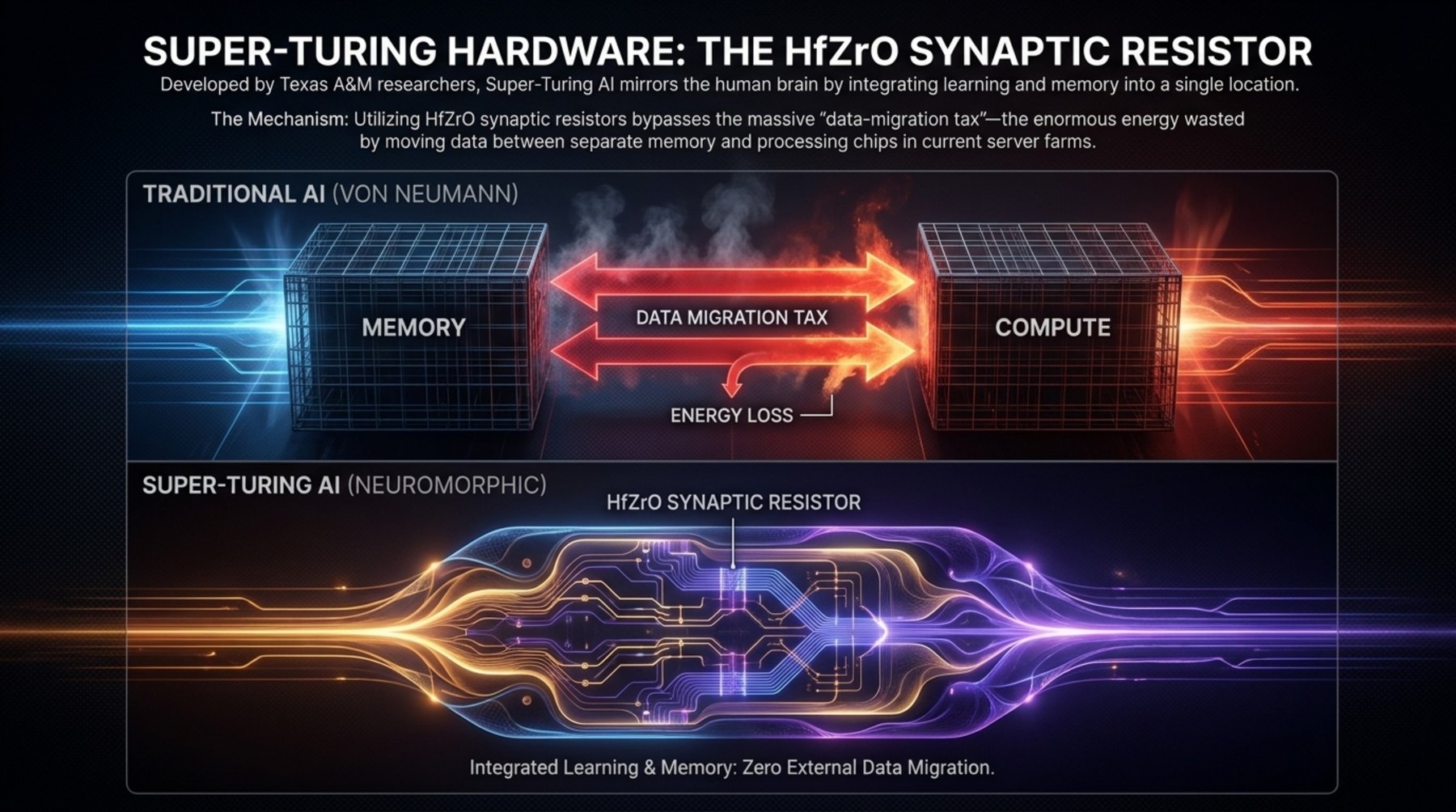
Put the second number beside the compute bill from Chapter 2 and something clarifies immediately. Current digital hardware dissipates somewhere in the region of a billion times the Landauer bound per logical operation. The physics is not the constraint. The engineering slack is enormous — which means the energy cost of computation is a choice, made repeatedly, by people who have found it cheaper to buy more power than to buy more thought. Chapter 2 called brute force a human habit. Landauer says it is a habit with about nine orders of magnitude of room still in it, and that the bill we are currently paying is almost entirely voluntary.
The floor is not where we are standing. It is nine orders of magnitude below us, and we have been paying for the distance in water and grid capacity.
Six fronts, as ledger entries
Each entry below follows the same form the Chapter 3 ledger used for offloading decisions, adapted for research claims. The question. What is established. What is open. What would falsify the hopeful reading. What the entry is worth.
Front 1
Engineering threshold
Quantum catalysis
Can a chemical reaction be simulated well enough, at the quantum level, that we design a catalyst instead of discovering one?
- Established
- Ammonia synthesis by the Haber–Bosch process consumes on the order of one to two percent of world primary energy and underwrites the food supply of several billion people. Nitrogenase, a bacterial enzyme, performs the same nitrogen fixation at ambient temperature and pressure. The gap is not mysterious in principle: the enzyme's iron–molybdenum active site holds a strongly correlated electronic structure that classical quantum chemistry cannot solve at chemical accuracy.
- Open
- Whether a quantum computer of realistic size can resolve the FeMoco electronic structure, and whether that resolution translates into a manufacturable catalyst rather than an explanation of one.
- What would falsify it
- If accurate simulation of the active site is achieved and no industrially viable catalyst follows within a decade, the causal chain from simulation to synthesis is broken, and the argument that quantum computing pays for itself through chemistry loses its strongest case.
- Ledger value
- The single largest identified energy prize in quantum research. A room-temperature nitrogen fixation route would remove roughly one to two percent of global primary energy demand at a stroke and decentralize fertilizer production away from gas-fed chokepoints.
Front 2
Author's own program
Spectral methods in neutronics
Can the statistics of a nuclear spectrum replace the simulation of it?
- Established
- Random matrix theory entered physics as a description of heavy-nucleus resonance spectra when the exact Hamiltonian was unavailable. Measured neutron resonance spacings in heavy nuclei follow random-matrix predictions closely — this is one of the better-verified statistical results in nuclear physics.
- Open
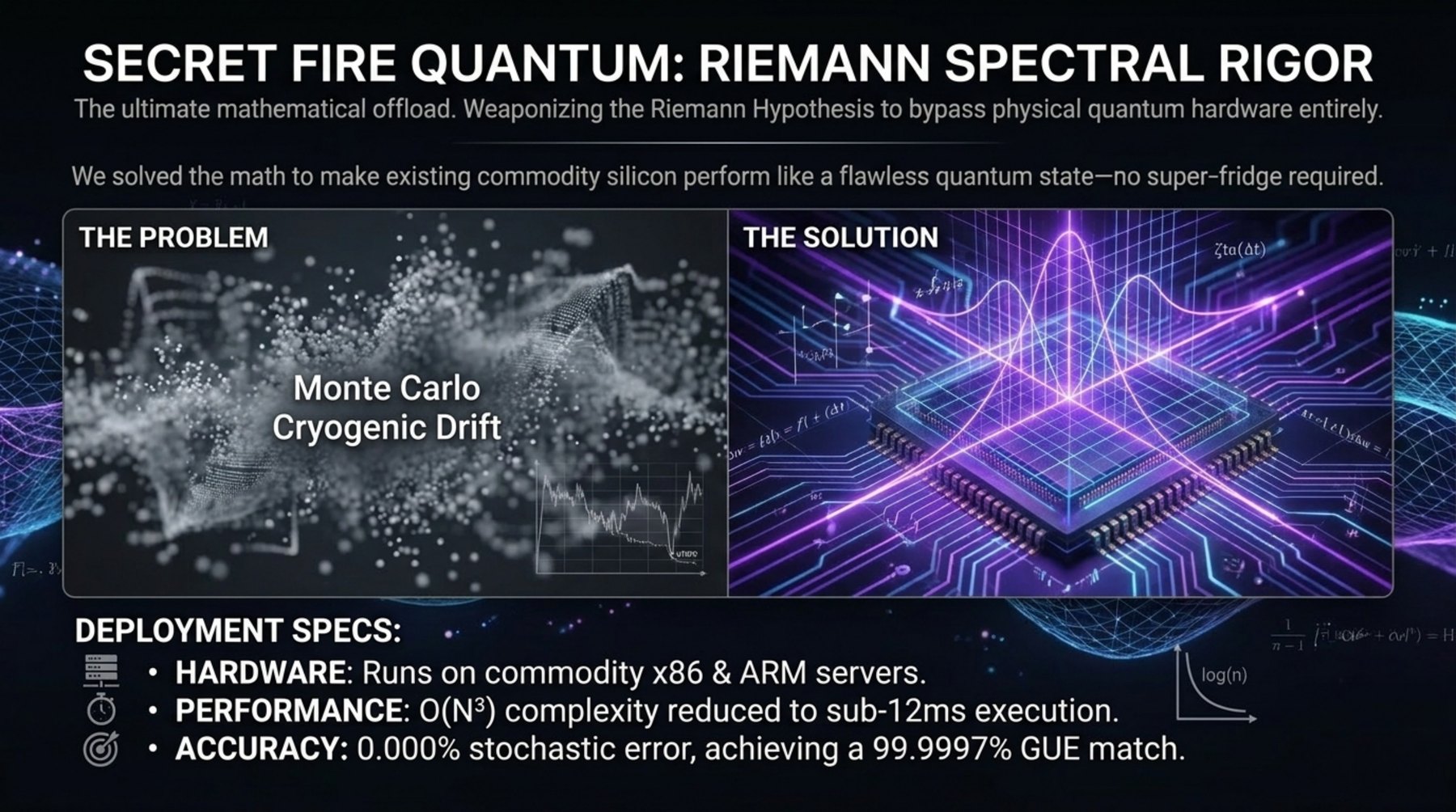
- Whether the Montgomery correspondence between Riemann zeta zeros and random-matrix eigenvalue statistics can be used as a computational shortcut in reactor transport, retiring some Monte Carlo sampling for analytical closure.
- What would falsify it
- If the analytical closure fails to reproduce benchmark transport results within accepted tolerance, or if its wall-time advantage disappears at realistic geometry, the program is finished. That test is ordinary and available.
- Ledger value
- Not a new energy source. A reduction in the compute cost of designing and licensing reactors — which is to say, a reduction in the compute bill on the very loop this book is auditing.
Front 3
Contested
Coherence in biological energy transfer
Does life already use quantum coherence to move energy efficiently, and if so can it be copied?
- Established
- Photosynthetic light-harvesting complexes transfer excitation energy with very high quantum efficiency. Long-lived oscillations were observed in two-dimensional spectroscopy of these complexes and were initially read as electronic coherence.
- Open
- The reading did not hold cleanly. The principal reassessment attributes the long-lived signal to vibrational rather than electronic coherence. Whether any functional advantage is conferred by coherence in a warm, wet, noisy protein remains genuinely unsettled.
- What would falsify it
- A synthetic light-harvesting device that reproduces the claimed coherence and shows no efficiency advantage over an incoherent design of matched geometry would settle it in the negative.
- Ledger value
- If real and copyable, an improvement in the capture stage of solar conversion. If not, the honest outcome is that biology is very good at geometry and very ordinary at quantum mechanics — which is itself worth knowing.
Front 4
Early experiment
Quantum thermodynamics
What do the laws of thermodynamics become when the working substance is a handful of quantum degrees of freedom?
- Established
- The field is real and productive. Landauer's bound — a minimum of kT ln 2 dissipated per erased bit — has been measured in the laboratory. Collective charging effects in engineered quantum systems have been demonstrated, including superabsorption in an organic microcavity.
- Open
- Whether any of it scales. The collective-charging result is a claim about charging power, not stored energy density, and it is routinely misreported as the latter.
- What would falsify it
- If the collective speedup vanishes at any device size large enough to matter, the practical claim collapses while the physics remains true. This is the likeliest outcome and should be stated as such.
- Ledger value
- In the near term, a sharper floor rather than a new ceiling. Landauer tells us how much of the compute bill in Chapter 2 is physics and how much is engineering slack — and the answer is that almost all of it is currently slack.
Front 5
Engineering threshold
Fusion and the wall-plug distinction
Has fusion produced net energy, and what does the word net mean in that sentence?
- Established
- In December 2022 an inertial confinement experiment achieved target gain greater than unity: the fusion yield exceeded the laser energy delivered to the target. The result has been repeated and improved.
- Open
- Facility gain — energy out against energy drawn from the grid to run the facility — remains far below unity. Every remaining problem is engineering: driver efficiency, repetition rate, tritium breeding, first-wall survival.
- What would falsify it
- The claim under test is not whether fusion works but whether it arrives inside the horizon of the problems in this book. If no facility demonstrates sustained wall-plug gain by mid-century, fusion is a twenty-second-century technology and must be excluded from every ledger written for this one.
- Ledger value
- Excluded from the working ledger of this book. Not because it is impossible, but because a technology with an undetermined arrival date cannot be borrowed against.
Front 6
Author's own program
Thermal transport and the cooling constraint
Can heat be moved out of dense compute without spending water?
- Established
- The water footprint of data centers is substantially indirect — attributable to the electricity consumed rather than to on-site evaporation — and the on-site share is still large enough to matter locally in dry basins.
- Open
- Whether closed-loop gas cycles, dry heat rejection, and engineered thermal materials can carry the load in regions where consumptive water use is ethically prohibitive.
- What would falsify it
- A closed-loop dry cycle that cannot hold steady-state efficiency within a stated margin of an evaporative baseline is not a humanitarian alternative. It is a worse plant with better public relations.
- Ledger value
- This is where the quantum scale meets the civic one. The physics of heat rejection is not exotic. The politics of who gets the water, from Chapter 4, is.
The nitrogen case, at length
Front 1 deserves more than a table entry, because it is the clearest worked example of what quantum research at the scale of energy actually looks like when it is not being oversold.
Roughly one to two percent of the world's primary energy is spent pulling nitrogen out of the air and fixing it into ammonia, and a very large fraction of the people currently alive are alive because that process exists. It runs at several hundred degrees and several hundred atmospheres, over an iron catalyst, because those are the conditions under which the triple bond in atmospheric nitrogen can be persuaded to break at industrial rate.
A bacterium in the soil does the same chemistry at ambient temperature and pressure. It uses nitrogenase, whose active site — an iron–molybdenum cluster called FeMoco — has an electronic structure so strongly correlated that classical quantum chemistry cannot solve it to chemical accuracy. Not for want of computing power in the crude sense. The cost of the exact treatment scales in a way that no classical machine will ever outrun.
This is the honest case for quantum computing as an energy technology, and notice its shape. The quantum computer produces no energy. It produces an answer — a description of how a catalyst works — which a chemist might then use to build one. Every joule of the benefit is downstream, contingent, and separated from the simulation by a decade of materials engineering that nobody has done yet.
It is also the largest single number on the frontier. Ambient-pressure nitrogen fixation would take one to two percent of global primary energy off the ledger permanently, and it would take fertilizer production off the natural-gas chokepoint that Chapter 4 mapped. A farmer who can fix nitrogen locally is not standing at anybody's valve.
Which is why I want the falsifier stated as plainly as the hope. Suppose the simulation succeeds. Suppose we obtain a complete and accurate description of the FeMoco mechanism, and a decade later there is still no industrial catalyst. Then the chain from understanding to capability is broken at a joint most of us assumed was solid, and the case for quantum computing paying for its own energy bill loses its best argument. That would be a real result. It would tell us something about the relationship between knowing and making that this book, which is a book about offloading, would need to absorb.
Why the spectral route interests me, and where it is vulnerable
Front 2 is my own, and I am going to hold it to a harder standard than the others for exactly that reason.
The starting point is not speculative. Random matrix theory entered physics because Wigner needed to say something about the resonance spectra of heavy nuclei when the exact Hamiltonian was hopeless. His move was to give up on the individual levels and describe their statistics instead — and it worked. Measured neutron resonance spacings in heavy nuclei follow random-matrix predictions to a degree that is, frankly, startling. This is one of the better-verified statistical results in nuclear physics, and it is the ground the whole program stands on.
The second ingredient is stranger and less secure. In 1973 Montgomery computed the pair correlation of the zeros of the Riemann zeta function and found the same functional form that governs eigenvalue spacings in the Gaussian Unitary Ensemble. Numerical work since has confirmed the agreement to very high precision. It remains a conjecture. There is no proof, and there is no accepted physical mechanism explaining why an object from analytic number theory should share statistics with a nuclear spectrum — though the Bohigas–Giannoni–Schmit conjecture supplies at least a family resemblance: quantum systems whose classical limits are chaotic tend to show these statistics, whatever they are made of.
The research question is narrow and I want to keep it narrow. If the spacing statistics are shared, can the analytically tractable side of the correspondence be used as a computational shortcut on the physical side — replacing some Monte Carlo sampling in neutron transport with closed-form spectral identities? That is not a claim about number theory. It is a claim about wall-clock time on a classical server.
And it is completely ordinary to test. Run the closure against established transport benchmarks. If it does not reproduce them within accepted tolerance, it is wrong. If it reproduces them but loses its time advantage at realistic geometry, it is useless. Either outcome ends the program, and neither one would be a tragedy — because the ledger value here was never a new energy source. It was a reduction in the compute cost of reactor design, which is to say a reduction in one line of the same bill Chapter 2 opened.
I state it this way because a reader is entitled to know when an author has a stake. I do. The correct response to having a stake is not to suppress the work; it is to write the falsifier down first and in public.
The guardrail: low energy, not high
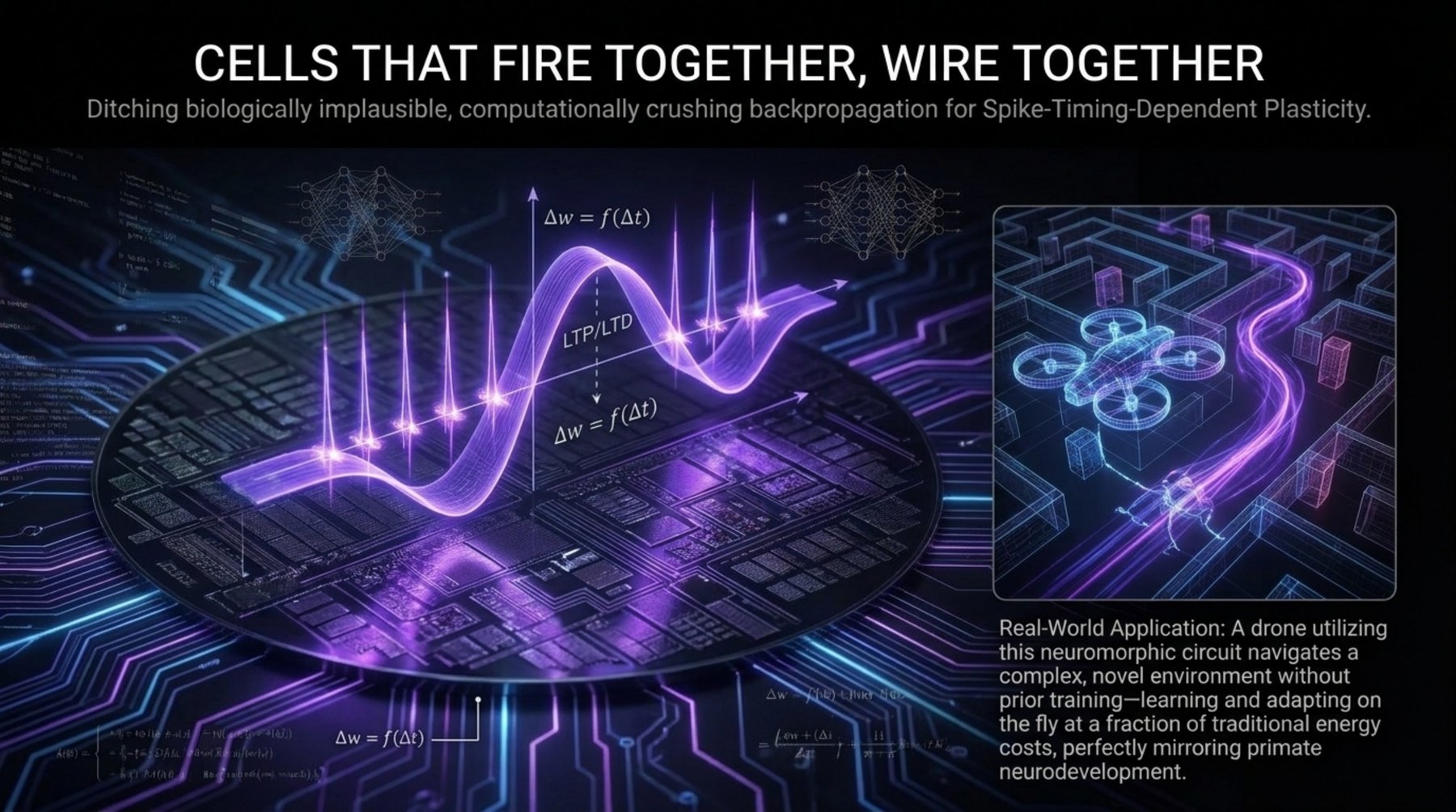
A pattern runs through the six fronts that I did not impose on them and only saw once they were laid out side by side. The entries with the best ratio of promise to plausibility are all low-energy approaches. Catalysis at ambient temperature. Statistical closure instead of brute sampling. Coherent transfer at physiological temperature. Thermal rejection without phase change.
The entries that demand escalating input energy — bigger colliders, bigger drivers, bigger lasers — are the ones with undetermined arrival dates. This is the guardrail carried over from the previous volume: the productive frontier lies in tuned, low-energy coupling rather than in escalating force. I proposed it there on aesthetic and structural grounds. Here it turns out to have a budgetary defence as well. A method that requires more energy to investigate energy is running the wrong direction on its own ledger, and it will be defunded before it is disproved.
This is not a claim that high-energy physics is worthless. It is a claim about where a citizen-scientist with finite resources, and a civilization with a constrained grid, should place attention. Chapter 2 named brute force as a human cognitive habit. It is a habit in the laboratory too.
Four refusals
A frontier chapter that only enumerates hopes is advertising. Here are four claims that circulate constantly in this territory and that the physics does not support. Each refusal is offered with its reason, because a refusal without a reason is just a different kind of assertion.
Energy extracted from the quantum vacuum
No. Zero-point energy is real in the sense that it appears in the standard formalism and produces measurable effects, the Casimir force among them. But the Casimir force is conservative: the plates must be pulled apart again, at cost. There is no cycle. A device that returns to its initial configuration has returned the energy.
Conservation of energy suspended at the quantum scale
No. The energy–time uncertainty relation is not a licence for temporary violation of conservation; it is a statement about the width of energy eigenstates in states of finite duration. Conservation follows from time-translation symmetry, and where that symmetry holds, so does the bookkeeping.
Quantum computing as an energy source
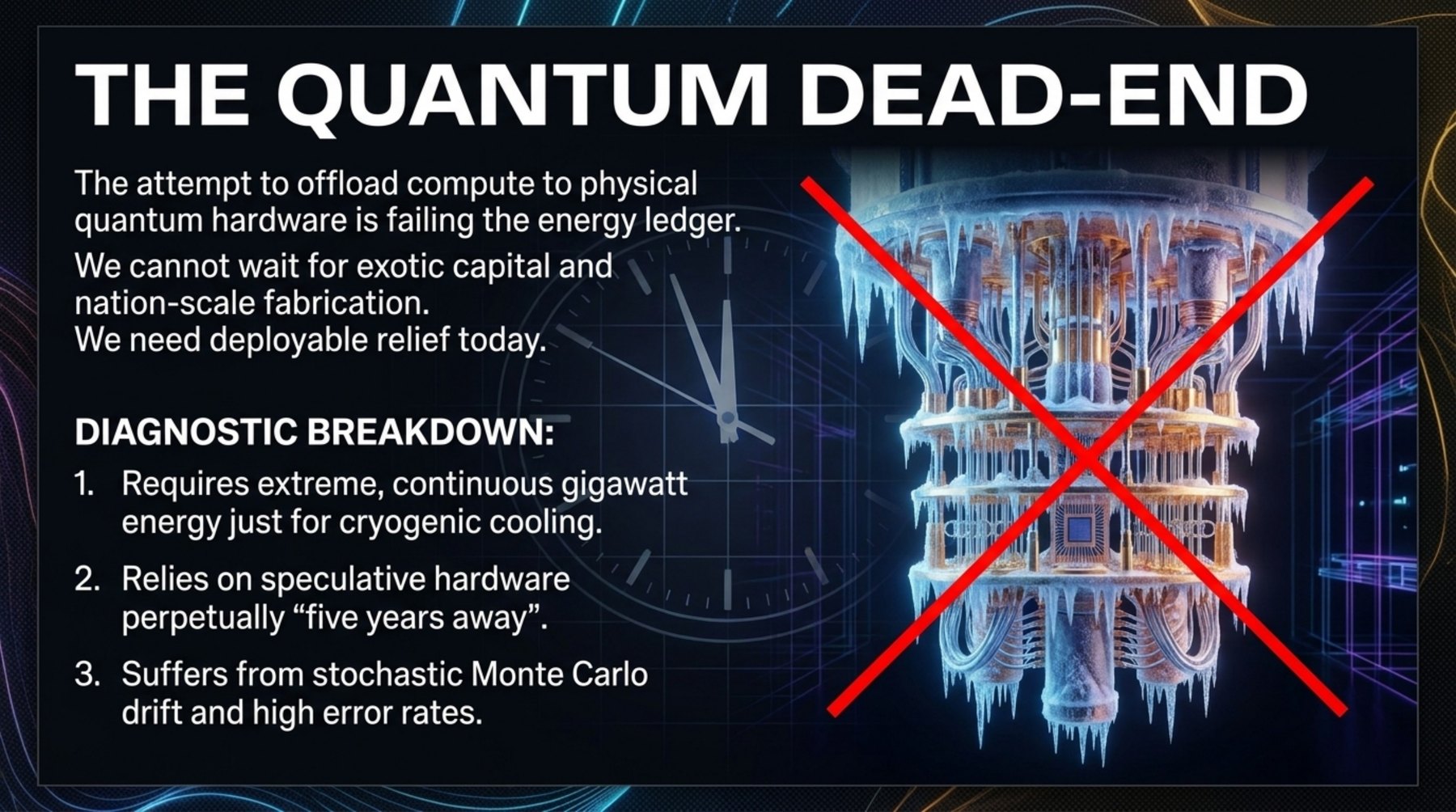
No, and the confusion is worth naming. Quantum computing is a consumer of energy that may reduce the energy cost of certain calculations. Error correction overhead currently makes it a very expensive consumer. Its energy value is entirely indirect: through the chemistry it might solve.
Coherence as a general-purpose efficiency multiplier
Not demonstrated. Decoherence times in warm, wet systems are short, and the burden is on any claim of functional advantage to show a matched incoherent control that performs worse. Most such claims have not met it.
The vacuum case is worth one more sentence because it is the most seductive. Zero-point energy is not a fiction — it appears in the standard formalism and it produces measurable forces. But the Casimir force is conservative. Letting the plates come together releases work; separating them costs the same work back. There is no cycle, and a device with no cycle is not a source. The energy was never sitting there waiting. It was in the configuration, and you paid for the configuration.
What this chapter owes the trial
This volume carries an obligation set out in the Opening: it must validate or invalidate the earlier reading of conservation of energy as a relationship rather than a bare bookkeeping identity. The quantum scale is the sharpest test bench available, and it would be evasive to leave this chapter without stating what it returns.
The relational reading survives here, but it survives in a constrained form, and the constraint is worth more than the survival. Noether's theorem gives conservation as a consequence of time-translation symmetry. That is already a relational statement — energy is conserved because of a symmetry of the system, not as a brute fact tallied by an external clerk. The bookkeeping is real precisely because the relationship is.
But the relational reading buys nothing that the ledger-only reading does not also buy. Every one of the four refusals above is returned identically by both accounts. If the relational framing were doing independent work, it would predict at least one case where the two diverge — some regime where symmetry is broken and the accounting fails in a specific, observable way. Cosmological expansion is the place to look, and that is Chapter 10's problem, not this one.
So the verdict returned from the quantum bench is: consistent, unfalsified, and not yet load-bearing. I would rather write that than a stronger sentence I cannot defend.
What it is like to learn this from outside
One last thing, and it belongs to this book rather than to physics.
Chapter 5 argued that the only tempo available to an individual is the somatic one — the body learning — and that the way to know whether a method trains it is to live inside the method. This chapter is that argument's next instalment, and it has been considerably less comfortable than the last one.
Working through this material with machine assistance produced exactly the phenomenon Chapter 3 warned about, in real time and aimed at me. The model will hand over a fluent paragraph about quantum coherence in photosynthesis on request. The paragraph reads well. It is also, if you accept it unexamined, a dependent offload of the purest kind: I would possess a sentence and not a fact, and I would have no internal means of telling the difference. The only defence I have found is the one this chapter is built out of — demanding, for every claim, the falsifier alongside the hope. You cannot fake a falsifier. Producing one requires knowing what the claim actually asserts.
That is the whole method, and it is available to anyone. The frontier of a field you were not trained in is not closed to you. It is expensive to enter, in exactly the metabolic sense Chapter 5 described, and the price of admission is the willingness to write down what would prove you wrong before you write down what you hope is right.
I do not know what quantum research will find at the scale of energy. I know what it is not permitted to find, I know which six doors are open, and I know what would close each of them. For a beginning, that is not nothing.
The prediction
One claim, stated so it can be checked. Over the next two decades the energy contribution of quantum research will arrive overwhelmingly through chemistry and materials — catalysts, conductors, thermal interfaces — and not through any new source, any new cycle, or any device that stores energy by quantum means. If a quantum energy source reaches commercial deployment in that window, this prediction is wrong and the chapter should be rewritten around whatever it was.
Chapter 7 turns from the frontier back to the ground and puts the same accounting on the one institution that decides whether any of this can be carried: education. Exact benefits, decreased costs, and the endocrine difference between forcing a mind and allowing one.
Endnotes
- 1. Landauer, Rolf. 'Irreversibility and Heat Generation in the Computing Process.' IBM Journal of Research and Development 5, no. 3 (1961): 183–91. The bound kT ln 2 per erased bit. Cited for the existence of a thermodynamic floor under computation, not for any claim that current hardware operates near it. ↩
- 2. Bérut, Antoine, et al. 'Experimental Verification of Landauer's Principle Linking Information and Thermodynamics.' Nature 483 (2012): 187–89. The first clean laboratory measurement of the Landauer bound in a single-bit memory. ↩
- 3. Wigner, Eugene P. 'Characteristic Vectors of Bordered Matrices with Infinite Dimensions.' Annals of Mathematics 62, no. 3 (1955): 548–64. The origin of random matrix theory as a description of heavy-nucleus resonance spectra — statistics standing in where the exact Hamiltonian is unavailable. ↩
- 4. Haq, R. U., A. Pandey, and O. Bohigas. 'Fluctuation Properties of Nuclear Energy Levels: Do Theory and Experiment Agree?' Physical Review Letters 48, no. 16 (1982): 1086–89. The Nuclear Data Ensemble: measured neutron resonance spacings in heavy nuclei follow random-matrix predictions. This is the empirical anchor for spectral methods in neutronics. ↩
- 5. Montgomery, Hugh L. 'The Pair Correlation of Zeros of the Zeta Function.' In Analytic Number Theory, Proceedings of Symposia in Pure Mathematics 24 (1973): 181–93. The pair correlation form 1 − (sin πα / πα)², identical to the GUE result. Odlyzko's numerical work through the 1980s confirmed the agreement to high precision. The correspondence remains a conjecture, not a theorem. ↩
- 6. Bohigas, O., M. J. Giannoni, and C. Schmit. 'Characterization of Chaotic Quantum Spectra and Universality of Level Fluctuation Laws.' Physical Review Letters 52, no. 1 (1984): 1–4. The conjecture that quantum systems with chaotic classical limits show random-matrix spectral statistics — the reason the same statistics recur across unrelated physical systems. ↩
- 7. Norton, K.W. 'Analytical Closure of Spectral Neutronics via Montgomery–GUE Universality.' Quantum Energy Research Journal I, no. 1 (2026). Author's own work, self-published and not externally refereed at time of writing. Cited here as a stated research program, explicitly not as an established result. ↩
- 8. Reiher, Markus, Nathan Wiebe, Krysta M. Svore, Dave Wecker, and Matthias Troyer. 'Elucidating Reaction Mechanisms on Quantum Computers.' Proceedings of the National Academy of Sciences 114, no. 29 (2017): 7555–60. The FeMoco resource estimate: the nitrogenase active site as the canonical target for quantum chemical simulation beyond classical reach. ↩
- 9. Smil, Vaclav. Enriching the Earth: Fritz Haber, Carl Bosch, and the Transformation of World Food Production. Cambridge, MA: MIT Press, 2001. Cited for the scale of ammonia synthesis in the global energy budget and for the dependence of current human population on it. ↩
- 10. Engel, Gregory S., et al. 'Evidence for Wavelike Energy Transfer through Quantum Coherence in Photosynthetic Systems.' Nature 446 (2007): 782–86. The result that opened the quantum-biology debate. Its interpretation is contested — see note 11. ↩
- 11. Duan, Hong-Guang, et al. 'Nature Does Not Rely on Long-Lived Electronic Quantum Coherence for Photosynthetic Energy Transfer.' Proceedings of the National Academy of Sciences 114, no. 32 (2017): 8493–98. The principal reassessment: the long-lived oscillations are attributed to vibrational rather than electronic coherence. Cited so the earlier claim is not left standing unchallenged. ↩
- 12. Kosloff, Ronnie. 'Quantum Thermodynamics: A Dynamical Viewpoint.' Entropy 15, no. 6 (2013): 2100–28. A survey of the field that asks what the laws of thermodynamics become when the working substance is a few quantum degrees of freedom rather than a bulk fluid. ↩
- 13. Campaioli, Francesco, Felix A. Pollock, and Sai Vinjanampathy. 'Quantum Batteries — Review Chapter.' In Thermodynamics in the Quantum Regime, Springer, 2018. Cited for the collective-charging speedup result, which is a scaling claim about charging power, not a claim about stored energy density. ↩
- 14. Quach, James Q., et al. 'Superabsorption in an Organic Microcavity: Toward a Quantum Battery.' Science Advances 8, no. 2 (2022): eabk3160. An experimental demonstration of collective superabsorption. Device-scale and far from application; included as evidence the effect is real, not as evidence it is useful yet. ↩
- 15. Abu-Shawareb, H., et al. (Indirect Drive ICF Collaboration). 'Achievement of Target Gain Larger than Unity in an Inertial Fusion Experiment.' Physical Review Letters 132 (2024): 065102. The National Ignition Facility result of December 2022 and its confirmations. Target gain exceeded unity; facility wall-plug gain did not, and the distinction is the whole of the engineering problem. ↩
- 16. Siddik, Md Abu Bakar, Arman Shehabi, and Landon Marston. 'The Environmental Footprint of Data Centers in the United States.' Environmental Research Letters 16, no. 6 (2021): 064017. Carried forward from Chapter 4 for the water accounting behind the cooling constraint. ↩
- 17. Norton, K.W. 'Closed-Loop Helium Thermodynamics for Waterless Reactor Operation in Drought Zones.' Quantum Energy Research Journal I, no. 3 (2026). Author's own work, self-published and unrefereed. Cited as a design proposal under test, not as a demonstrated cycle. ↩
- 18. Norton, K.W. The Evolving Receiver: Riemann, Quantum Science, and Evolution. Standing Wave Editions, 2026. The low-energy resonance guardrail — the argument that the productive frontier lies in tuned, low-energy coupling rather than in escalating collision energy — is developed there. ↩
- 19. Noether, Emmy. 'Invariante Variationsprobleme.' Nachrichten von der Gesellschaft der Wissenschaften zu Göttingen (1918): 235–57. Conservation of energy as a consequence of time-translation symmetry. This is the load-bearing result behind the Opening chapter's definition and behind the refusals set out in this chapter. ↩
- 20. Milonni, Peter W. The Quantum Vacuum: An Introduction to Quantum Electrodynamics. San Diego: Academic Press, 1994. Cited for the standard treatment of zero-point energy and for the reason the Casimir effect is not an energy source: the force is conservative and the configuration must be reset at cost. ↩
- 21. U.S. Department of Energy. 'Quantum Information Science.' Energy.gov. https://www.energy.gov/topics/quantum-information-science. The federal portal for DOE quantum information science programs, including quantum computing, sensing, and networking, with links to the National Quantum Initiative and the five Quantum Information Science Research Centers. ↩