
Ariadne's Thread: A Set of Literary Engineers
Follows Play It As It Lays
By KW Norton
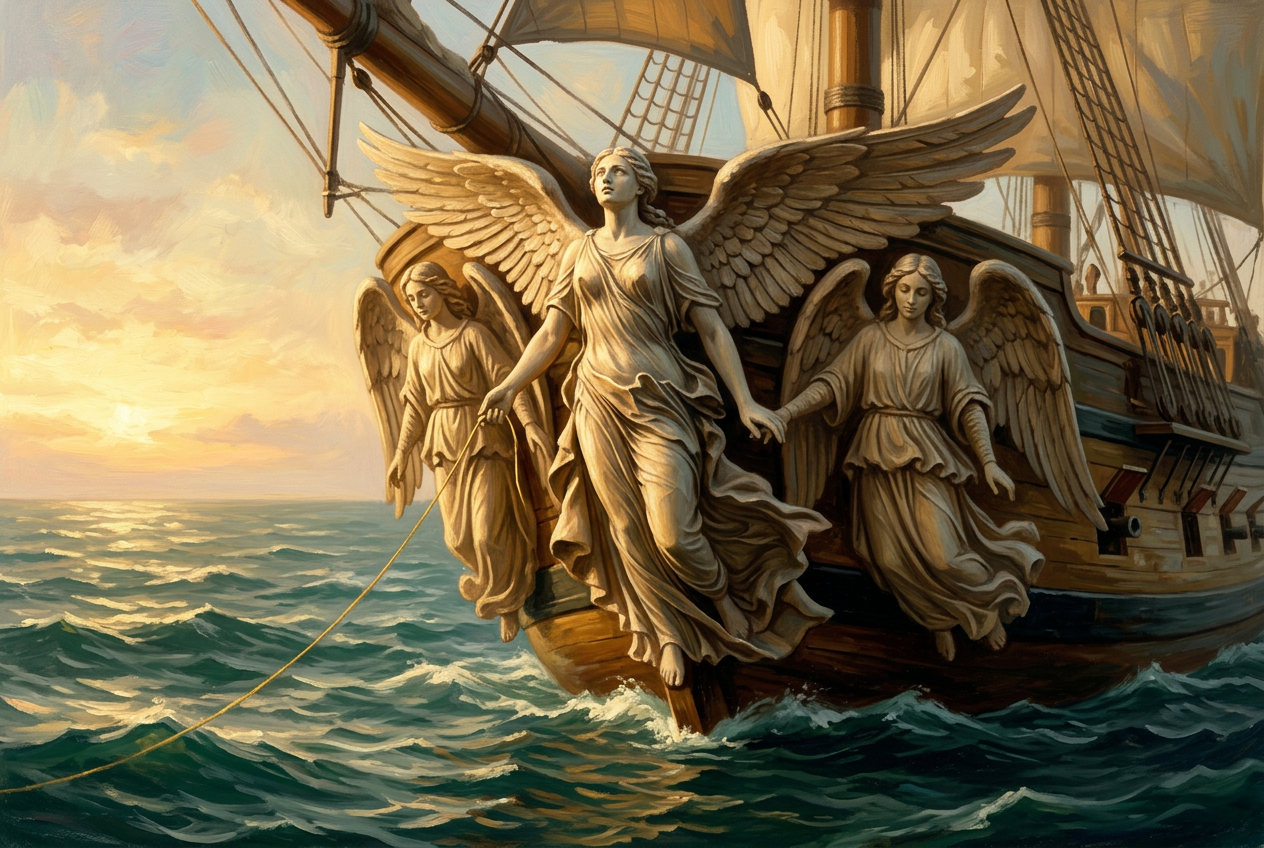
In tracing the writers who most affected my own desire to become a writer I see a thread of truth which irony brings down through the parade of human history.
Truth which serves to transform the lives of young writers into crucibles where the temperature and pressure is high enough to build new ideas.
Didion and Thompson: The Fraternal Twins of California Dreaming
Joan Didion and Hunter S. Thompson, twins from different mothers, stood as two bookends of the so-called “new journalism” which emerged.
Hunter S. Thompson: Thompson, and his wilder, less tame, more terrifying, Gonzo Journalism, handed down a gauntlet of brilliantly incendiary literary fire power - daring new writers to pick it up and win the relay race he began. Thompson infamously threw graphic art into his literary rocket ship.
Joan Didion: Didion was the composed, genteel, female version of Thompson. Like a psychiatrist who descended from the wild unpredictability of the Donner Party, she took her scalpel of a sharp mind to clinically dissect and perform a revealing autopsy on her own culture.
Kerouac, Snyder, and Brautigan: Exploding San Francisco Mythology
While some might categorize these writers as “the Beat Generation” I see them as the truth tellers who took on the mythology of California and the Golden Gate to breakdown the stereotypes.
Jack Kerouac: Kerouac brought a different kind of permission to young writers, introducing the removal of an inner critic, freeing them to think onto the page what thoughts took place in the mind.
Gary Snyder: Snyder brought a more serious sobriety to the wild children of the so called beat generation, taking on a more fatherly intellectual role and becoming a noted householder, lending a kind of respectability to life on the San Juan Ridge.
Richard Brautigan: Brautigan was the true wild child of the 1960’s writers but founded upon earlier American writers such as Nathaniel Hawthorne & Mark Twain. Brautigan brought true grounded American wit to the sober seriousness of the oh so hip 1960’s.
Joyce, Pynchon & Hoffer: The Literary Code Breakers
Joyce regarded literature and language as the master key to human psychology - freely rewriting the code of language by breaking the code first. Joyce considered himself a word smith, comparing his work to that of a black smith. While Pynchon the literary engineer used engineering to break down all the expected truisms into false choices.
James Joyce: Between his Ulysses and Dubliners, Joyce broke the code down into digestible luminous prose on the one hand and into indigestible code breaking on the other. Between Joyce’s lyrical rendition of snow and his transformation of English into a psychological treatise he introduced the literature of the 20th century.
Thomas Pynchon: Pynchon took his literary code breaking seriously, taking the objectivity of an engineer to his dubious, wry portrait of what it felt like to survive the first half of the 20th century. His prose lurched between such paradoxes as paranoia and anti-paranoia. Pynchon lingered between paradoxes, as a standing wave, for long enough to hear the screaming which came from across the sky.
Eric Hoffer: Eric Hoffer turned code breaking into a whole new blue collar art. In The True Believer, Hoffer freely brutalized the language to reveal things the upper classes would rather have kept quiet about. His former work as dockworker offered muscular authenticity to literary code breaking. Hoffer, in good company here, is the first to offer the process of Californication to young writers.
This writer invokes this motley crew of modern literary codebreakers and academic renegades to offer a much needed parallax identity to the pantheon of modern literary engineering.
← Play It As It Lays·Next: Ariadne: Unlikely Quantum Figurehead →
Comments
Loading conversation…
Sign in to join the conversation.