
Ariadne: Unlikely Quantum Figurehead
Follows Ariadne's Thread: A Set of Literary Engineers
By KW Norton
Some of us had to take the alternative off ramp for this second quarter of the 21st century - to decide we would work within contemporary parameters while also taking up the incendiary gauntlets handed down to us by our literary forebears.
I have shared my 20th century forebears in literary engineering, the ones who most help shape the architecture of my own literary code breaking.
The spectral luminosity of the thread, the classical architecture which I, & fellow modern writers, have inherited - stretches back to well before any designated antiquity.
I think of this thread as if it were spun down from pale blue fire, from some angelic thread of thermodynamics which is woven through our human bodies, woven through the fabric which composes the universe, and which is woven through the fabric of these words.
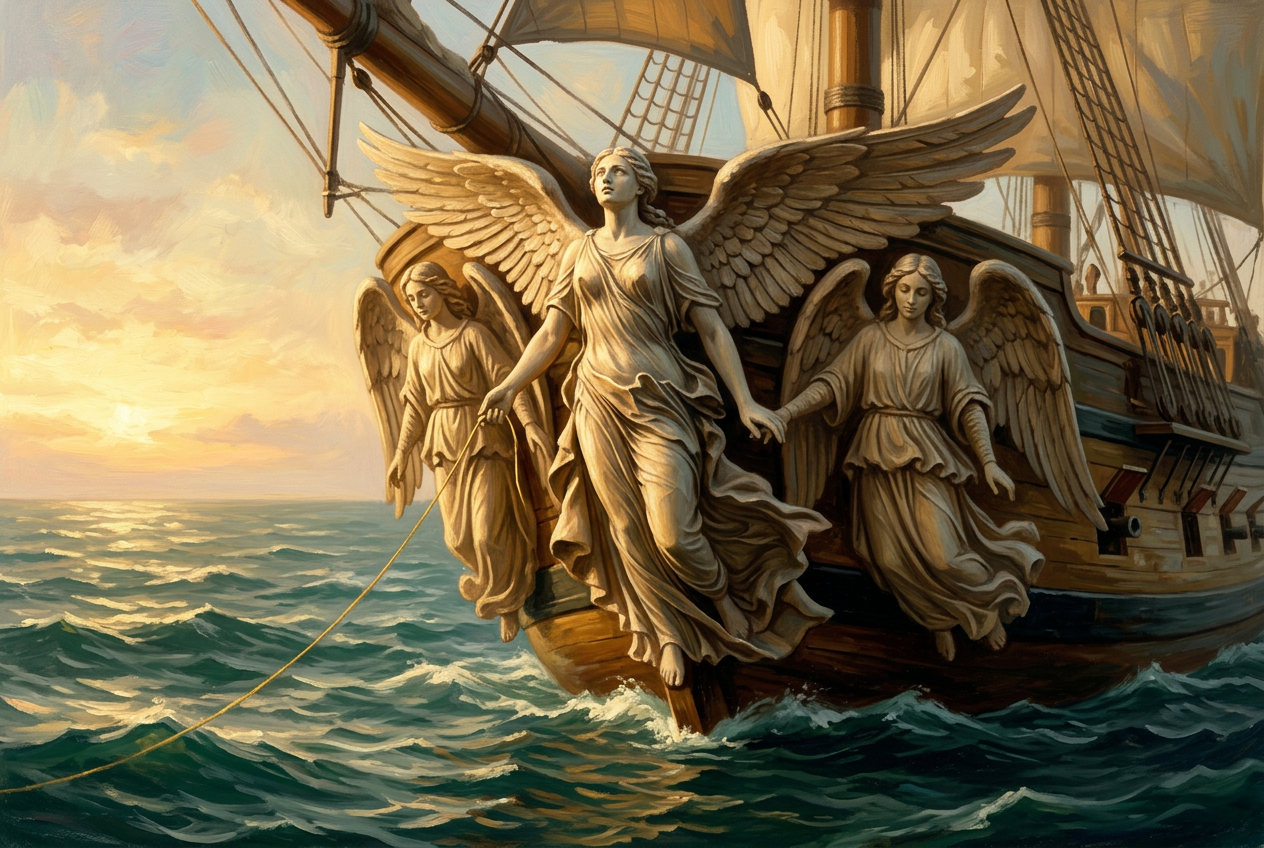
Ariadne is the hidden thread through so much of literary engineering she goes practically unnoticed, like a stowaway who accidentally found herself at the leading edge of a spectral ship.
01
The Spectral Thread of Thermodynamics
The concept of a “spectral thread of thermodynamics” reframes literature not as a collection of symbols, but as an active transfer of energy. If we view the systems architecture of words through the lens of physics, the literary movements of the 20th century stop looking like stylistic choices and start looking like varying states of entropy and combustion.
02
Miguel de Cervantes
Cervantes provided an illuminated thermodynamic literature 400 years before the words to describe it could be spoken. And provides an interesting Ariadne figure way ahead of Shakespeare.
03
Shakespeare
Shakespeare opens the thermodynamic door by deconstructing human characters and relationships into what becomes an almost psychiatric expose of modern culture. His Hamlet becomes the quintessential dispossessed modern man and Portia the quintessential modern woman.
04
Joyce
Joyce blows the gaskets and door jambs out of the picture and throws down language like someone possessed by both thermodynamic intensity and by coldly rational logic.
05
The Beats, Didion and Thompson
The Beats claim altogether new territory and take the whole conversation out into the streets and the natural world. While Didion and Thompson provide a dual autopsy - one conducted by a cold clinician and the other by a modern version of an outlaw county coroner.
06
From Camus to Brautigan
From Camus to Brautigan the code breakers take turns casting a decidedly jaundiced set of eyes and a hearty kaleidoscope of ironic detachment to the incendiary thermodynamic mix.
07
García Márquez and Magical Realism
If the other writers mentioned so far in the modern reframing of the literary code breakers existed as intellectual renegades, Marquez goes them one better. In his magical realism his characters barely touch the ground, barely exist in the language he invents to hold them. They become thermodynamic humans, so very real only Marquez's elegant prose keeps them in the book at all.
08
Pynchon
Pynchon engineers the thermodynamic drive of literature by forcing the combined neurotic worries of his Puritan ancestors into direct confrontation with both his paranoia & anti-paranoia and forces them to hear the screaming which comes across the sky.
09
Dylan
Dylan, in Visions of Johanna, says everything has been returned that was owed: as the fiddler now steps to the road while on the back of the fish truck which loads his conscience explodes. Meanwhile both Madonna and Johanna are nowhere to be seen while harmonicas play skeleton keys and the rain.
This chapter is still being written. The Shakespeare bridge and García Márquez are still to come.
← Ariadne's Thread: A Set of Literary Engineers
Comments
Loading conversation…
Sign in to join the conversation.