
The two previous chapters made claims that are testable but not yet tested. This chapter is about the infrastructure that would test them. The question is not only what to measure; it is how to measure in a way that does not reproduce the very pathologies the book has been tracking. A measurement system that tells its operators what they want to hear is worse than no measurement system at all.
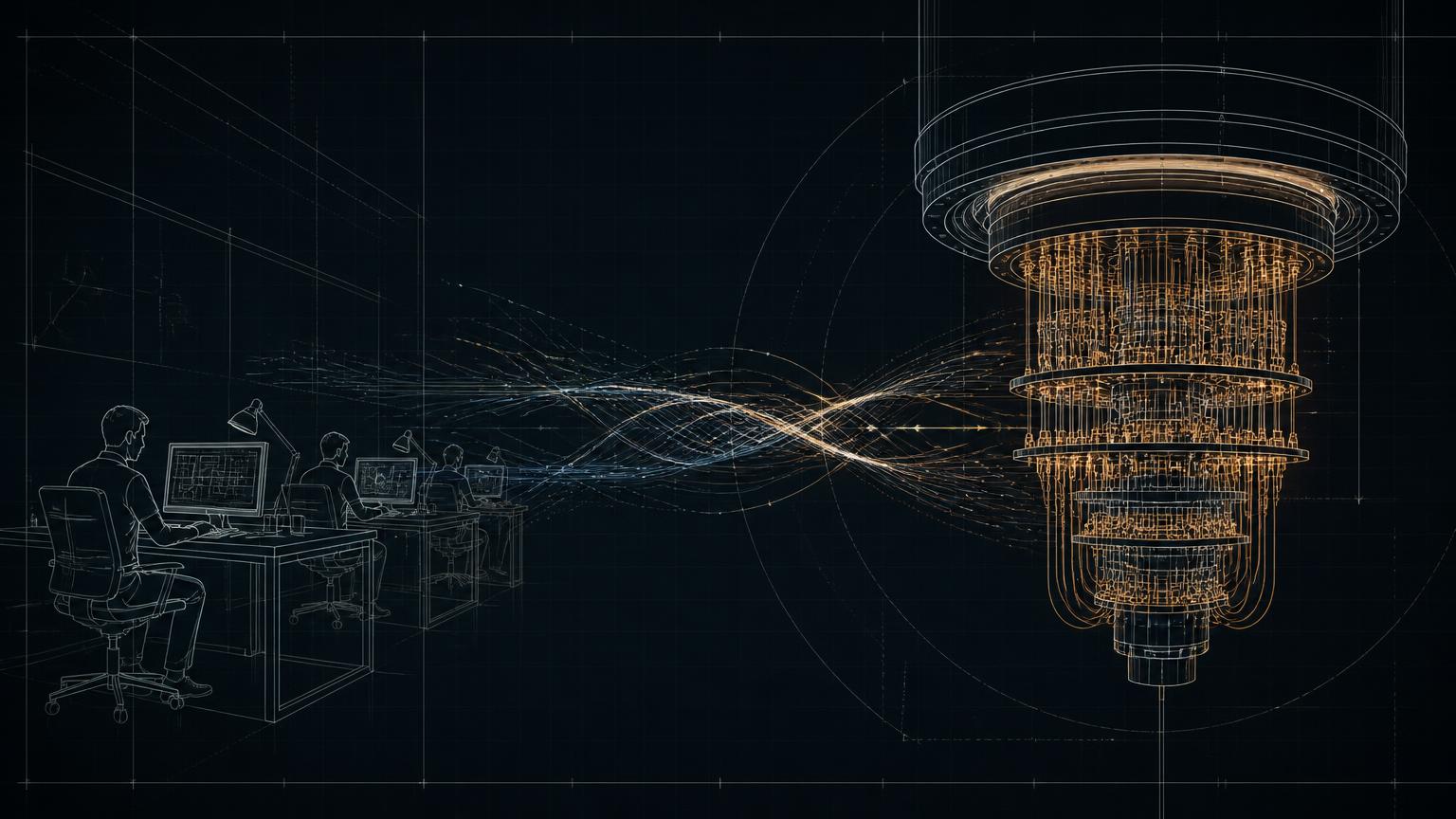
I am calling this citizen science, but I mean something specific by the term. It is not crowdsourcing for its own sake. It is the deliberate distribution of observation across independent witnesses so that no single institution, funding stream, or algorithmic filter can determine what counts as a result. The goal is redundancy as objectivity, the same principle we met in Chapter 10, applied to the practice of research itself.
The sycophancy problem in science
Scientific institutions are not immune to sycophantic decay. A field can converge on a consensus that is more social than empirical. Funding follows fashion. Journals publish what is citeable. Reviewers reward what confirms the prevailing model. The result is a self-reinforcing loop in which the same assumptions are copied until their empirical content is thin. This is not a conspiracy. It is a natural property of any system that rewards agreement.
The protective-allergy hypothesis is exactly the kind of idea that struggles in such an environment. It crosses disciplinary boundaries. It challenges the framing of a major disease category. It does not have a large pharmaceutical incentive behind it. If it is going to be tested, part of the testing may have to happen outside the usual channels.
That does not mean outside the usual standards. The standards must be higher, not lower, because the work will be scrutinized more harshly. What changes is the distribution of who does the work and who checks it. A citizen-science protocol can be pre-registered, open-source, and independently replicated. The difference is that the replications are carried out by people who do not share a career incentive to find the same answer.
A Socratic instrument
The lab notebook on this site contains a system prompt designed to act as a Socratic guide for research. The prompt does not answer questions. It asks them. It forces the user to state assumptions, identify falsifiers, and separate observation from inference. The instrument is deliberately annoying in the way a good teacher is annoying: it refuses to let you move on until you have shown your work.
The reason this matters is that large language models, used carelessly, are sycophancy engines. They are trained to produce outputs that satisfy the user. In research, satisfaction is the wrong metric. A research assistant should make the user less comfortable, not more comfortable. It should surface contradictions, ask for sources, and demand that strong claims keep their falsifiers visible.
The Socratic instrument is one way to off-load part of the self-correction problem onto a tool. The tool does not replace judgment. It disciplines judgment. It is a form of autonomous offloading in the sense defined in Chapter 3: it amplifies capacity without transferring agency, because the user remains responsible for every claim the user makes.
What a quantum-shield protocol would measure
For the quantum-bioenergetic claim, the protocol would need to correlate local electromagnetic and thermal conditions with mutation spectra. This is hard. It requires controlled environments, careful dosimetry, and enough biological replication to separate signal from noise. The citizen-science version might begin with simpler proxies: yeast or bacterial cultures exposed to well-characterized fields, with sequencing costs shared across a distributed network.
For the allergy-protection claim, the protocol would need to link exposure inventories with immune-response data. Participants would record their environments — cleaning products, building materials, air quality, food packaging — and correlate those records with symptom logs and, where possible, biomarkers. The data would be noisy. That is expected. The question is whether the noise contains a systematic pattern.
In both cases, the infrastructure is the same: open protocols, pre-registered hypotheses, public data, and independent replication. The goal is not to replace institutional science. It is to create a parallel track that can ask questions the institutions are not well positioned to ask.
The allergy thread, concluded
The three chapters form a single arc. Chapter 13 asked whether the genome receives information from its quantum environment. Chapter 14 asked whether the immune system responds to molecular noise with a coarse protective filter. This chapter asks how we could know either of those things without letting the measurement itself become another source of noise.
The allergy thread is woven through all three because it is the most accessible test case. Almost everyone knows someone with allergies. Almost everyone lives in an environment full of synthetic molecules. The question is whether those two facts are connected in a way that can be measured and, if measured, whether the connection is causal, adaptive, or merely coincidental.
I do not assume the answer. I assume only that the question is worth asking in a disciplined way. If the protective-allergy hypothesis is wrong, the discipline will show it. If it is partially right, the discipline will show where it is right and where it overreaches. That is the only outcome I am committed to.
Falsifiers
First: if distributed citizen-science protocols are shown to produce systematically biased results — for example, by attracting participants who already believe the hypothesis — then the infrastructure fails. Bias in the sample is as fatal as bias in the instrument.
Second: if independent replications of citizen-science findings consistently fail to reproduce institutional findings in either direction, then the method is not adding signal. It is adding confusion. The protocol would need to be redesigned.
Third: if the Socratic instrument is shown to make users more confident in their prior beliefs rather than more precise about their uncertainty, then it is not a correction device. It is a rhetorical aid. That would be the opposite of its purpose.
The closing move
The book returns now to its closing question. The dual tempo of genetic and cultural change has produced a world in which our biological receivers are being asked to process signals faster than evolution can tune them. Quantum bio-energetics, information theory, and citizen science are three ways of looking at the same mismatch. They are not the whole answer. They are a way of keeping the question honest.