
Phase 0 · Playable Slice
The Lamp Room
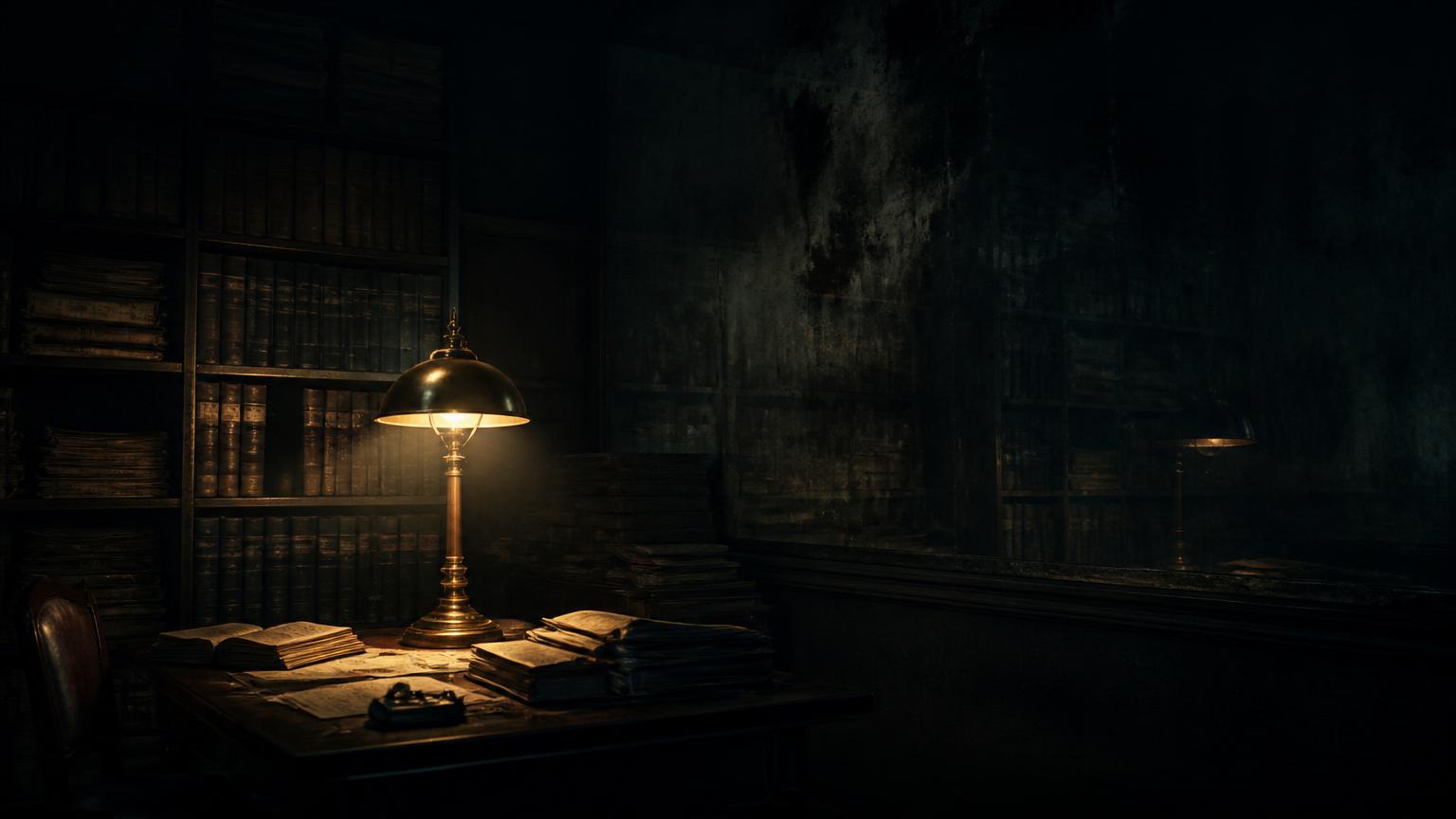
3:00 a.m., the sealed archive beneath a public library. Two hundred years of handwritten ledgers, one brass lamp — and a wall that eats the light. You cannot enter, touch, or search. You can only ask.
The Case
The night clerk keeps a log. Near the north wall the room is far darker than one lamp can explain — and the darkness deepens and eases on a rhythm through the night. The air there smells of wet plaster. On the shelves closest to that wall, two-century-old ink has begun to bloom and run.
- · The lamp has been tested. It is not the lamp.
- · The room is windowless and sealed. No one else has a key.
- · The shortfall repeats on a schedule, not at random.
- · The archivist has three nights before the collection is moved — or lost.
Find the mechanism. Not the culprit — the mechanism.
Questions asked
0
Total question score
0
Best single question
0 / 12
Where this is going
- Phase 0 — this page. One room, two voices, and a scoring engine. The only question worth answering here is whether a well-built question visibly outscores a lazy one.
- Phase 1 — the engine hardens. Persist transcripts, calibrate the four axes against human graders, and expose the rubric so players can argue with their own scores.
- Phase 2 — aperture, not difficulty. Later rooms do not get harder; they get wider. They yield only to questions that cross domains — light, biology, arithmetic — which is the Flatland ladder made playable.
- Phase 3 — the curriculum. Rooms become coursework. Question quality becomes the transcript.
Framework and game rules: Human as Engineer — Becoming Sherlock Holmes