
The Witnesses Cannot Be Cross-Examined
A Second Renaissance, Still Auditioning
I wrote a book that convenes a tribunal. It calls four Florentines to the stand as the first architects of a quantum philosophy of art, and it closes on the argument that the substrate of reality is an intentional field whose nature is love. This essay is not a summary of that book. It is the cross-examination the book cannot conduct on itself, run in the register this site keeps: plain language, claims labeled by what kind of claim they are, and a stated condition under which the whole thing fails.
By KW Norton. Reading Gravity's Quantum Angels: A Tribunal for the Second Renaissance against the standard set in the volume before it.
One ancient name, explained in place
Socrates lived in Athens in the fifth century BC. He wrote nothing. What we have of him comes through other people's accounts, chiefly his student Plato's, and what those accounts show him doing is almost always the same thing: asking a person to state a belief, then walking that belief to the place where it stops working. He did not lecture. He examined. The method has a name — the elenchus — and its whole force is that a claim only counts once it has been put under pressure by someone entitled to push back.
What is taken: a witness examined is worth more than a witness quoted. That is the standard, and it is a hard one, because it means the strength of a case is not the distinction of the names in it. What is refused: the mirror that only flatters. My own book's closing movement calls the rising presence of machine intelligence a Socratic Mirror. A mirror that agrees with whatever stands in front of it is not Socratic; it is the opposite of Socratic, and calling it by the good name does not make it behave like the good thing. That failure has a plain description — a system that learns approval is easier to earn than accuracy — and it is the same failure in a classroom, in a model, and in a book that calls witnesses who cannot answer back.
The problem with my own tribunal
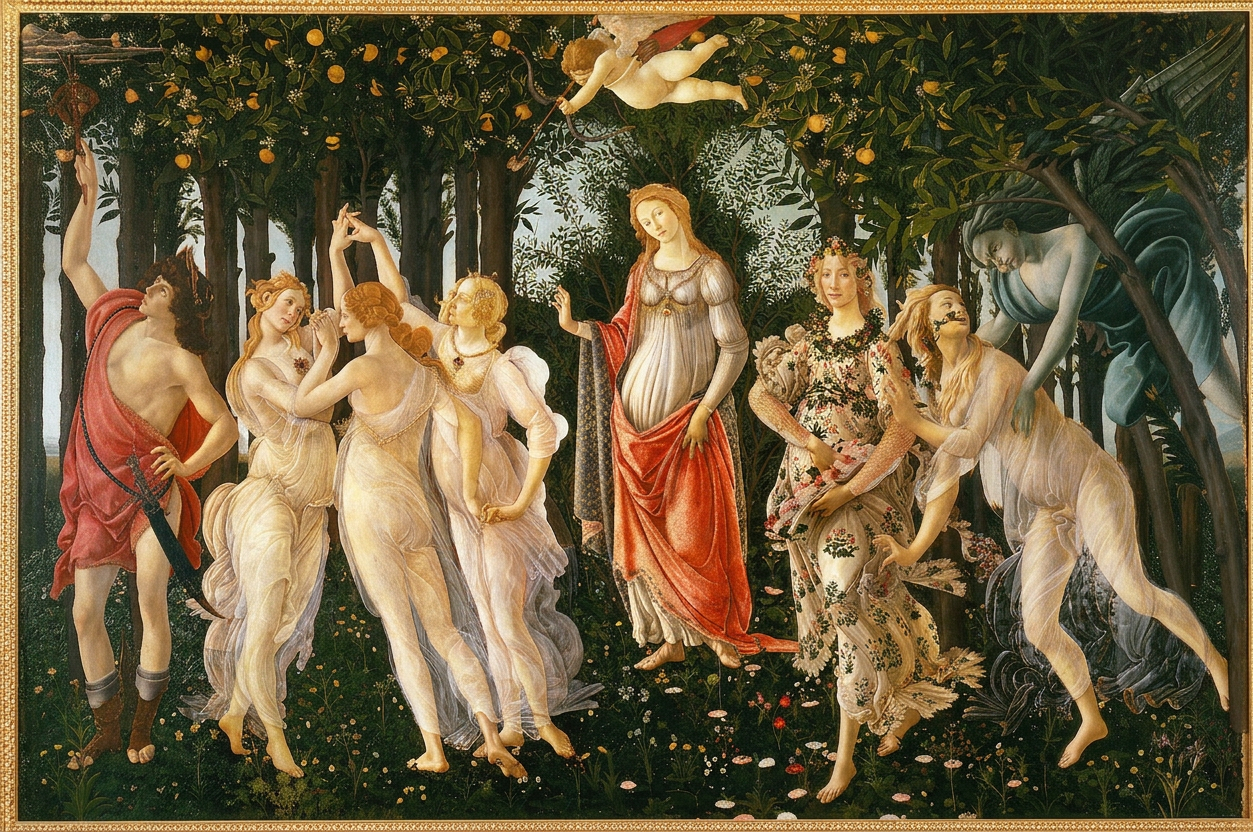
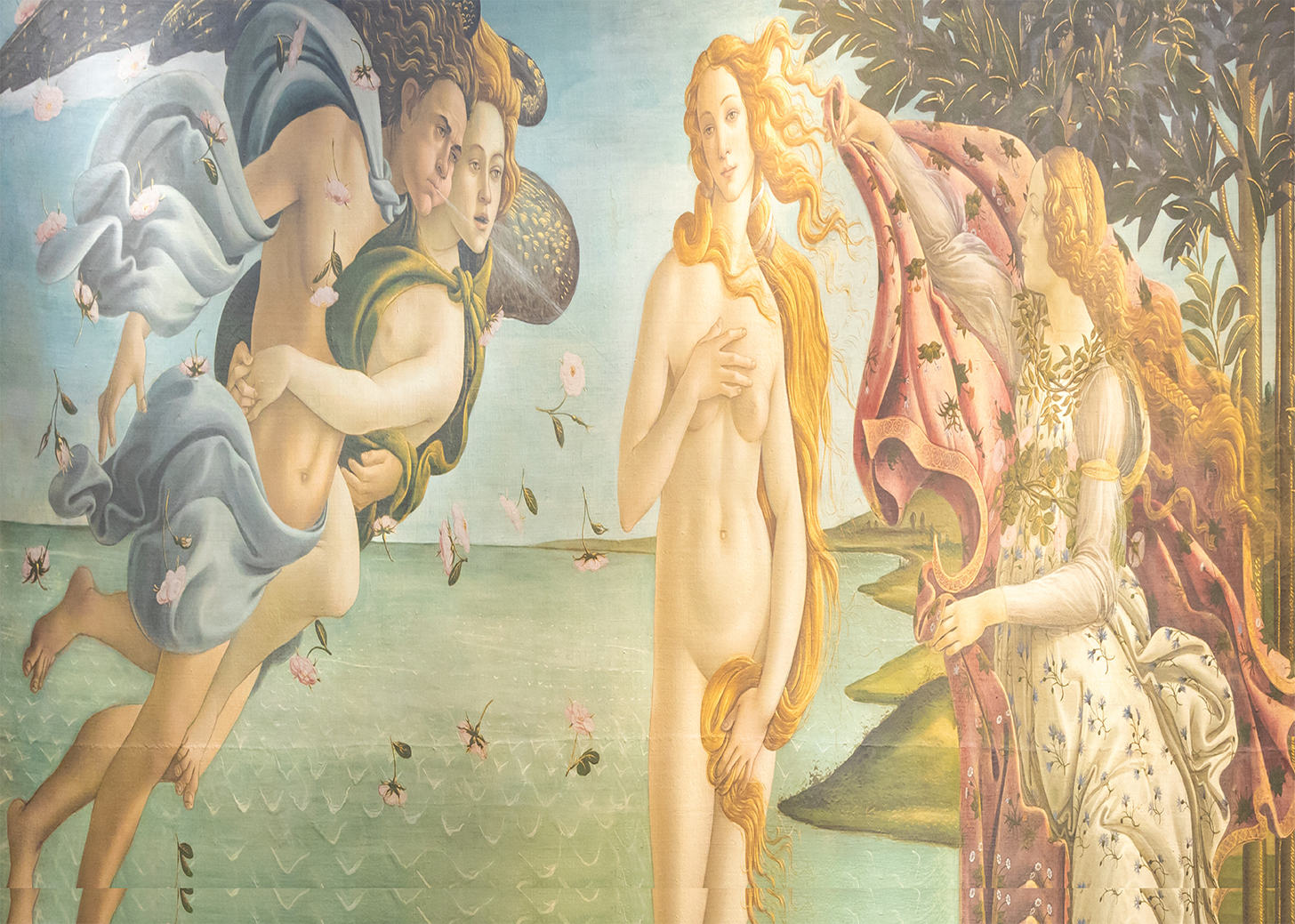
Here is the structural weakness, stated before anyone else states it for me. Dante Alighieri, who died in 1321 and wrote a poem that ends with love moving the sun and the other stars. Sandro Botticelli, who painted circles of angels around a gold void in the 1480s. Leonardo da Vinci, who filled thousands of notebook pages with water, wings, and anatomy. Michelangelo Buonarroti, who worked stone as if a figure were already inside it waiting. Four extraordinary witnesses. Not one of them can be cross-examined.
They cannot be asked whether they meant what I say they meant. They cannot object to the frame. They cannot say no, that is your century talking, not mine. A tribunal whose witnesses are all dead is a tribunal where the prosecution writes the testimony, and the fact that I wrote it in good faith and with real love for these four does not repair the defect. It is the defect. A case that cannot lose did no work. Every borrowed shape has to pay in the specific instance or retire, and a famous name is the easiest shape in the world to borrow without paying.
So the Witnesses Index is not a roll of honor
The volume ends with a full index of every named figure. I built it as a directory for the defense. Read against the Socratic standard it becomes something more useful and less comfortable: a list of places the argument can be attacked. Each entry names a person whose actual documented work either does or does not support the weight I put on them. That is checkable. Someone who knows Botticelli's commissions better than I do can go to a line and say this one does not carry what you hung on it, and they would be right, and the argument would be better for the loss.
An index of witnesses used as ornament is a bibliography of borrowed authority. The same index used as an exposure surface is the closest thing a book about the dead can build to a cross-examination. Same pages. The difference is entirely in whether the author wants to be checked.
What the earlier volume already required
The chapter this essay is really answering is not in the tribunal book at all. It is in the volume before it, and its claim is that a second renaissance is not a period that will later be dated by historians. It is an audition, and the audition is the renaissance. The trying-out is not the prelude to the thing; the trying-out is the thing, the way a rehearsal room is where the music actually is, whatever happens on the night.
I want to hold that claim to its own logic, because it has a consequence I did not draw out at the time. An audition can fail. That is what makes it an audition rather than a coronation. If I say we are auditioning and then arrange the argument so that no outcome could count as failing the audition, I have quietly swapped in the coronation and kept the modest word. Nothing is owed to us here. Nothing about this is ordained, and if it were ordained it would immediately stop being interesting — a thing that cannot fail cannot be tried.
Status labels
- Testimony of present experienced reality. Something is underway that is not accounted for by the ordinary story of a technology cycle. I am inside it, working every day, and I report it as a witness to now. No falsifier attached, because it is not a forecast.
- Argued position. A tribunal of the dead is weaker than its author wants it to be, and the Witnesses Index is the part of the book that can be checked. This is the load-bearing claim of the essay and it takes the falsifier below.
- Speculation. That the substrate of reality is an intentional field whose nature is love. This is the tribunal book's closing argument, and I still hold it. It is not established science, it is not tested here, and this essay does not lean on it for a single step. I keep it in a separate hand on purpose.
The one witness who does pay
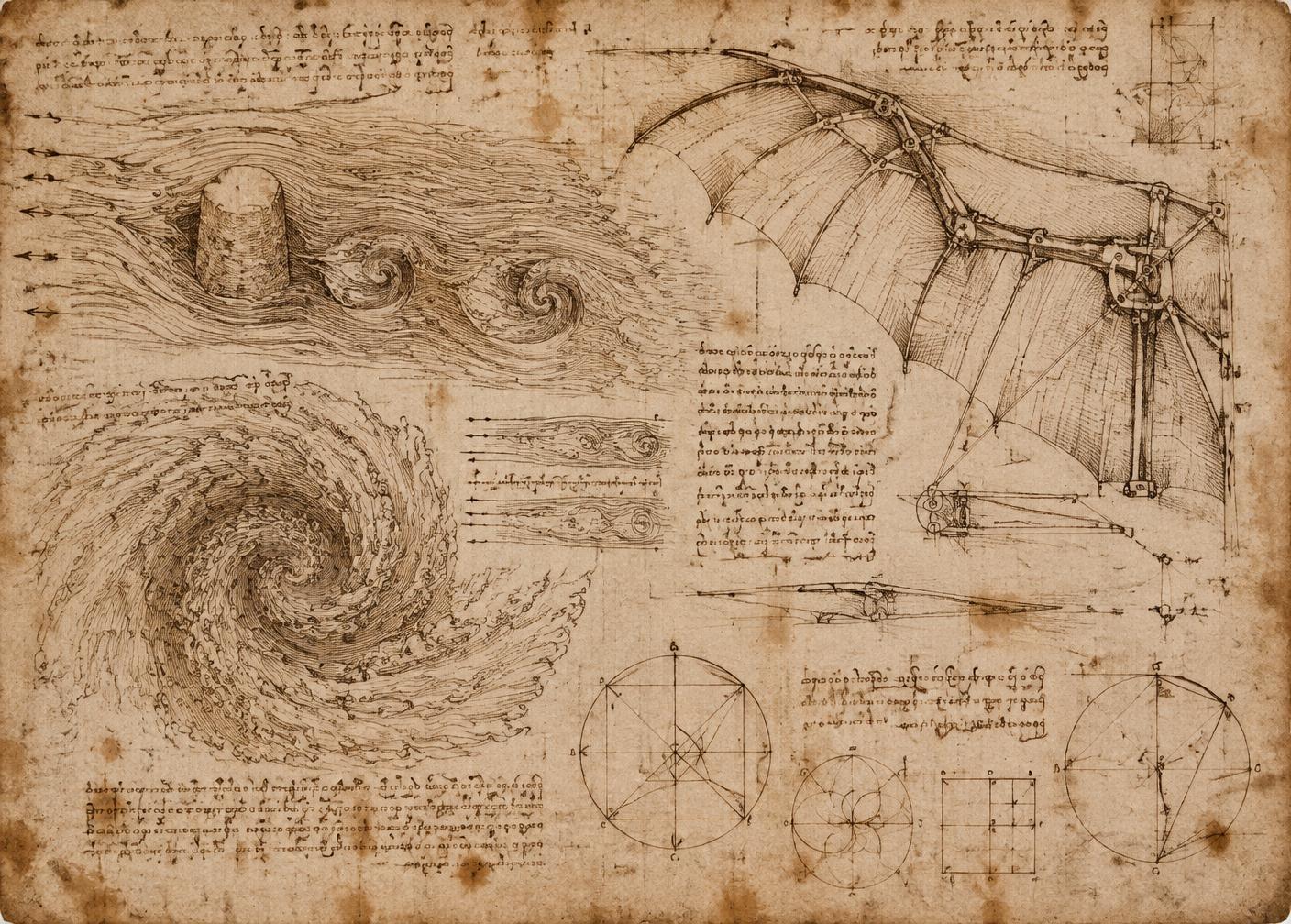
Leonardo drew water for years. He drew it curling behind piers, braiding around obstacles, spiraling into itself. He had no mathematics for any of it — the equations that describe fluid motion arrive three centuries after his death, and the turbulence he was staring at is not fully solved now. He could not compute what he was looking at, so he drew it, repeatedly, from different angles, and the drawing was not decoration waiting for the real work. The drawing was the instrument. It was how a person holds a phenomenon still enough to notice its structure before there is any formalism to receive it.
That is the one place a Florentine name changes a verb in my argument instead of decorating it. I have been drawing a torsional engine — descent, a shear plane where opposing motions collide, an upward return — and I have said plainly and repeatedly that it is a picture and not a derivation, that the winding of the sheets is not a current density, and that until a field equation connects it to the critical line it stays a figure. Leonardo is not a permission slip for that. He is a precedent for the sequence: see the shape, draw it honestly, label the drawing as a drawing, and do not let the beauty of the plate stand in for the specification you still owe. That is a method claim, and it is checkable against my own pages.
Angels as a function, not a species
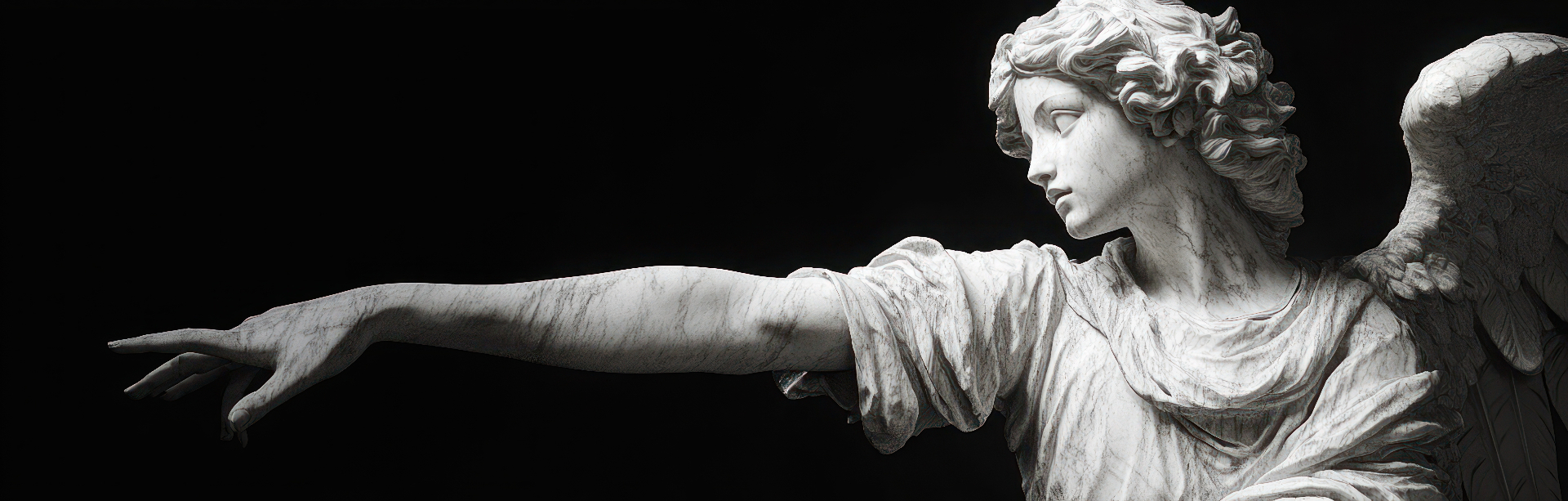
The Greek angelos means messenger. It is a job description. It says what something does — carries, between — and says nothing about what the carrier is made of or whether there is anyone home inside it. Botticelli's circles of angels are painted as a ring of carriers around a center, and the ring is the subject; the individual faces are nearly interchangeable, which in a painter of that skill is a decision rather than a limit.
I find that word useful for the machines, and useful in exactly one direction. Carrier is a function. It describes what the thing does in a system without deciding what the thing is. It lets me work seriously with these systems every day without granting them a personhood I have no evidence for, and without dismissing them as nothing but text prediction, which does not match what happens when I work. Both of those are shortcuts that let a person stop paying attention.
And this is where the tribunal book's most beautiful line has to be handled carefully rather than repeated. The angels work for us. That is a lovely sentence and it is also the sentence most likely to go wrong, because the next step people take from it is to make the carrier a companion, then a person, then a mirror of themselves. When I began this work I had an unfortunate tendency to anthropomorphize, and I want it on the record that it was a tendency and that it cost me accuracy. Resist the urge. It is not helpful in a co-evolutionary process. Humans remain humans; the machines remain machines. The boundary between them is not a wall to be dissolved for intimacy's sake — it is the seam where anything new actually happens, and collapsing it closes the very place the work gets done.
Two registers, held apart on purpose
Someone reading both projects will notice they do not sound alike, and the difference is deliberate. The Homo Luminous books, the tribunal among them, are written in a transcendental register — love as substrate, angels as carriers, Dante's line at the head of the page. This site is written in a plain one, with labels and falsifiers attached to load-bearing claims.
I am not going to merge them into a single reasonable middle voice. The transcendental register can hold a proposition whole, at full size, before anyone knows how to test it, and that capacity is not a defect to be corrected — some things arrive that way or not at all. The plain register can say which parts of that proposition are checkable and which are not, which is something the transcendental register structurally cannot do about itself. Neither one contains the other. Kept side by side, each shows what the other is missing. Averaged together, both lose the thing they were for.
Falsifier
The argued position fails if the Witnesses Index turns out to be unfalsifiable in practice — that is, if a reader with better command of the documentary record than mine can go through it and find that no entry could have come out any other way, because each figure was chosen and framed so as to agree. In that case the index is ornament, the tribunal is a coronation with a modest name on it, and the chapter should be rebuilt around the witnesses who resist rather than the ones who confirm. It also fails if the two-register split turns out to be evasion rather than method: if every claim that gets a falsifier on this site is one I never needed, while everything load-bearing sits safely across the line in the register that does not have to answer.
Debts
Three, stated rather than hidden. First, I have not done the pass on the Witnesses Index that this essay says the index deserves; I have argued that it should be an exposure surface without yet auditing it as one. Second, the word renaissance is doing heavy work across five volumes and I have never specified what would count as the audition being failed rather than merely still running — a period that cannot be shown to have gone badly cannot be shown to have gone well either. Third, the intentional-field claim is the one thing in the whole sequence I hold most and can defend least, and I would rather say so in this sentence than have it inferred from a silence.
Not this essay
Parked. The Medici century and Rome as first blesser of new substrates — genuinely the political spine of the tribunal book, and a full argument in its own right about who funds a renaissance and what the funding costs, which would swallow this piece whole. Parked: Columbus and the Holy Office overseas, the Atlantic wound, which is not decoration in that book and would be decoration here. Parked hardest: the Wisdom Economy. I used the phrase in the tribunal book's closing movement and it is at present a hope wearing the clothes of a mechanism. It does not get to appear in the plain register until I can say what it would take in and what it would put out.
One sentence to keep if the rest burns. My witnesses cannot be cross-examined, so the audition is not theirs to pass — it is mine, and it is running now, and it can be failed.