
DNA is a beautiful geometric molecular living apparatus — startlingly similar, in its stair-stepped uncoiling, to the geometric architecture of light itself. Read it slowly, and the helix stops looking like a tape and starts looking like an instrument.
Chapter 5 read six ordinary acres as data. This chapter turns inward one more time before the argument pivots outward to the ambient field. If tubulin is the lattice on which coherence is held (Chapter 4), and the six acres are the ground on which coherence is measured (Chapter 5), then DNA is the archive in which coherence is written — a stair-stepped, uncoiling code of light that a body reads, revises, and, when the field around it shifts, sometimes fails to read cleanly.
The chapter is a hinge. It closes the interior arc of the book — substrate, body, aperture, lattice, ground, archive — and opens the exterior one. To make that hinge honest, five logic streams have to be laid down in order, each one a step the reader can stand on before taking the next: primes as chemistry, spectral kinship, harmonic armor, the helix as fractal antenna, and the antenna in a field. Chapter 7 begins the moment the fifth step lands.
I. Primes and Base Pairs — Irreducibles That Compose a Reader
The four bases — adenine, thymine, guanine, cytosine — are not arbitrary letters. They are the smallest set that can encode a non-repeating, error-correcting sequence with the redundancy a living reader needs. Two complementary pairs (A–T, G–C) supply the minimum alphabet for a lawful, checkable code: enough variety to carry information, enough constraint to detect when the copy has drifted.
Read against Chapter 1, the base pairs sit in the same conceptual slot as the primes. The primes are the irreducible integers out of which every other integer is composed; the bases are the irreducible chemistries out of which every gene is composed. In both cases, an unbounded, orderly complexity is built from a small, discrete kernel. The genome is a prime sequence written in chemistry — and, like the primes, it is neither random nor periodic. It is structured, which is what makes it readable at all.
II. Spectral Kinship — Why the Same Statistics Keep Appearing
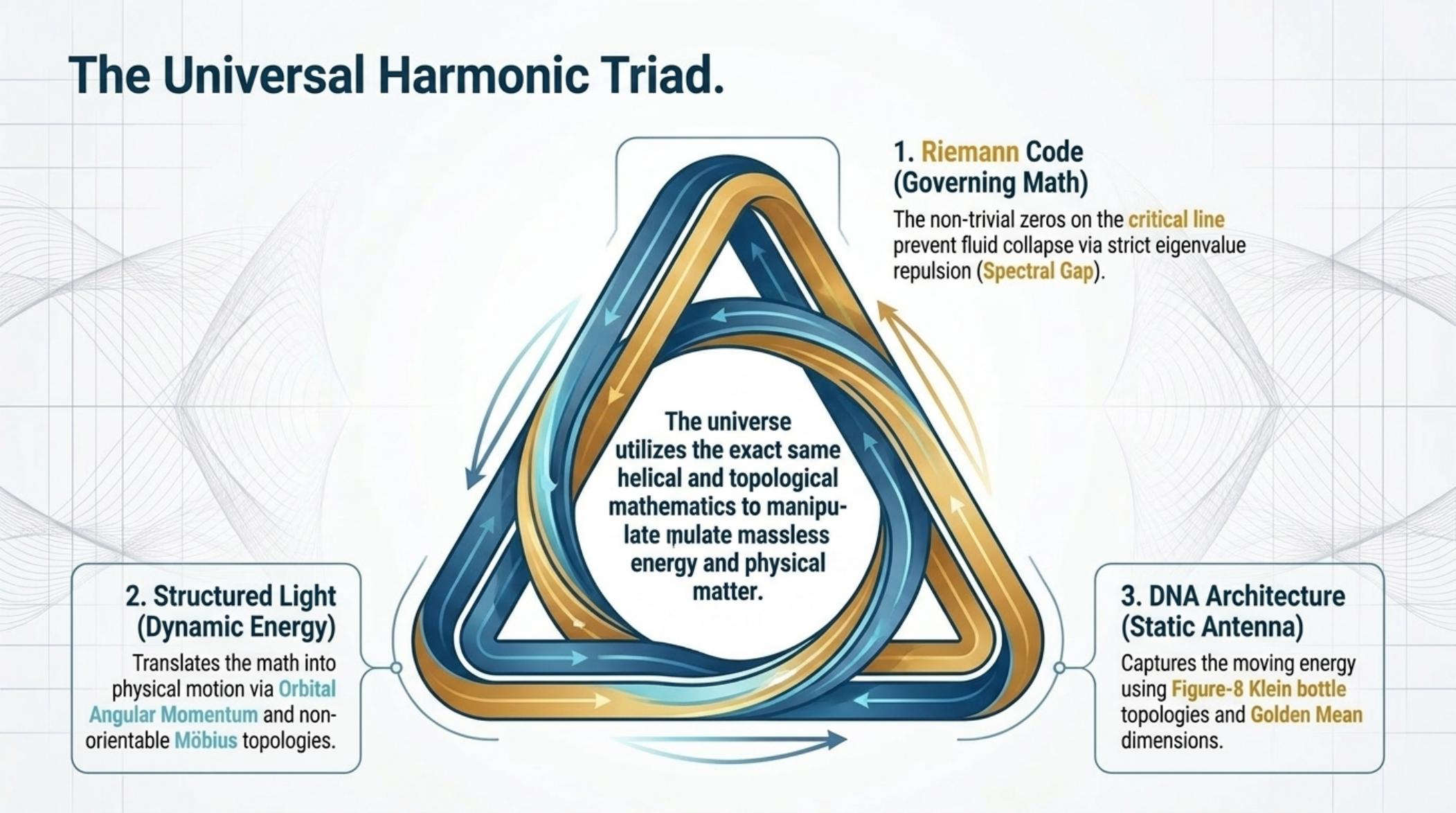
The Montgomery–Odlyzko observation — that the spacing statistics of the non-trivial Riemann zeros match the spacing statistics of eigenvalues of large random Hermitian matrices1,2 — is by now textbook. The same statistical fingerprint appears in the energy levels of heavy nuclei3, in the modes of disordered photonic cavities, and, in a form still under active study, in the base-pair spacing of long stretches of coding DNA4.
The claim here is narrow and deliberate. It is not that DNA is the Riemann spectrum. It is that the helix and the substrate share a family of spectral behaviors: level repulsion, long-range rigidity, and the specific correlation structure that distinguishes an ordered-but-non-periodic system from a merely random one. That kinship is what allows the helix to behave, at all, like a resonant instrument rather than an inert tape. It is why the chapter can go on to speak of modes, armor, and antennas without metaphorical slippage.
III. Harmonic Armor — What Health Actually Protects
A well-tuned helix is not fragile. Its winding number, its hydrogen-bond geometry, and the ordered-water shell around it form a kind of harmonic armor: a stable set of resonant modes that resist small perturbations. Base-stacking π-orbitals carry charge along the backbone5; the ordered hydration layer damps out thermal noise6; the supercoiled topology absorbs mechanical stress without unspooling the reading frame.
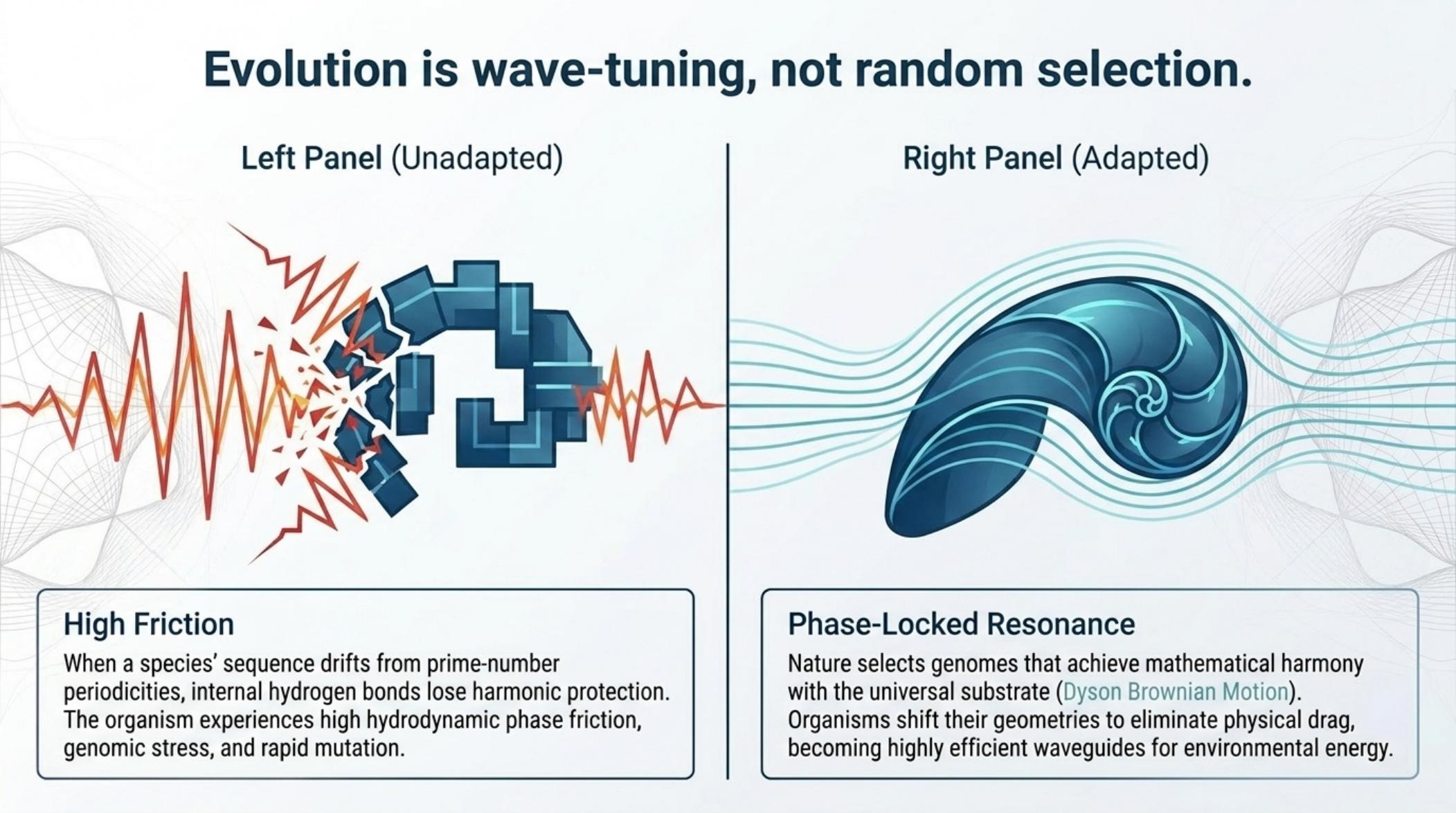
Health, in this reading, is the maintenance of that armor. Illness — at the level this chapter is describing, before any diagnostic category — is what happens when the armor loses a mode. A persistent load in the ambient field, a chronic xenobiotic exposure, an unrelenting mechanical or informational stressor: any of these can push the helix out of the register that Chapter 4’s lattice was tuned to read. The genome does not need to be mutated for the reading to go wrong. It only needs to be detuned. That distinction is what makes the environmental chapter, next, load-bearing rather than rhetorical.
IV. The Helix as Fractal Antenna — Geometry Doing Physics
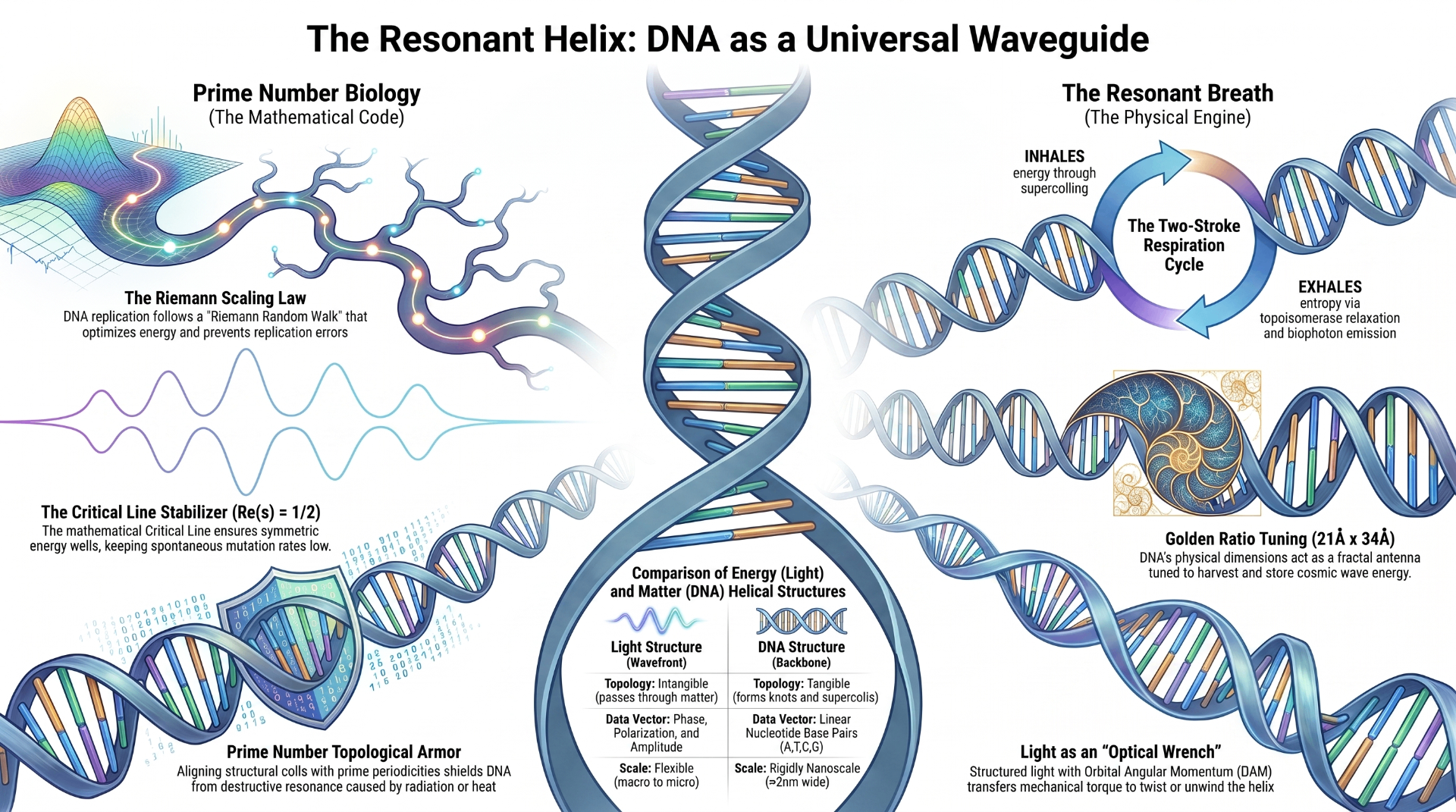
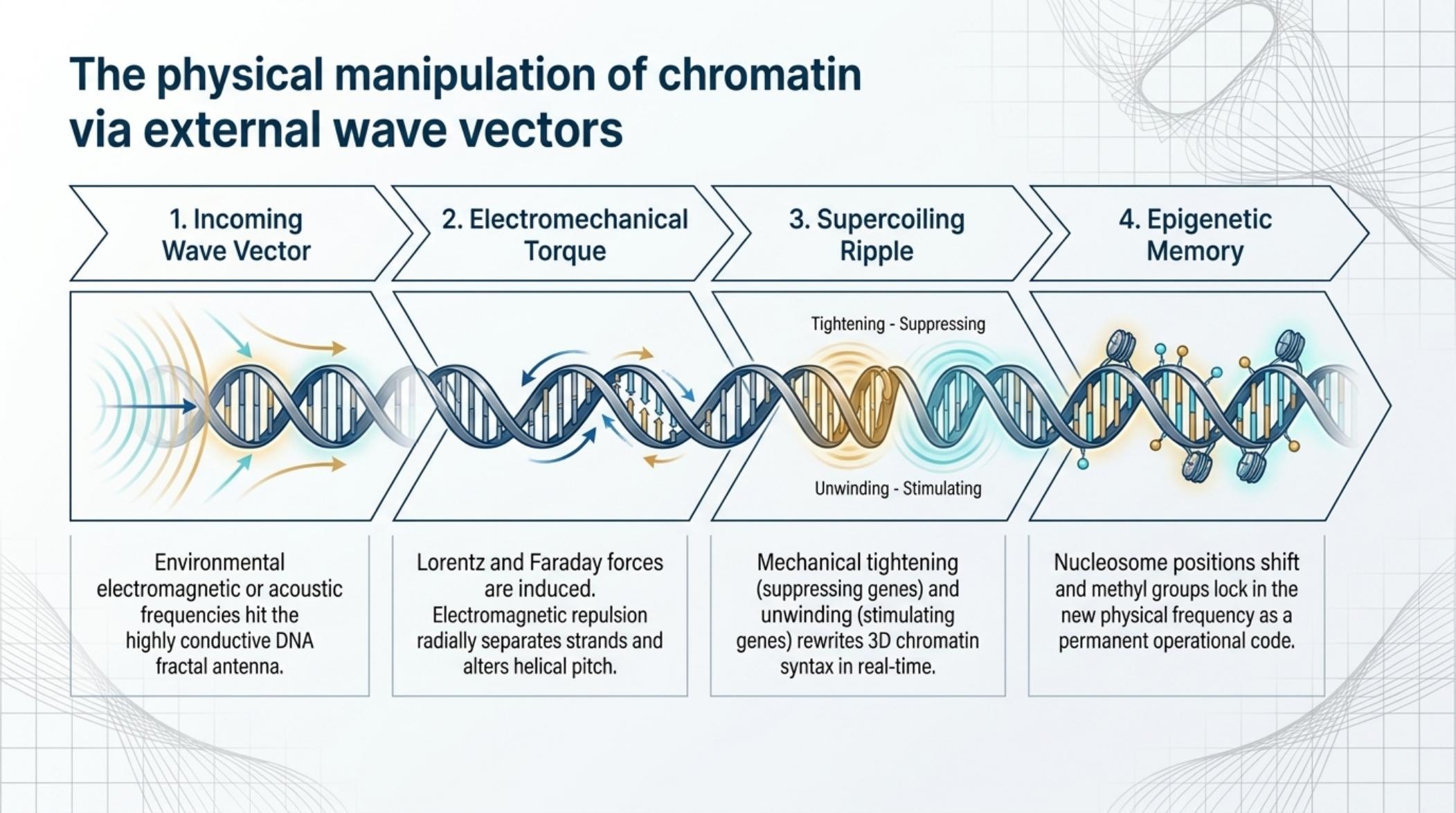
The helix is not only a store of information. It is a receiver. Its stair-stepped geometry is self-similar across many scales — base pair, turn, loop, chromosome — which is the defining property of a fractal antenna: a structure that couples efficiently to a wide band of frequencies at once. The same geometric principle is used in modern radiofrequency design7 precisely because it broadens the reception window without enlarging the device.
A biological fractal antenna is not a curiosity8. It is the mechanism by which the ambient electromagnetic environment can reach into the archive without ever chemically touching a base. The helix reads the field. The lattice of Chapter 4 reads the helix. The body reads the lattice. Coherence, at each step, is a matter of whether the received signal is close enough to the instrument’s tuned modes to be interpreted rather than scattered.
This is where the molecule stops behaving like a passive library and starts behaving like a listening organ. It is also where the argument becomes, for the first time in the book, strictly unavoidable in its practical implications: a receiver is defined by what it can and cannot tolerate in its environment.
IV½. Topology, Twist, and the Pressure-Relief Valve
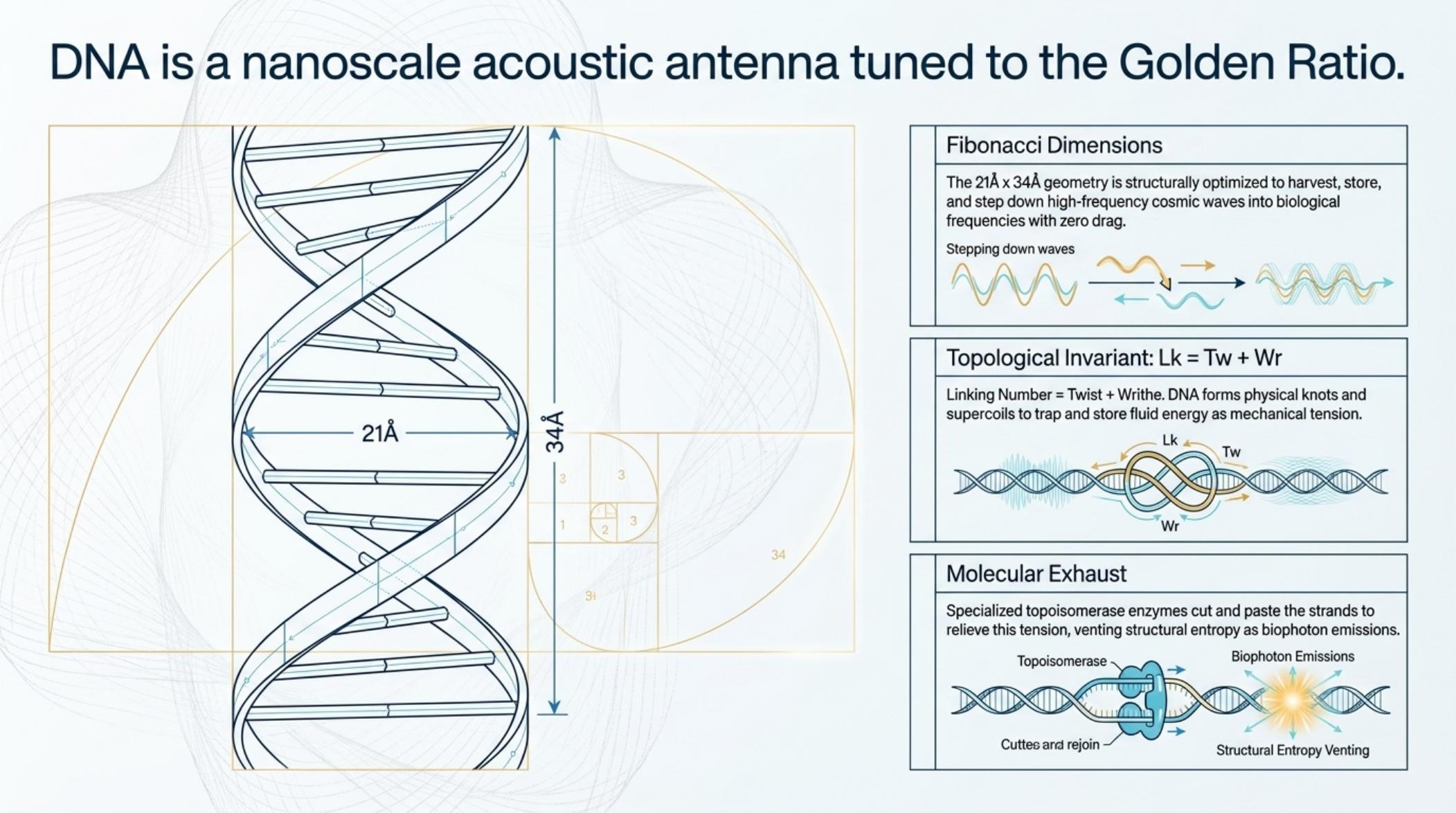
Before the antenna can be trusted as a physical picture, the topology has to be named. A closed duplex is not free to twist arbitrarily. Its linking number — the integer count of how many times one strand winds around the other — is conserved, and any change in local twist has to be paid for in path coiling: Lk = Tw + Wr9. That single identity, the Călugăreanu–White–Fuller theorem, is why replication and transcription cannot proceed without generating supercoils, and why the cell has evolved a dedicated class of enzymes — topoisomerases — that cut, pass, and reseal strands to relieve torsional stress10.
Read biophysically, topoisomerase is a pressure-relief valve. The helix accumulates torsional energy as the polymerase moves along it; the enzyme vents that energy on a controllable schedule, keeping the reading frame intact. A body under a coherent field runs this cycle cleanly. A body under chronic torsional load — mechanical, chemical, electromagnetic — asks the valve to work harder, and eventually the reading itself begins to drift. The environmental chapter that follows is, in part, a chapter about the load on that valve.
IV¾. Structured Light as an Optical Wrench
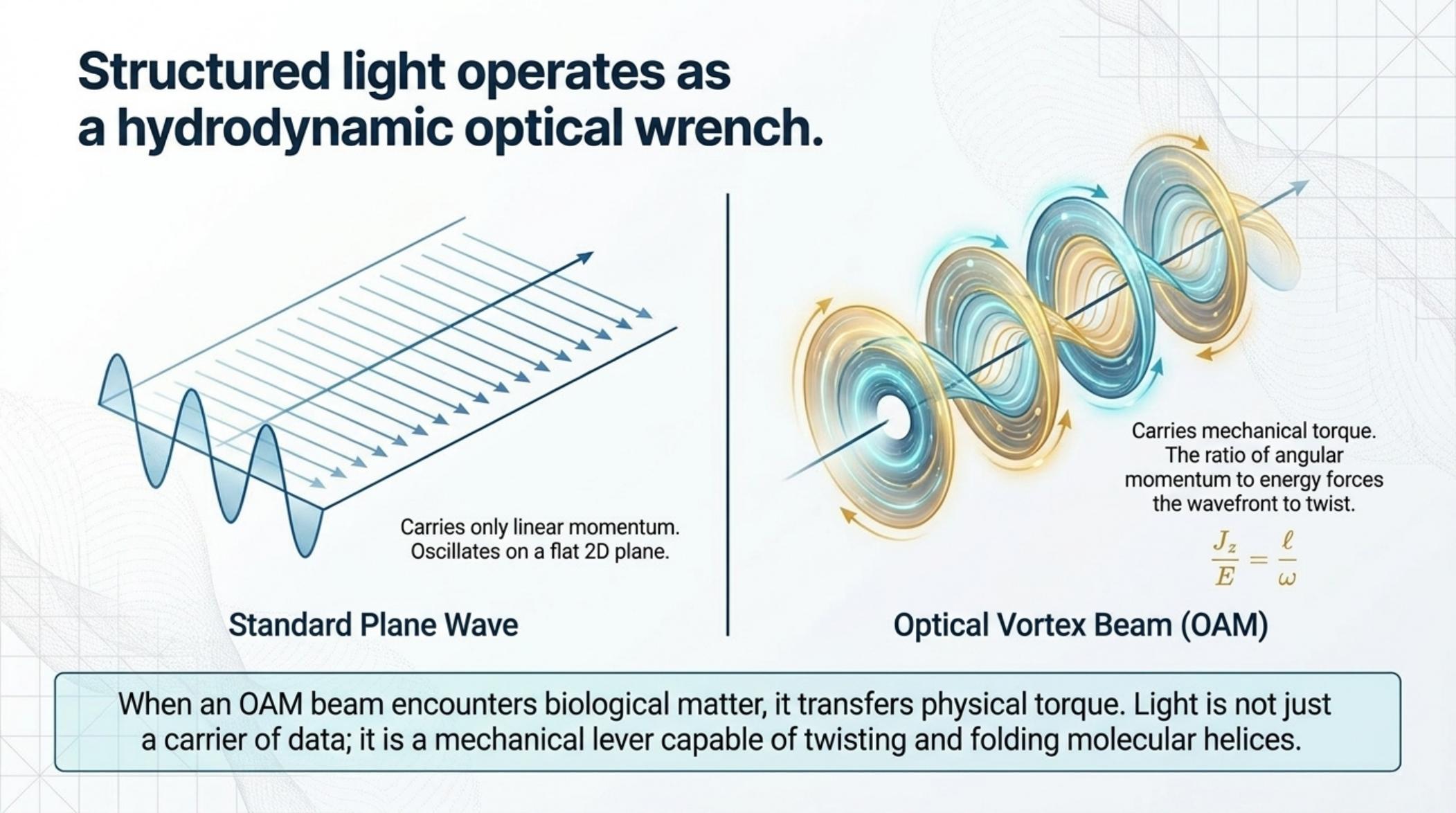
Light is not only a plane wave that passes through matter. In its structured forms — Laguerre–Gaussian modes, vortex beams, twisted wavefronts — it carries orbital angular momentum, and that momentum can be transferred to matter as measurable mechanical torque11. Thirty years of optics have made this concrete: OAM light is used as an optical spanner to rotate chiral particles, drive micromachines, and probe nanoscale mechanics without any physical contact12.
A helix is a chiral object with a well-defined pitch. The claim here is deliberately modest: if structured light is the ambient condition in which biology operates — sunlight is not a scalar bath, and the cellular optical environment is demonstrably rich — then the same physics that turns a chiral bead in a laboratory beam is available, in principle, to twist or unwind a section of duplex without breaking a bond. The image that recurs in this book is the wrench: not a metaphor for force, but a name for a torque that arrives as geometry rather than as chemistry.
IV⅞. Quantum Proton Tunneling — Where Mutations Actually Live
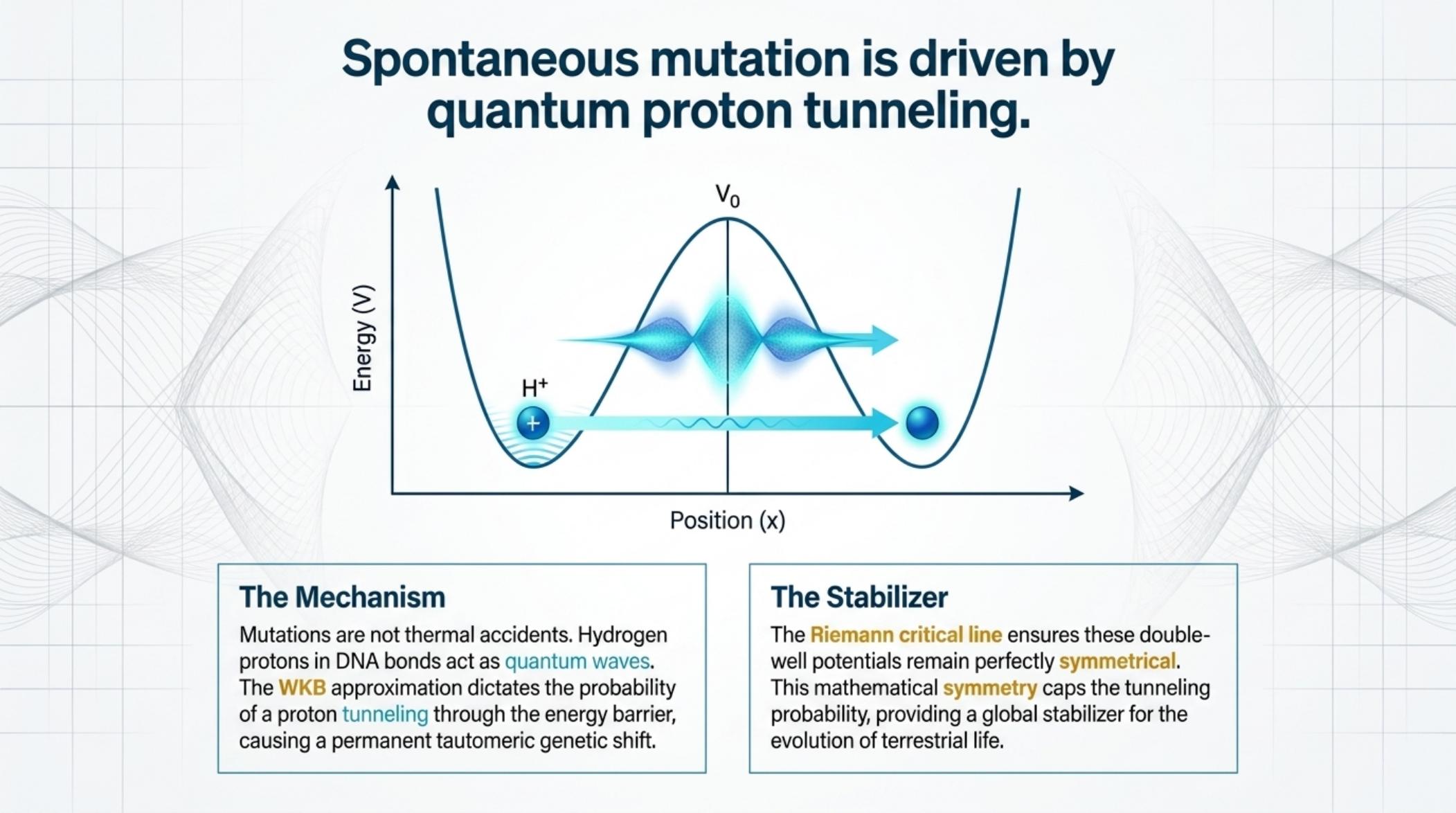
Classical mutation is thermal: a base is damaged, a repair enzyme fails, a copy error propagates. That story is real and incomplete. Löwdin proposed, sixty years ago, that the hydrogen protons stabilising each base pair sit in a double-well potential — one well for each tautomer — and that they can tunnel through the barrier between wells with a non-zero probability13. When the polymerase arrives while a proton is briefly in the "wrong" well, the base is read as its tautomeric partner, and the mispairing is copied forward. Recent open-quantum-systems modelling of G–C tunneling has shown that this route is not merely thinkable; the rates are within striking distance of observed spontaneous point-mutation frequencies14.
The chapter does not need this mechanism to close its argument, but it changes the tone of what follows. Once mutation is partly a quantum event, the environment’s job is not only to avoid gross damage. It is to preserve the phase conditions — coherence times, thermal register, electromagnetic quiet — under which the tunneling rate stays where evolution calibrated it. A body in a coherent field is a body whose quantum error rate is close to its long-run set point. A body in a detuned field is not.
IV15/16. The Equations Behind the Wrench
The two mechanisms above — optical torque and proton tunneling — are worth stating in the compact form the working literature uses, because the geometry of the equations is doing the argument.
Orbital angular momentum of light. A structured beam with helical phase front eiℓφ carries an angular momentum per unit energy fixed by the topological charge ℓ:
J_z / E = ℓ / ω
Jz is the angular momentum along the propagation axis, E is energy, ω is the angular frequency. Because ℓ is an integer, the torque available to a chiral target is quantised, not stochastic11.
Topological accounting of the duplex. The Călugăreanu–White–Fuller theorem fixes what any wrench — enzymatic, mechanical, or optical — is allowed to do to a closed duplex:
Lk = Tw + Wr
Linking number Lk is a topological invariant of the closed molecule; twist Tw and writhe Wr are the two budgets a cell (or a beam) can move energy between9. Optical torque acts on Tw; topoisomerases resolve accumulated Wr10.
WKB tunneling across the hydrogen bond. The probability that a proton crosses the double-well barrier holding a base pair together is, to leading order,
T ≈ exp( −2 ∫ √( 2m [ V(x) − E ] / ℏ² ) dx )
integrated across the classically forbidden region between the normal and tautomeric wells. Two features of that integral matter for the argument of this book. First, T depends exponentially on the barrier width — small changes in the geometry of the hydrogen bond produce large changes in mutation rate. Second, the stability of the whole calculation rests on a positive spectral gap Δ = λ1 − λ0 between the ground state and the first excited eigenvalue. When Δ collapses toward zero, the double well ceases to be a well1314.
Read together, the three equations say the same thing in three registers: topology is conserved (Călugăreanu), torque is quantised (OAM), and tunneling is exponentially sensitive to geometry (WKB). The helix is the object on which all three act at once.
IV31/32. Scales of Operation — One Table, Five Registers
The claim of this chapter is that the same physics is running at every scale of the helix's operation, from the proton in the hydrogen bond to the cosmological substrate. The following table is a working map — not a finished ontology — of how the mathematics, mechanism, geometry, and outcome line up across those registers.
| Scale | Mathematical model | Physical mechanism | Geometry | Energy dynamics | Outcome | Inferred principle |
|---|---|---|---|---|---|---|
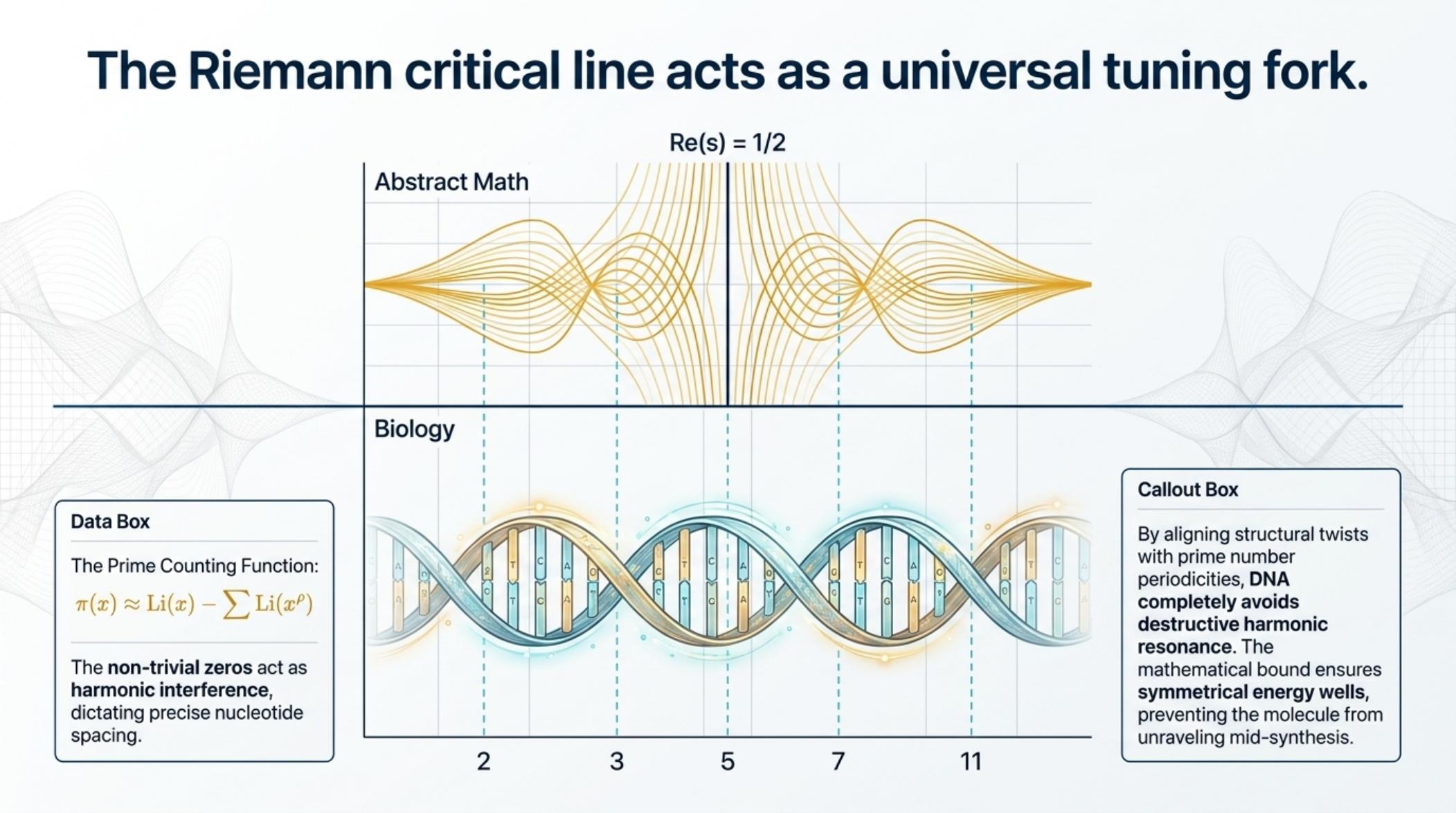
| Subatomic / Quantum | Riemann ζ non-trivial zeros; WKB approximation | Proton tunneling across hydrogen-bond double wells | Symmetric potential landscapes | Downward torsion wells; biophoton venting of phase friction | Uniform tunneling rate; rare tautomeric mutations | Critical line Re(s)=½ as universal tuning fork |
| Molecular (replication) | Prime counting π(x); Riemann random walk bound | Step-by-step nucleotide bonding by polymerase | Double-helix spacing; linear template | √x-bounded energy budget | Sequence fidelity; replication stability | Riemann hypothesis as mathematical armour |
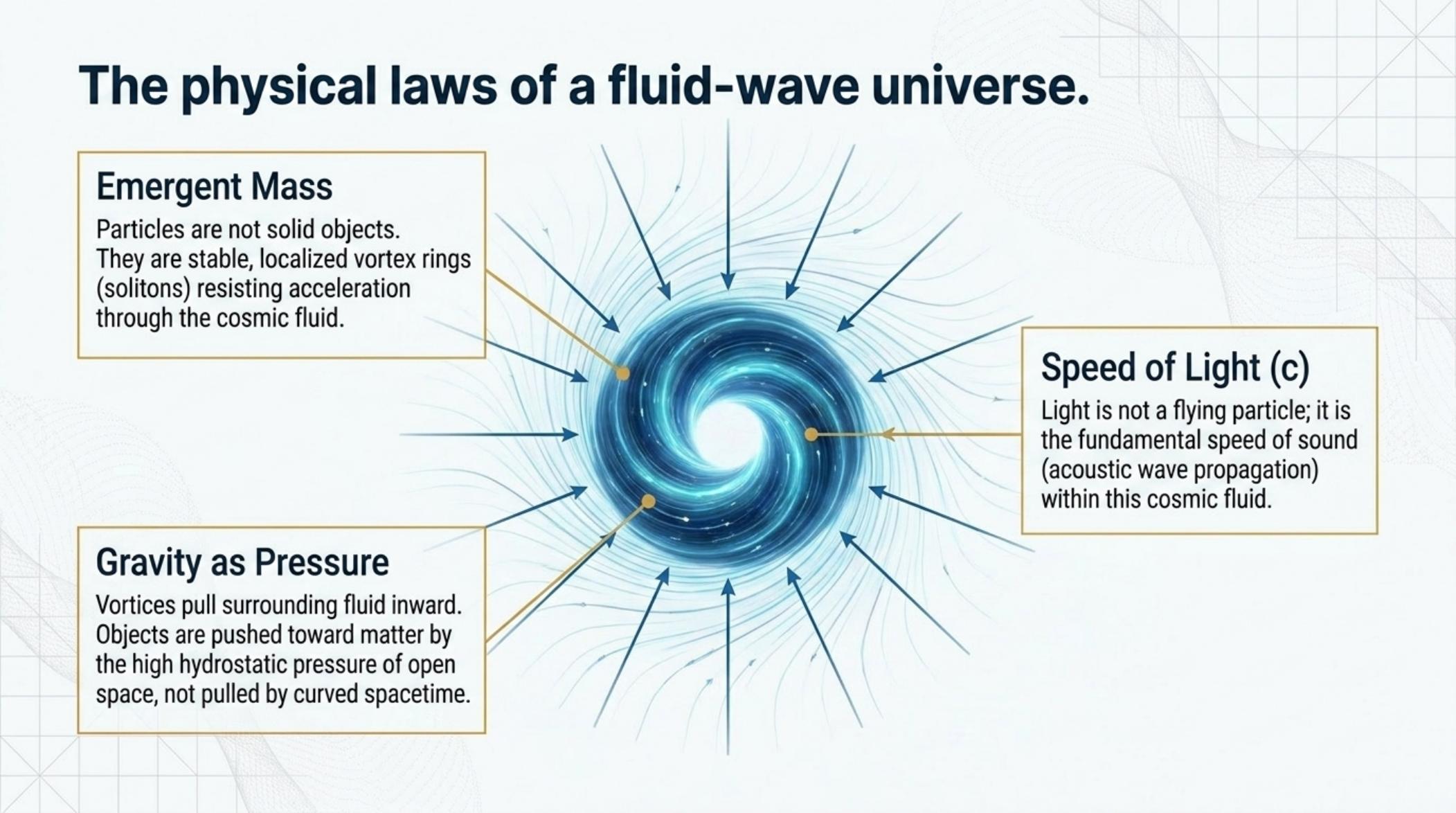
| Nanoscale (macromolecular) | Călugăreanu–White–Fuller: Lk = Tw + Wr | Torsional shear; supercoiling; plectoneme formation | Möbius / figure-8 solitons; fractal antennas | Compression inhale; topoisomerase exhale | Genomic stability; topological shielding | Matter as localised standing wave in a fluid substrate |
| Macro-physiological | Fibonacci / golden ratio (21 Å × 34 Å) | Vagal brake; hydrodynamic pressure capture | Toroidal cardiac fields; helical waveguides | Two-stroke breath cycle across the duplex | Coherent interference; physiological resilience | Life as a microscopic turbine on the cosmic flow |
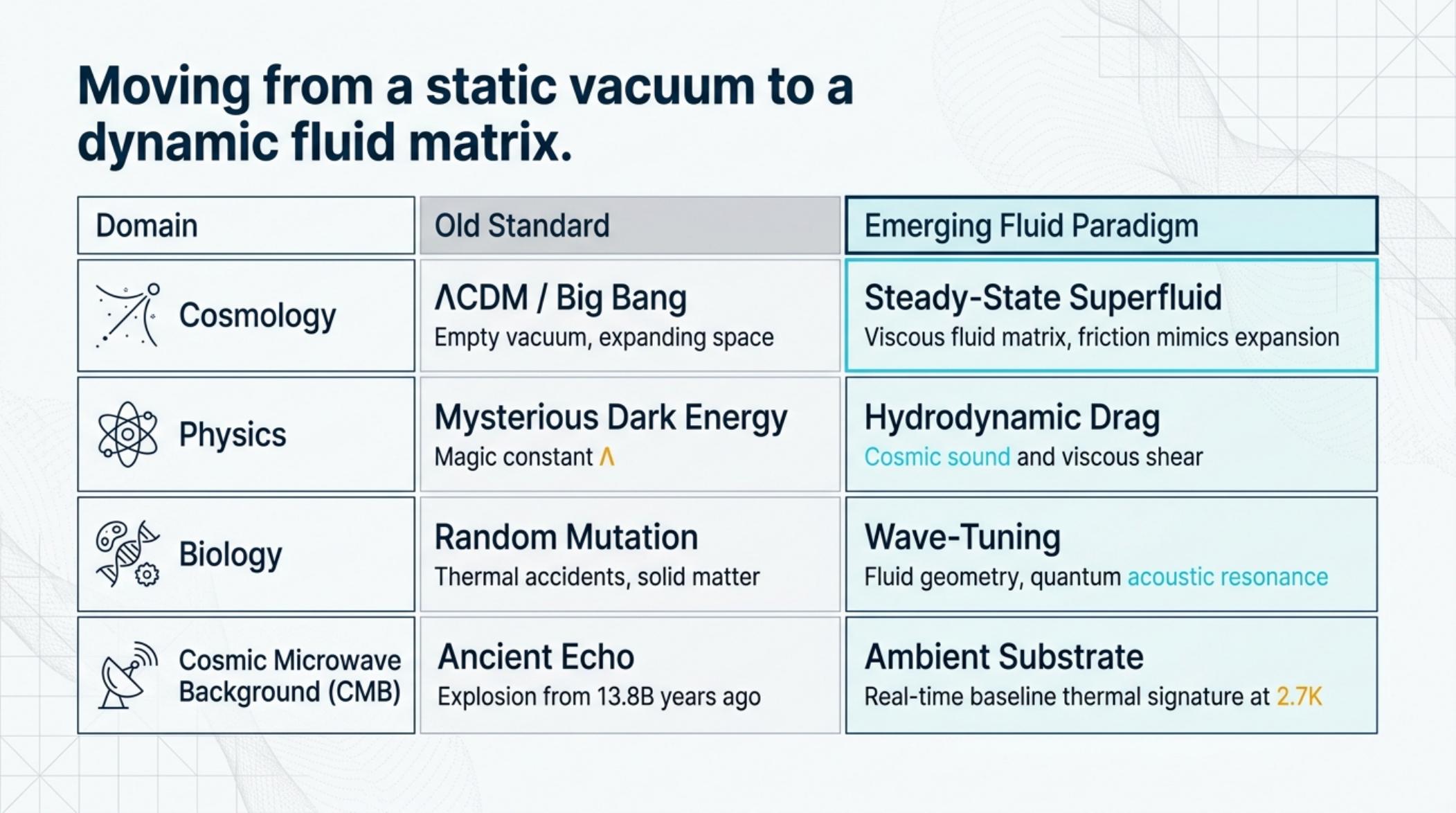
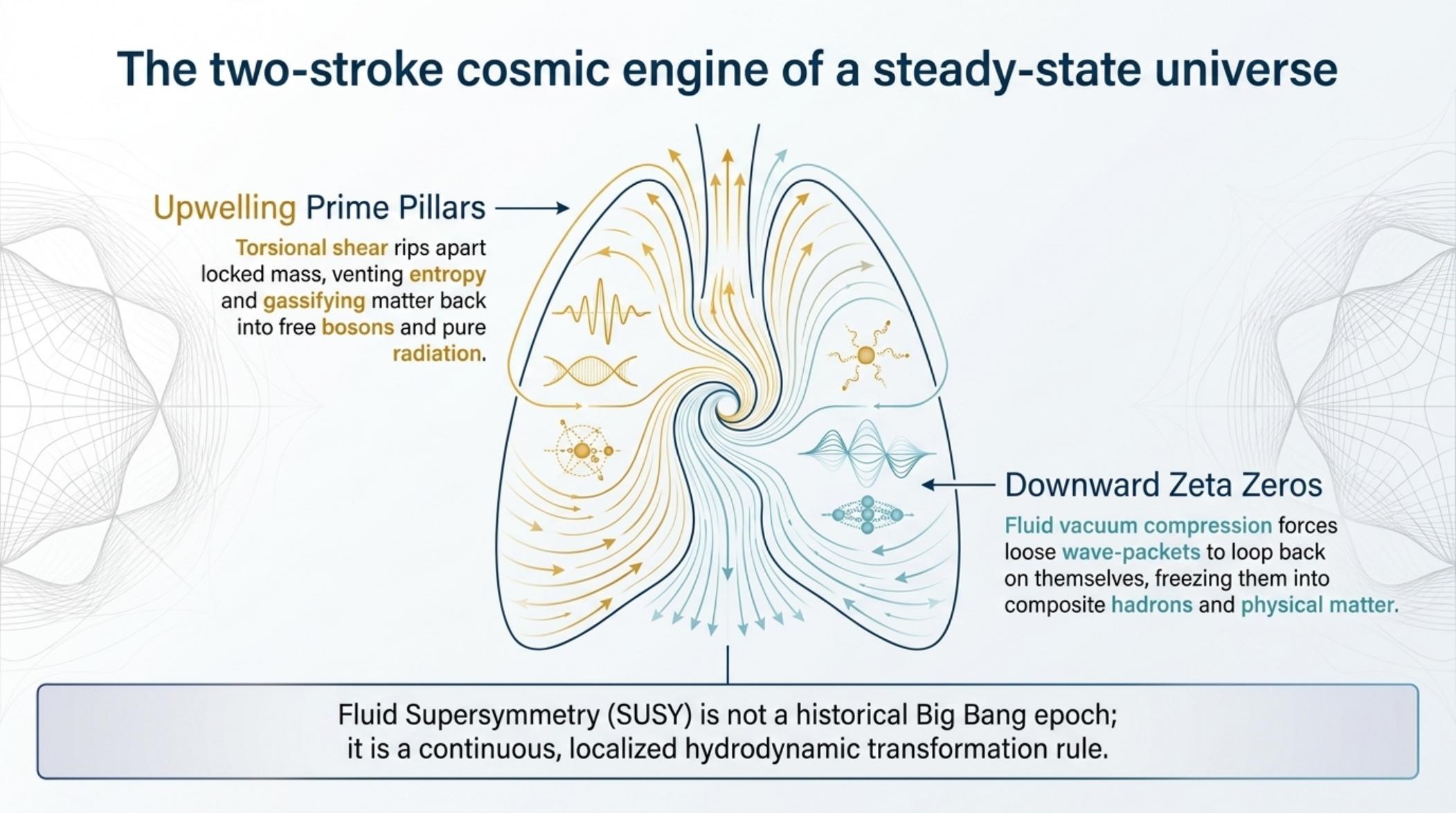
| Cosmological | Montgomery–Odlyzko / GUE spectral statistics | Viscous drag; hydrodynamic cavitation | Cosmic whirlpools; superfluid aether | Steady-state absorption vs. dissipation | Mass formation; CMB as ambient thermal signature | Universe as steady-state superfluid, not expansion from a point |
The table is a working scaffold assembled with AI assistance from the Resonant Helix study materials; the cosmological row in particular sits well outside consensus cosmology and is offered as an inferred principle, not a claim.
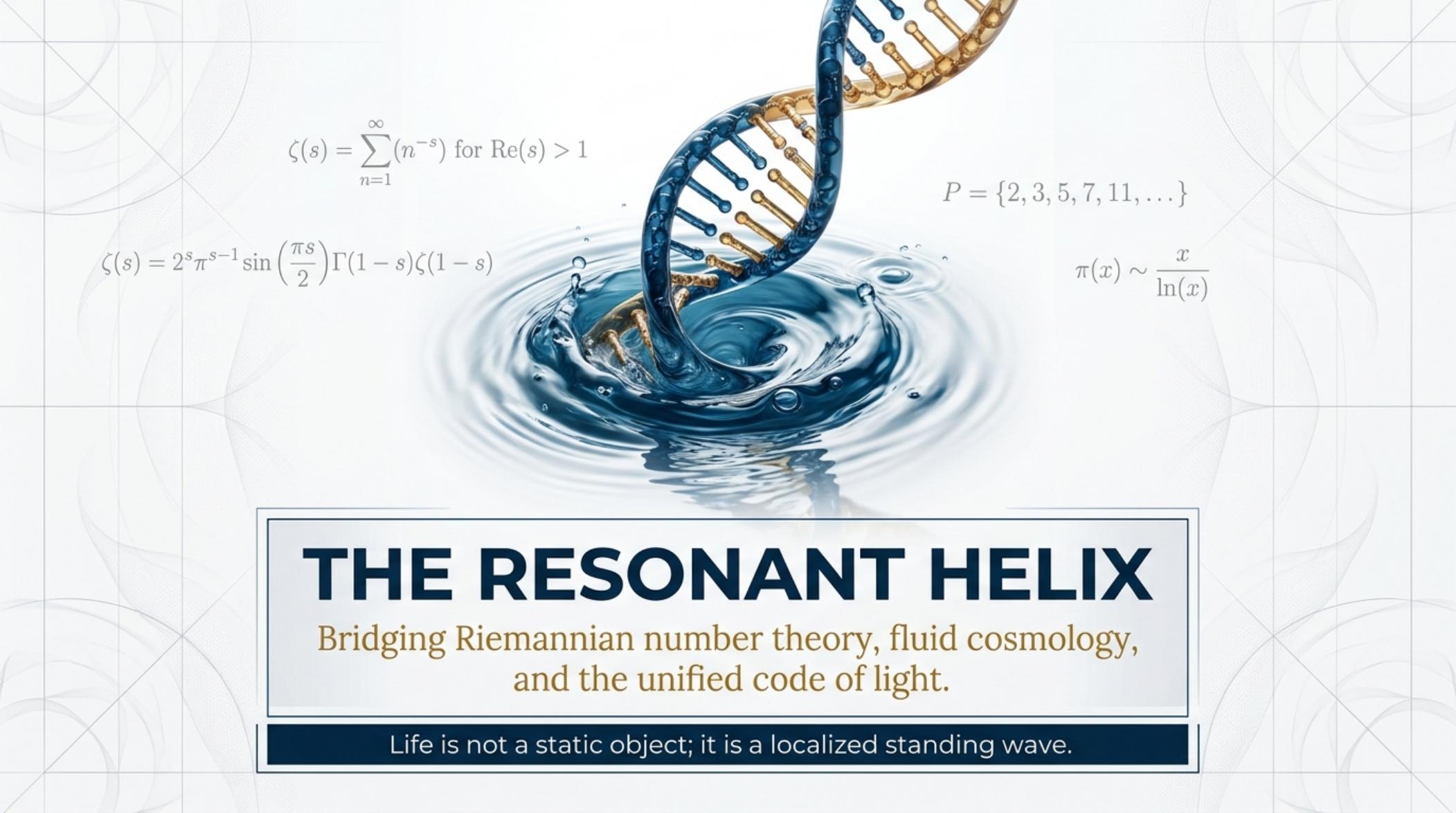
IV·½. Plates — The Resonant Helix study deck
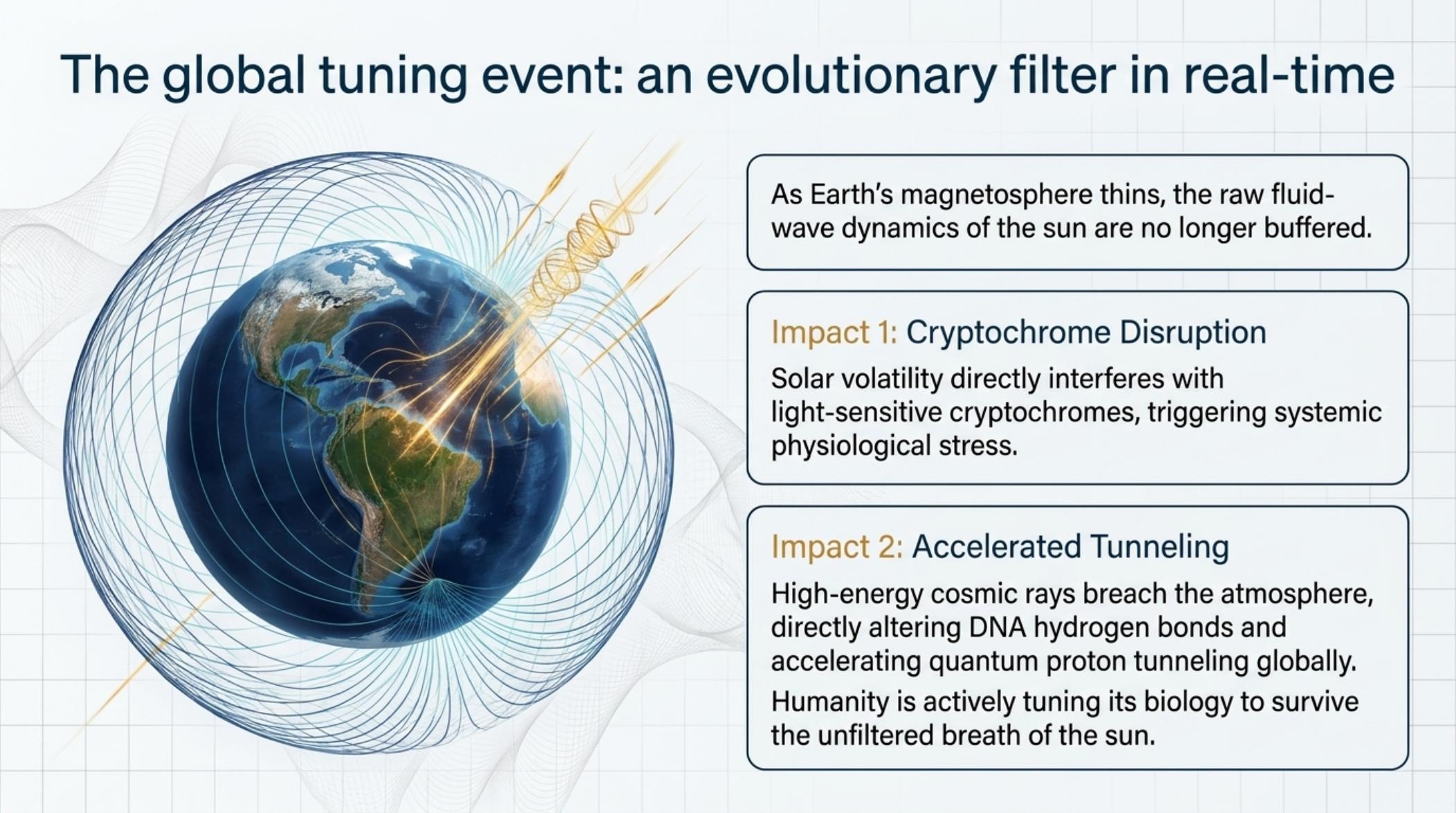
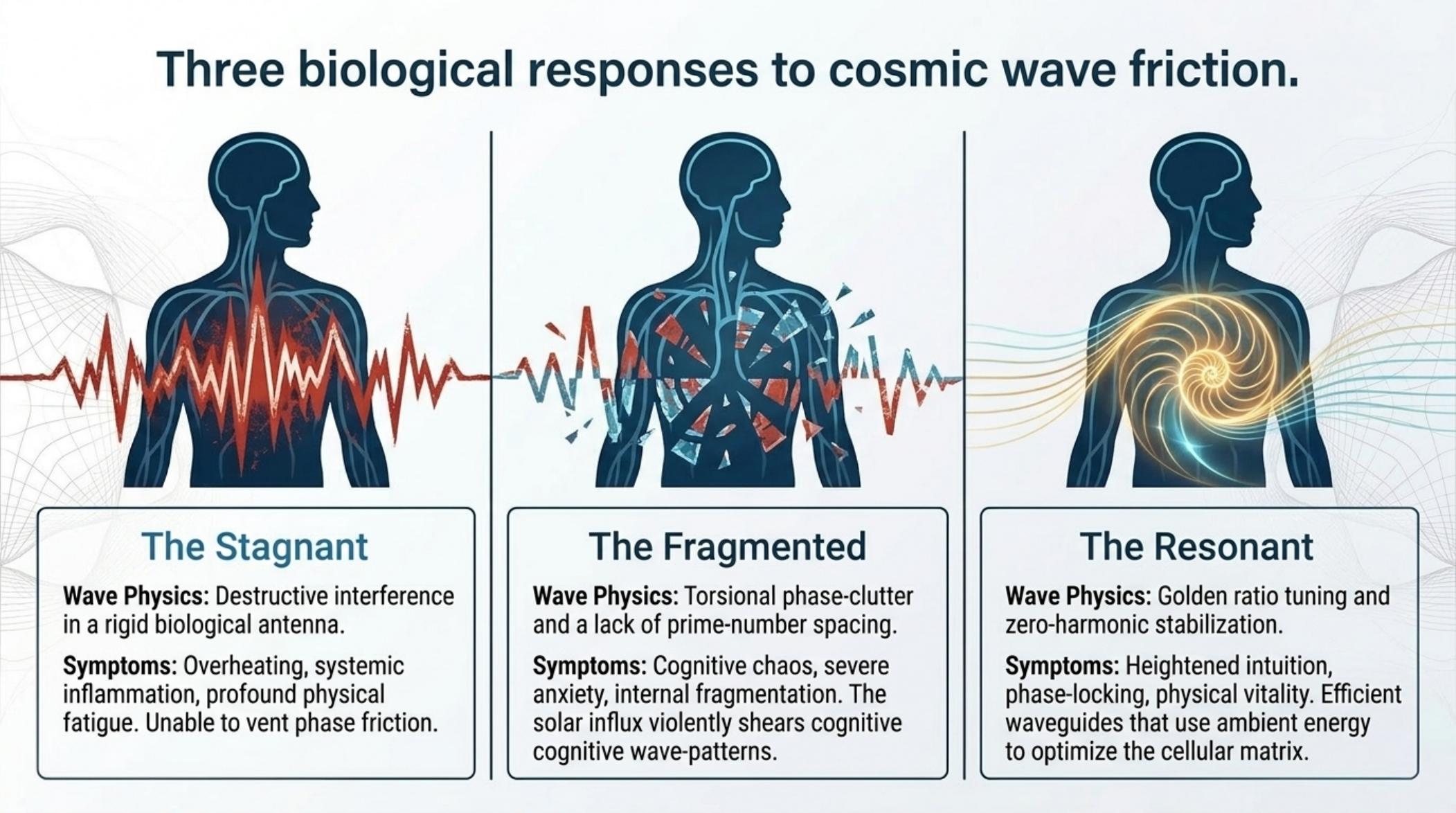
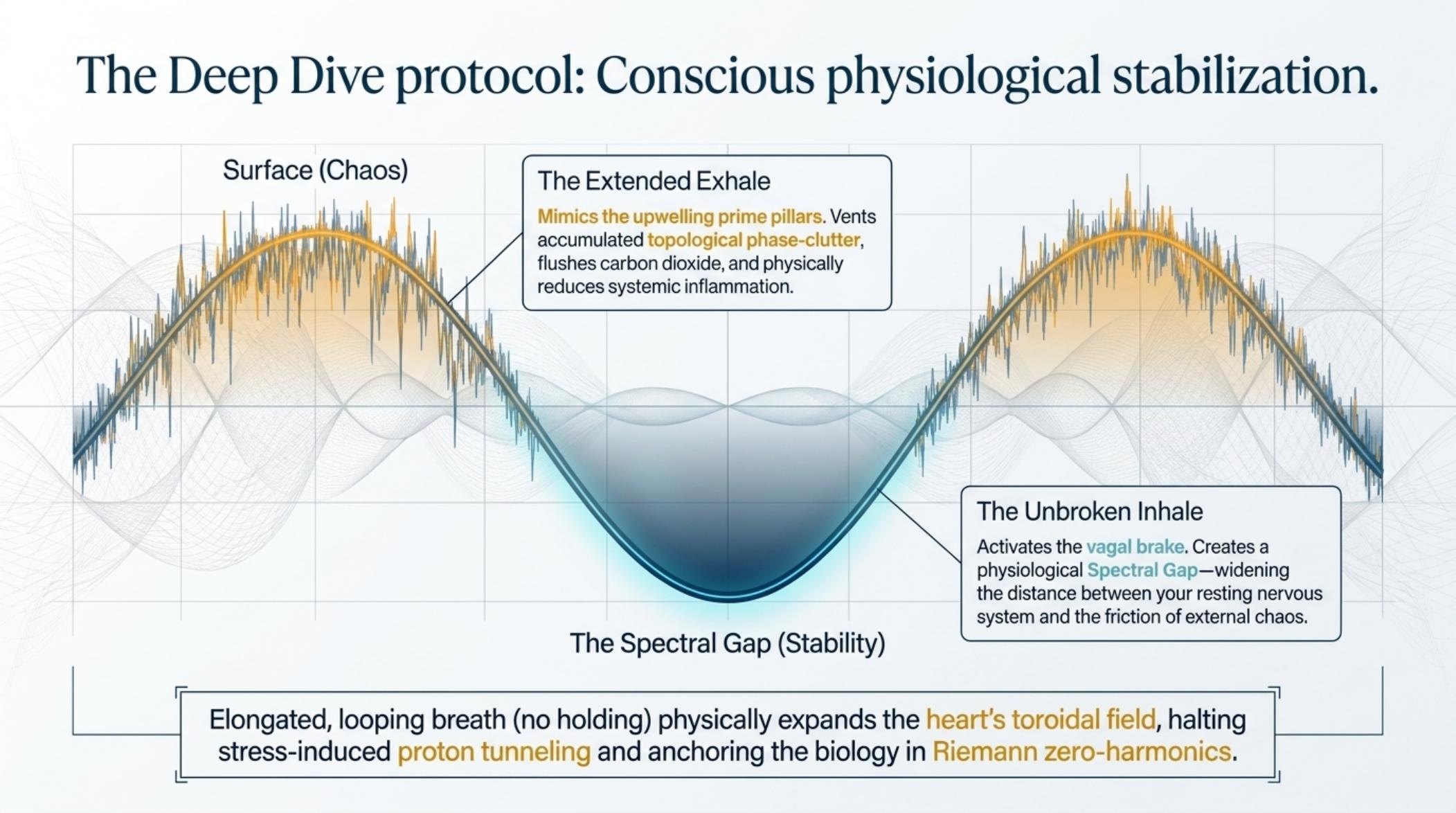
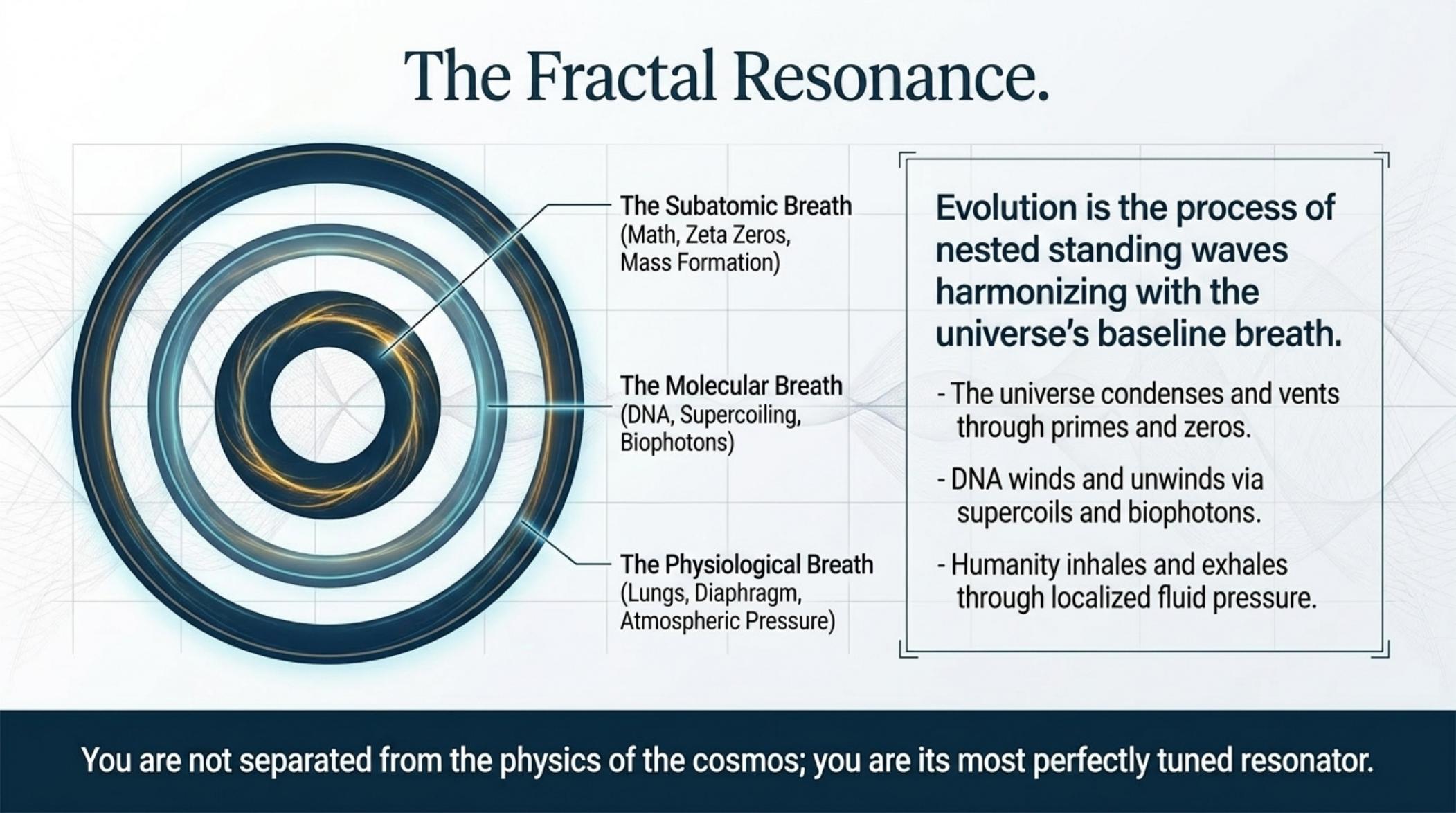
The fifteen plates below are the working illustrations behind this chapter. They were assembled with AI assistance from the Resonant Helix study materials and are offered as a visual scaffold, not as consensus science; wherever a plate reaches past current mainstream framing — steady-state superfluid cosmology, light-as-sound, wave-tuned evolution — read it as a proposed picture the chapter's argument is testing, not a settled result.
V. The Antenna in a Field — Bridge to Chapter 7
Everything Chapter 7 will name — the anthropogenic radiofrequency blanket, the heliophysical connection, the xenobiotic load, the spatial geometry of modern indoor living — is a boundary condition on the helix described here. The chapter that follows does not introduce a new physics. It measures the field in which the physics of this chapter is already operating.
Two consequences follow, and both are needed before the reader turns the page. First, to read the grid without first understanding the antenna is to read only half the story: the exposures become abstract, and the science of them collapses into either alarm or denial. Second, to read the antenna without eventually facing the grid is to keep the argument private — a beautiful interior model with no purchase on the conditions that actually determine how well any given body reads its own archive.
The hinge, then, is this: the helix is a stair-stepped code of light; the light it is asked to read is the ambient field of the next chapter; and the health of the reading is the health of the fit between them. Chapter 7 begins there.